


Warning: Fuse ratings and electrical circuits may change from year to year.
Location of fuses
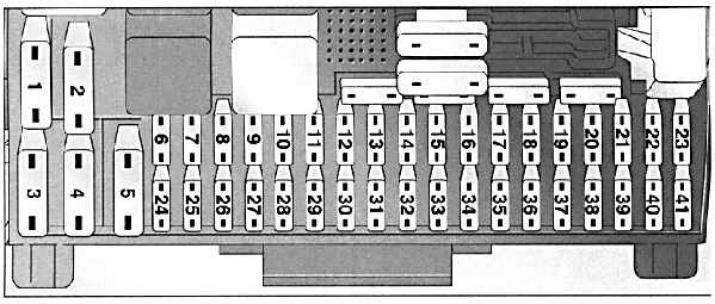
Fuses and fuses
|
N
|
CURRENT STRENGTH (COLOR)
|
ELECTRIC CIRCUIT
|
|
1
|
–
|
–
|
|
2
|
30 (Green)
|
Air conditioner, cooling system fan
|
|
3
|
40 (Orange)
|
Rear window defroster
|
|
4
| ||
|
5
|
–
|
–
|
|
6
|
10 (Red)
|
Low beam headlights, headlight corrector
|
|
7
|
10 (Red)
|
Parking light, rear right side lights
|
|
8
|
10 (Red)
|
High right beam
|
|
9
|
30 (Green)
|
Headlight washer
|
|
10
|
20 (Yellow)
|
Sound signal
|
|
11
|
30 (Green)
|
Central locking system
|
|
12
|
20 (Yellow)
|
Fog lights
|
|
13
|
–
|
–
|
|
14
|
30 (Green)
|
Wiper
|
|
15
|
–
|
–
|
|
16
|
10 (Red)
|
Rear fog light
|
|
17
|
30 (Green)
|
Window lifters
|
|
18
|
10 (Red)
|
License plate lighting
|
|
19
|
20 (Yellow)
|
Fuel pump
|
|
20
|
30 (Green)
|
Window lifters
|
|
21
|
–
|
–
|
|
22
|
20 (Yellow)
|
Light hazard warning lights, information display,
on-board computer, interior lighting, radiator fan,
radio, alarms.
|
|
23
|
–
|
–
|
|
24
|
10 (Red)
|
Low beam left, headlight corrector
|
|
25
|
10 (Red)
|
Parking lights and rear left light
|
|
26
|
10 (Red)
|
High beam left
|
|
27
|
–
|
–
|
|
28
|
–
|
Coolant heater (diesel)
|
|
29
|
10 (Red)
|
Light emergency signaling, electrically controlled
exterior mirrors, power windows, sunroof, cruise control, interior lighting
car
|
|
30
|
30 (Green)
|
Luke
|
|
31
|
–
|
–
|
|
32
|
–
|
–
|
|
33
|
20 (Yellow)
|
Terminal 30: Trailer DC
|
|
34
|
20 (Yellow)
|
CD changer switch
|
|
35
|
10 (Red)
|
ABS, Traction Control, Automatic Transmission
|
|
36
|
20 (Yellow)
|
Heated front seats
|
|
37
|
10 (Red)
|
Cigarette lighter
|
|
38
|
10 (Red)
|
Brake lights, automatic transmission, display,
cruise control
|
|
39
|
10 (Red)
|
Automatic transmission
|
|
40
|
10 (Red)
|
Radiator fan, rear window defroster
|
|
41
|
10 (Red)
|
Mirror heater
|
Location of the main fuse and relay box on the instrument panel on the driver's side
[Text was copied from the portal www.OPELBOOK.ru]
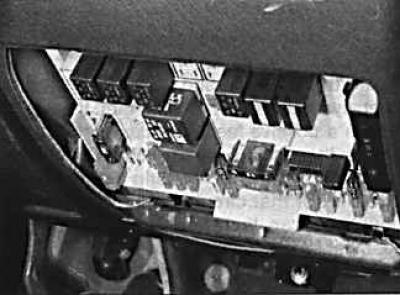
The main fuse and relay box is located under the cover in the instrument panel on the driver's side.
The location of the fuses and relays is shown on the cover.
Each fuse has an inscription indicating the amount of current it can pass through.
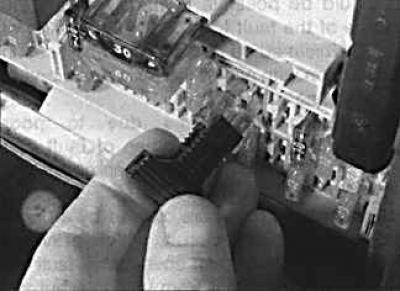
To remove a fuse, use tweezers to pull the fuse out of the socket. Pull the fuse out of the tweezers. The wire inside the fuse is easily visible and will be severed if the fuse is blown.
Always replace a fuse with another fuse of the same rating. Never replace a fuse more than once without determining the cause of its blown fuse.
Relay
A relay is an electronically controlled switch that is typically used as follows:
- a relay can switch high voltage current remotely from the circuit in which that current flows, allowing the use of thinner wires and switch contacts;
- a relay can have more than one control input, unlike a mechanical switch;
- the relay can perform the function of a timer, for example, outputting the interval of operation of the windshield wipers.
Location of the relay in front of the battery in the engine compartment
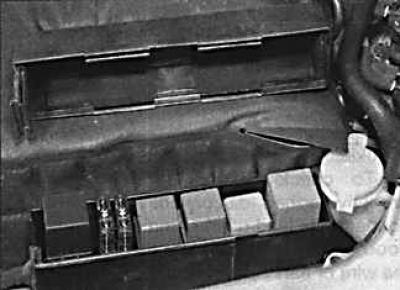
The relays are located in the main fuse/relay box, although some engine related relays are located in the engine compartment.
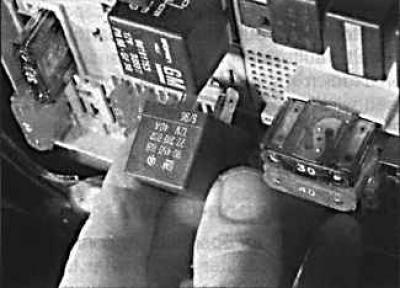
If a relay-controlled system fails and the relay is probably the cause of the failure, listen to the relay when the system is on. If the relay is working properly, you should hear a click when it is turned on. If the relay is working properly, the cause of the failure is in the components or connecting wires. If the relay does not work, it is not receiving the main power or control pulse, or the relay is faulty.
Removal the relay
Visitor comments