


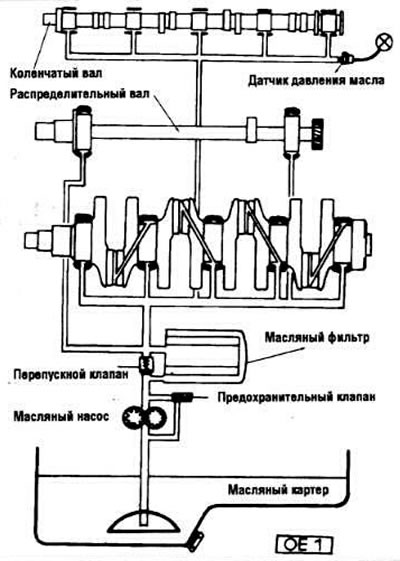
The oil pump sucks engine oil through a pipe from the oil pan and sends it to a full-flow oil filter. Near the oil pump is a safety valve that opens when a certain pressure is exceeded and transfers some of the oil back to the oil pan.
After the oil filter, the oil enters the main oil line. If the filter is clogged, the bypass valve directs the oil directly to the main line, bypassing the filter.
From the main oil line, oil flows through the appropriate channels to the crankshaft bearings. Through the channels in the crankshaft, oil flows to the connecting rod bearings, and from there to the piston pins and cylinder mirrors. At the same time, oil flows through the pipeline to the cylinder head to lubricate the camshaft bearings, and in gasoline engines, to the hydraulic valve clearance compensators.
In cars with an automatic control system, the oil level is constantly monitored not only when starting the engine, but also while driving. A float switch located in an oil bath is used as an oil level sensor. When the oil level is normal, its contacts are closed. Since the oil fluctuates during the car's movement, the oil level indicator lamp does not react immediately, but with some delay. A signal about a drop in the oil level is received only when its level has dropped significantly.
Visitor comments