


2. Remove the front wheel.
3. Remove the cotter pin from the serrated nut or nut retainer at the end of the drive shaft. Unscrew the nut. This nut is very tight and you will need a long steering knuckle to loosen it. Have an assistant press the brake pedal or screw a lever in place of the two holes for the wheel bolts (as shown in the picture 7.1) to prevent the drive shaft from turning. There is no need to remove the brake caliper.
4. Disconnect the anti-roll bar from the lower control arm.
5. Disconnect the lower control arm support from the body side member (Chapter 10) and while it is hanging on its ball joint, move the control lever to the side.
6. Now you will need a tool that can be inserted between the gearbox housing and the inner joint of the drive shaft. If you don't have an official tool, a flat steel block with a good chamfer on one end will do as a substitute. Insert such a tool into the gap between the joint and the housing to disconnect the shaft retaining ring from the differential. Be prepared for some oil spillage and plug the hole (even with the help of a piece of cloth) to prevent oil loss and dirt ingress (photo).
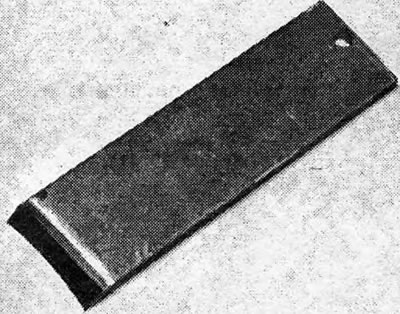
Photo 2.6A Suitable tool for removing the drive shaft.
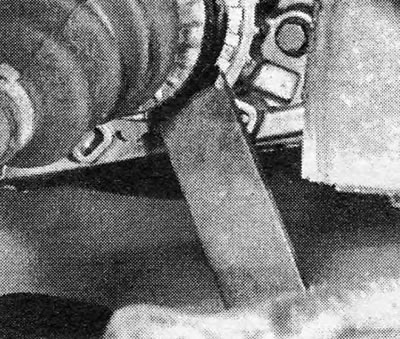
Photo 2.6B Disconnecting the drive shaft from the differential.
7. It should now be possible to push the drive shaft out of the hub using your fingers. If this is not the case, use a hub extractor (photo).
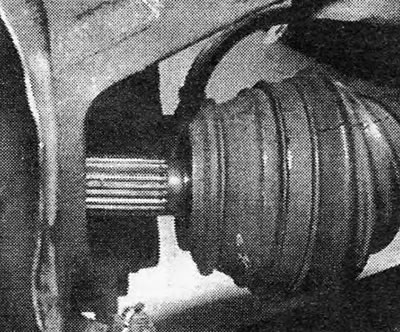
Photo 2.7 Drive shaft disconnected from hub carrier.
8. When removing the left-hand drive shaft, it may be difficult to use a suitable tool to disconnect it from the transmission. In this case, take a long steel rod and, grasping the edge of the hinge, push it out.
9. Models manufactured after October 1982, in particular the 1.6, 1.8 and 2.0 models with automatic transmission, are fitted with shafts which incorporate a modified internal joint. This type of hinge does not contain a stopper to limit the sliding feed inside the hinge. Therefore, when removing or working with this type of drive shaft, great care must be taken not to pull on the shaft, which will cause the joint parts to separate and render the entire shaft unusable.
10. On 1.6, 1.8 and 2.0 models with manual transmission, the longer right-hand drive shaft has a two-part weight that serves as a torsional vibration damper. If you remove it for any reason, it is important that when reinstalling it, the distance between the inner end of the outer hinge bellows and the outer surface of the weight is 260 mm (10.24 inches).
11. Do not move the machine on its wheels until one or both drive shafts are removed from their hubs. If this precaution is not taken, the front wheel bearings may be damaged.
12. The drive shaft - hub nut should be replaced every time it is disturbed.
13. Before reinstalling the drive shaft, make sure that the contact surfaces of the shaft joint and the hub bearing are absolutely clean (Figure 7.3). Apply a small amount of grease to the keyways of the shaft and insert it into the hub holder. Tighten the shaft nut with your fingers. Install a new snap ring onto the inner end of the drive shaft (photo).
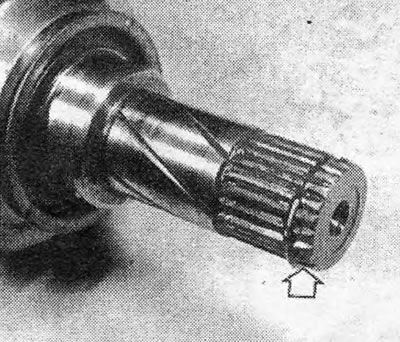
Photo 2.13 Drive shaft inner joint snap ring (indicated by the arrow).
14. Insert the inner end of the drive shaft into the gearbox all the way (photo).
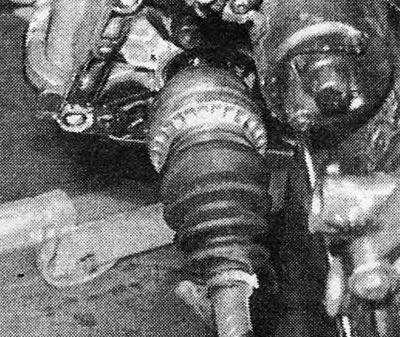
Photo 2.14 The drive shaft is inserted into the gearbox.
15. Now use a screwdriver, grasping the weld edge, not the metal covering, and insert the drive shaft into the differential until the retaining snap ring is definitely in place. Pull the drive shaft to check the clutch (photo).
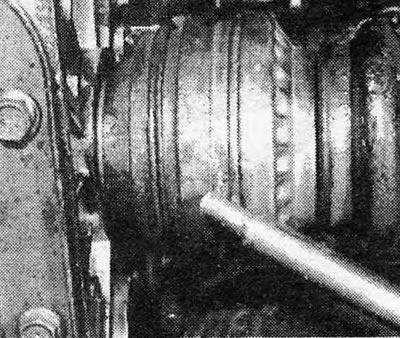
Photo 2.15 Attaching the drive shaft joint to the gearbox.
16. Reconnect the control arm and anti-roll bar as shown in Chapter 10 and tighten all nuts and bolts to the specified torque values.
17. Tighten the new drive shaft/hub nut to the specified torque value in stages (see Specifications).
18. Install the nut stopper (if it is installed) and insert a new cotter pin. Bend the ends of the cotter pin.
19. Install the wheels and lower the car to the ground.
20. Add transmission oil (see Chapter 6).
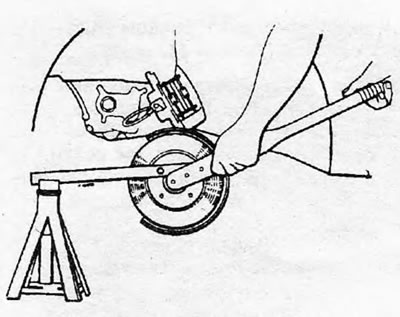
Figure 7.1. Unscrewing the drive shaft nut.
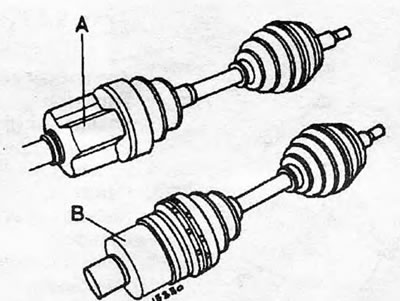
Figure 7.2. Comparison of inner joints on models with automatic transmission: A - Since 1983.; B - Early models.
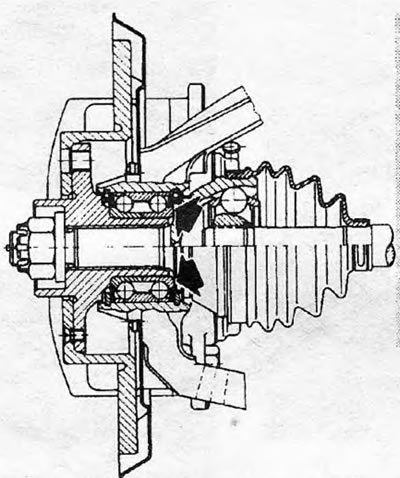
Figure 7.3. Section of the front hub. Clean the indicated surfaces.
(The article was published on the website: www.opelbook.ru)
Visitor comments