OpelBook.ru
Cars AvtoVAZ Cars Mitsubishi Cars BMW Cars Mercedes Cars Nissan Cars Toyota Cars Chevrolet
English Русский
Български
Беларускі
Український
Српски
Hrvatski
Română
Polski
Slovenský
Magyar
 |  Sitemap  |  Contacts  |    


Main Astra Corsa Insignia Kadett Omega Vectra Zafira Others Articles
Astra F (1991-1998, petrol) Astra G (1998-2004, petrol) Astra G (1998-2004) Astra H (2004-2009) Astra J (2009-2015, petrol)
  • Main
  • Astra
  • Astra J
  • General information
  • Faults en route
  • Checking the brake system

Checking the brake system (Opel Astra J)

            0

Checking the brake system


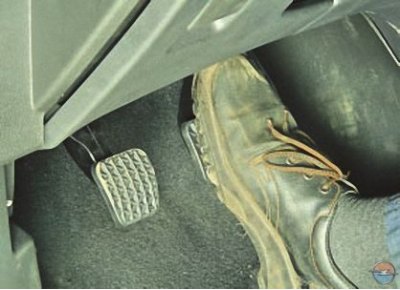
1. The reason for the decrease in braking efficiency may be the poor operation of the vacuum booster. To quickly check it, press the brake pedal several times with the engine off to remove the vacuum in the booster, and then, holding the pedal, start the engine. If the pedal drops slightly after starting the engine, the vacuum booster is working properly.

1. The reason for the decrease in braking efficiency may be the poor operation of the vacuum…


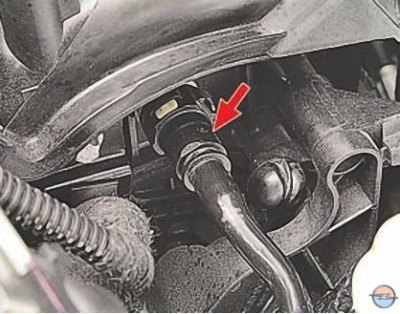
2. If the pedal remains motionless, check the integrity and reliability of the connection of the vacuum booster hose to the fitting on the engine intake pipe..
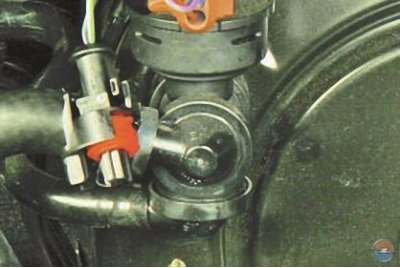
2. If the pedal remains motionless, check the integrity and reliability of the connection of the…


3. …and with the booster. Replace or repair the faulty hose. If the hose is in good condition, the vacuum booster must be replaced (see Replacing the brake booster).


3. …and with the booster. Replace or repair the faulty hose. If the hose is in good condition, the…


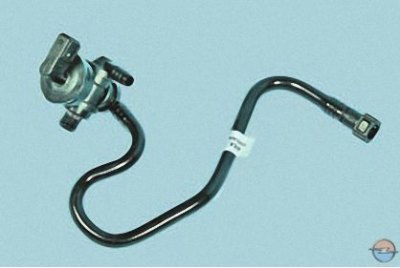
Note: The vacuum booster hose is made in one piece with the check valve. Check its functionality (see Checking the operation of the brake booster). If the check valve is faulty, replace the vacuum booster hose assembly.


If braking is accompanied by beating and pulsation of the brake pedal, you should first check the condition of the front disc brakes.
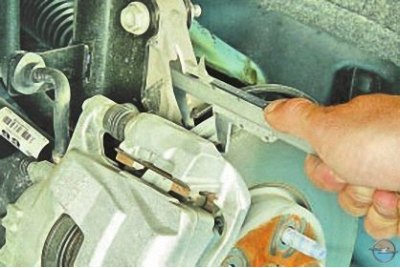
If braking is accompanied by beating and pulsation of the brake pedal, you should first check the…


4. After jacking up the car, remove the front wheels one by one and inspect the brake discs. The thickness of the brake discs with a diameter of 276 and 300 mm must be at least 26.0 mm.

Note: Depending on the configuration, Opel Astra J vehicles are equipped with front wheel brake mechanisms with brake discs with a diameter of 276 and 300 mm.


The surface of the disc should be flat and smooth on both sides. If the disc surface is rusty in places, which usually happens after a long period of parking with un-dried brakes, try cleaning the working surface with fine sandpaper. If this procedure does not help, you will have to send the discs for grinding or replace them with new ones.


The surface of the disc should be flat and smooth on both sides. If the disc surface is rusty in…


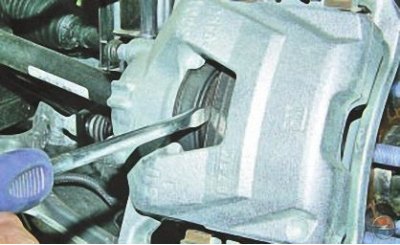
5. Check the mobility of the brake piston. To do this, try to move the piston with a screwdriver. If the piston cannot be moved, it is jammed in the brake cylinder.

Attention! Jamming of the brake cylinder piston leads to constant braking of the corresponding wheel when the pedal is released and skidding of the car when braking.


If braking is accompanied by jerking of the car and creaking in the area of the rear wheels, and during intensive braking the rear part of the car skids, check the condition of the brake mechanisms of the rear wheels.
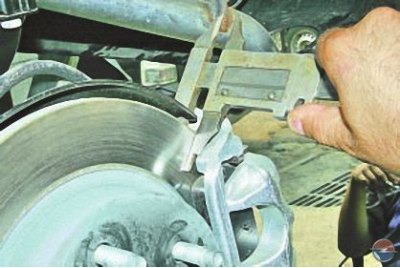
If braking is accompanied by jerking of the car and creaking in the area of the rear wheels, and…


Note.
  • Depending on the configuration, Opel Astra J cars are equipped with rear wheel brake mechanisms with brake discs with a diameter of 268 and 292 mm.
  • Check the thickness of the disc in the same way as you did for the front brake (see point 4); the thickness of brake discs with a diameter of 268 and 292 mm should be at least 12.0 mm.


Check the thickness of the disc in the same way as you did for the front brake (see point 4); the…


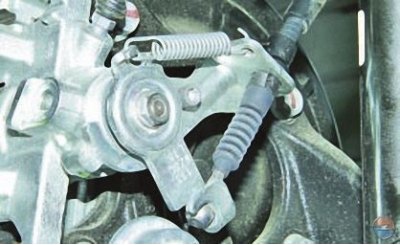
Check the mobility of the parking brake drive; the cable and drive lever should move freely.

Note: The parking brake operates the rear brakes via cables that connect the parking brake lever and the brake shoe control mechanisms. Many drivers try to use the parking brake as little as possible to extend its "life", and achieve the opposite result. If you do not use the parking brake, dirt and moisture stagnate in the cable sheaths, the cables become covered with rust, stop moving and break. Therefore, use the parking brake when necessary, but do not forget to adjust its drive from time to time (see Adjusting the parking brake drive).


This article is available at russian, bulgarian, belarusian, ukrainian, serbian, croatian, romanian, polish, slovak, hungarian
Checking the article: Trifonova Emilia

Share information:

Previous articles
Opel Astra J: Faults en route
Next articles

Bleeding the brake system
Signals for urgent brake check
Vibration and shock on the steering wheel
Extraneous knocks in the suspension and transmission
Extraneous knocking noises in the engine
Electrical equipment faults
Actions in case of a puncture of a tire
Wheel replacement


See similar ones from other Opel car manuals:
▶ Checking the brake system Opel Corsa B (1993-2000)
▶ Checking the vacuum in the brake booster system Opel Insignia A (2008-2017)
▶ Checking and adjusting the brake system regulator Opel Kadett D (1979-1984)
▶ Checking the brake system for leaks and damage Opel Vectra B (1995-2002, petrol)
▶ Brake system — checking technical condition Opel Zafira A (1999-2005, petrol)
Link to this page in different formats

Visitor comments


No comments yet


How much will 10 + 45 =


Astra J (2009-2015, petrol) 
  • General information
  • Vehicle device
  • User manual
  • Faults en route
  • Maintenance
  • Power unit
  • Engine repair
  • Cooling and lubrication system
  • Engine power system
  • Exhaust system
  • Transmission
  • Clutch
  • Car gearbox
  • Drive shafts
  • Chassis
  • Front suspension
  • Rear suspension
  • Steering
  • Brake system
  • Wheels and tires
  • Body
  • Exterior
  • Interior
  • Doors and windows
  • Body Care
  • Heating and air conditioning
  • Security systems
  • Electrical equipment
  • Equipment and devices
  • Lighting and signaling
  • Power devices
  • Electrical circuits
Astra H (2004-2009) 
  • General information
  • Introduction to the guide
  • Troubleshooting
  • User manual
  • Maintenance
  • Power unit
  • Engine repair
  • Cooling and heating
  • Power and exhaust system
  • Ignition system
  • Launch and charge system
  • Transmission
  • Mechanical gearbox
  • Automatic gearbox
  • Drive shafts
  • Chassis
  • Brake system
  • Car suspension
  • Steering
  • Body
  • Interior
  • Exterior
  • Electrical equipment
  • Equipment and devices
  • Electrical circuits
Astra G (1998-2004) 
  • General information
  • Introduction to manual
  • User manual
  • Maintenance
  • Power unit
  • SOHC gasoline engines
  • DOHC gasoline engines
  • Diesel engines 1.7 and 2.0
  • Engine repair
  • Cooling system
  • Supply system
  • Injection system (gasoline)
  • Injection system (diesel)
  • Exhaust system
  • Charge and launch system
  • Ignition system (gasoline)
  • Preheat system (diesel)
  • Transmission
  • Manual gearbox
  • Automatic gearbox
  • Clutch
  • Drive shafts
  • Chassis
  • Brake system
  • Wheel suspension
  • Steering
  • Body
  • Exterior
  • Interior
  • Doors and windows
  • Ventilation and heating
  • Electrical equipment
  • Equipment and devices
  • Electrical circuits
Astra G (1998-2004, petrol) 
  • General information
  • User manual
  • Car care
  • Maintenance
  • Power unit
  • Single shaft engines
  • Twin shaft engines
  • Engine repair
  • Cooling and heating
  • Fuel and exhaust systems
  • Starting and charging system
  • Ignition system
  • Transmission
  • Clutch
  • Mechanical gearbox
  • Automatic gearbox
  • Drive shafts
  • Chassis
  • Brake system
  • Car suspension
  • Steering
  • Body
  • Interior
  • Exterior
  • Electrical equipment
  • Equipment and devices
  • Wiring diagrams Opel Astra
  • Wiring diagrams Opel Zafira
Astra F (1991-1998, petrol) 
  • General information
  • Maintenance
  • Power unit
  • Engine in car
  • Engine removed
  • Cooling system
  • Heating and ventilation
  • Fuel supply (carburetor)
  • Fuel supply (injector)
  • Emission control
  • Ignition system
  • Transmission
  • Clutch
  • Mechanical gearbox
  • Automatic gearbox
  • Drive shafts
  • Chassis
  • Brake system
  • Car suspension
  • Steering
  • Body
  • Exterior
  • Interior
  • Electrical equipment
  • Equipment and devices
  • Electrical circuits
OpelBook.ru © 2017–2026 · Mobile version · · Sitemap: EN BG BY UA RS HR RO PL SK HU · Feedback · Site search
Astra F, petrol · Astra G, petrol · Astra G · Astra H · Astra J, petrol · Corsa B · Corsa C, petrol · Corsa C · Insignia A · Kadett D · Kadett E · Omega A · Omega B · Omega B2 · Vectra A, petrol · Vectra A · Vectra B, petrol · Vectra B · Vectra C · Zafira A, petrol · Frontera A, petrol · Frontera B · Ascona C · Vivaro A ·
We want your visit to be comfortable 🤝! We use cookies 🍪 to make that happen.