OpelBook.ru
Cars AvtoVAZ Cars Mitsubishi Cars BMW Cars Mercedes Cars Nissan Cars Toyota Cars Chevrolet
English Русский
Български
Беларускі
Український
Српски
Hrvatski
Română
Polski
Slovenský
Magyar
 |  Sitemap  |  Contacts  |    


Main Astra Corsa Insignia Kadett Omega Vectra Zafira Others Articles
Astra F (1991-1998, petrol) Astra G (1998-2004, petrol) Astra G (1998-2004) Astra H (2004-2009) Astra J (2009-2015, petrol)
  • Main
  • Astra
  • Astra J
  • General information
  • Vehicle device
  • Ventilation, heating and air conditioning system device

Ventilation, heating and air conditioning system device (Opel Astra J)

            0

The ventilation, heating and air conditioning system installed in the car operates effectively with the windows closed and is a single complex that ensures maximum comfort of the car regardless of weather conditions and ambient temperature. The temperature in the cabin is regulated by mixing cold and hot air. The cooling unit of the air conditioning system reduces the temperature and humidity of the air, cleans it from dust. The heater increases the air temperature in any operating mode of the system.

Note: The air conditioning system is installed on cars only in Active (Enjoy) and Cosmo trim levels.


The system provides low-inertia regulation of air temperature, practically independent of the vehicle speed. The amount of air entering the cabin is mainly determined by the fan operating mode, so it should be turned on even when driving at high speed.

Outside air can enter the passenger compartment through the door windows when the windows are lowered and the air blower located in front of the windshield. Air from the air blower can enter the passenger compartment of the car through the windshield blower nozzles, side and central nozzles, as well as through the lower nozzles of the heater housing.

The volume, temperature, direction and intensity of air flows are regulated by switches installed in the control unit of the heating, air conditioning and ventilation system.
The volume, temperature, direction and intensity of air flows are regulated by switches installed…


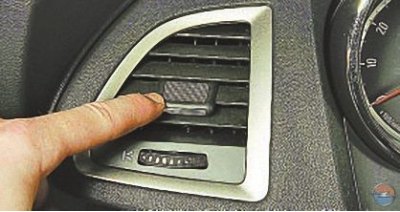
The direction of the air flow through the side and central nozzles is changed by turning the flaps upward with a handle installed in the center of the nozzle...


The direction of the air flow through the side and central nozzles is changed by turning the flaps…


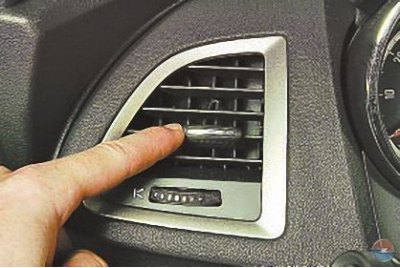
...down...

...down...


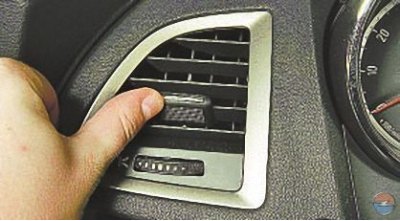
...or blinds to the right...
...or blinds to the right...


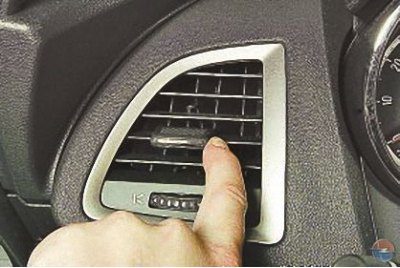
...to the left.
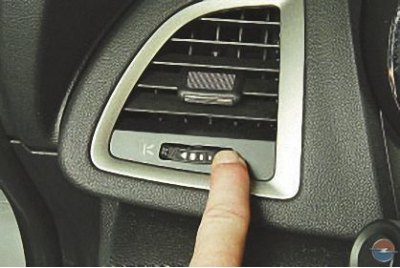
...to the left.


The amount of air supplied through the nozzles is regulated by handles located next to each nozzle.


(Text copied from this portal: «OpelBook.ru»)

When the handle is turned all the way to the right, the damper opens completely (maximum air flow).
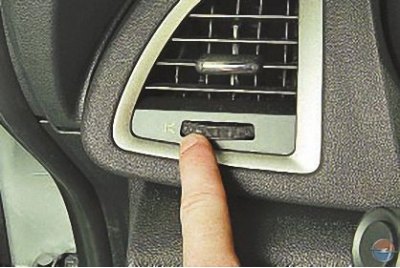
When the handle is turned all the way to the right, the damper opens completely (maximum air flow).


When turned all the way to the left, the damper closes completely, blocking the air flow.

Depending on the configuration, the car may be equipped with a dual-zone climate control system with automatic control, air conditioning with manual control, or only a heating and ventilation system. This subsection describes in detail the controls of the dual-zone climate control system with automatic control as the most complex and having the most complete set of functions.

The control units of the air conditioning system with manual control and the heater are unified in terms of controls with the unit of the dual-zone climate control system. The control algorithm and the location of the controls in all three units are almost identical. The difference lies in the presence of certain switches: in the unit of the air conditioning system with manual control there is only one regulator for the air temperature in the cabin, and the rotation speed of the supercharger fan is set by a separate regulator; the heater control unit does not have switches associated with air conditioning control, and switches for heating the front seats and steering wheel (decorative plugs have been installed instead).


Useful tips


For more efficient ventilation and heating at vehicle speeds below 50 km/h and when driving on particularly dusty road sections with the windows closed (to create excess air pressure in the cabin, preventing dust suction) we recommend turning on the heater fan switch at low or maximum speed.

To quickly eliminate fogging of the rear window and free it from ice and snow, turn on the heated glass switch.

If you do not use the air conditioner for a long time, it is necessary to turn it on briefly once a week with the engine running to restore the lubricant layer on the compressor parts and seals.


This article is available at russian, bulgarian, belarusian, ukrainian, serbian, croatian, romanian, polish, slovak, hungarian
Checking the article: Trifonova Emilia

Share information:

Previous articles
Opel Astra J: Vehicle device
Next articles

On-board computer
Instrument cluster
Instrument panel
Car keys
Vehicle Passport Data
Description and characteristics of the car
Automatic dual-zone climate control unit
Side door locks
Side door window lifters
Tailgate (trunk lid)
Trunk — structure and contents
Seat belts


See similar ones from other Opel car manuals:
▶ Heating and ventilation system with additional air… Opel Corsa C (2000-2006, petrol)
▶ Heating and air conditioning system Opel Omega B2 (1999-2003)
▶ Heating and ventilation system Opel Vectra A (1988-1995, petrol)
▶ Heating and ventilation system Opel Vivaro A (2001-2014)
▶ Pre-heating system for diesel engines Opel Insignia A (2008-2017)
Link to this page in different formats

Visitor comments


No comments yet


How much will 33 + 27 =


Astra J (2009-2015, petrol) 
  • General information
  • Vehicle device
  • User manual
  • Faults en route
  • Maintenance
  • Power unit
  • Engine repair
  • Cooling and lubrication system
  • Engine power system
  • Exhaust system
  • Transmission
  • Clutch
  • Car gearbox
  • Drive shafts
  • Chassis
  • Front suspension
  • Rear suspension
  • Steering
  • Brake system
  • Wheels and tires
  • Body
  • Exterior
  • Interior
  • Doors and windows
  • Body Care
  • Heating and air conditioning
  • Security systems
  • Electrical equipment
  • Equipment and devices
  • Lighting and signaling
  • Power devices
  • Electrical circuits
Astra H (2004-2009) 
  • General information
  • Introduction to the guide
  • Troubleshooting
  • User manual
  • Maintenance
  • Power unit
  • Engine repair
  • Cooling and heating
  • Power and exhaust system
  • Ignition system
  • Launch and charge system
  • Transmission
  • Mechanical gearbox
  • Automatic gearbox
  • Drive shafts
  • Chassis
  • Brake system
  • Car suspension
  • Steering
  • Body
  • Interior
  • Exterior
  • Electrical equipment
  • Equipment and devices
  • Electrical circuits
Astra G (1998-2004) 
  • General information
  • Introduction to manual
  • User manual
  • Maintenance
  • Power unit
  • SOHC gasoline engines
  • DOHC gasoline engines
  • Diesel engines 1.7 and 2.0
  • Engine repair
  • Cooling system
  • Supply system
  • Injection system (gasoline)
  • Injection system (diesel)
  • Exhaust system
  • Charge and launch system
  • Ignition system (gasoline)
  • Preheat system (diesel)
  • Transmission
  • Manual gearbox
  • Automatic gearbox
  • Clutch
  • Drive shafts
  • Chassis
  • Brake system
  • Wheel suspension
  • Steering
  • Body
  • Exterior
  • Interior
  • Doors and windows
  • Ventilation and heating
  • Electrical equipment
  • Equipment and devices
  • Electrical circuits
Astra G (1998-2004, petrol) 
  • General information
  • User manual
  • Car care
  • Maintenance
  • Power unit
  • Single shaft engines
  • Twin shaft engines
  • Engine repair
  • Cooling and heating
  • Fuel and exhaust systems
  • Starting and charging system
  • Ignition system
  • Transmission
  • Clutch
  • Mechanical gearbox
  • Automatic gearbox
  • Drive shafts
  • Chassis
  • Brake system
  • Car suspension
  • Steering
  • Body
  • Interior
  • Exterior
  • Electrical equipment
  • Equipment and devices
  • Wiring diagrams Opel Astra
  • Wiring diagrams Opel Zafira
Astra F (1991-1998, petrol) 
  • General information
  • Maintenance
  • Power unit
  • Engine in car
  • Engine removed
  • Cooling system
  • Heating and ventilation
  • Fuel supply (carburetor)
  • Fuel supply (injector)
  • Emission control
  • Ignition system
  • Transmission
  • Clutch
  • Mechanical gearbox
  • Automatic gearbox
  • Drive shafts
  • Chassis
  • Brake system
  • Car suspension
  • Steering
  • Body
  • Exterior
  • Interior
  • Electrical equipment
  • Equipment and devices
  • Electrical circuits
OpelBook.ru © 2017–2026 · Mobile version · · Sitemap: EN BG BY UA RS HR RO PL SK HU · Feedback · Site search
Astra F, petrol · Astra G, petrol · Astra G · Astra H · Astra J, petrol · Corsa B · Corsa C, petrol · Corsa C · Insignia A · Kadett D · Kadett E · Omega A · Omega B · Omega B2 · Vectra A, petrol · Vectra A · Vectra B, petrol · Vectra B · Vectra C · Zafira A, petrol · Frontera A, petrol · Frontera B · Ascona C · Vivaro A ·
We want your visit to be comfortable 🤝! We use cookies 🍪 to make that happen.