
OpelBook.ru
Cars AvtoVAZ Cars Mitsubishi Cars BMW Cars Mercedes Cars Nissan Cars Toyota Cars Chevrolet
English Русский
Български
Беларускі
Український
Српски
Hrvatski
Română
Polski
Slovenský
Magyar
 |  Sitemap  |  Contacts  |    


Main Astra Corsa Insignia Kadett Omega Vectra Zafira Others Articles
Astra F (1991-1998, petrol) Astra G (1998-2004, petrol) Astra G (1998-2004) Astra H (2004-2009) Astra J (2009-2015, petrol)
  • Main
  • Astra
  • Astra J
  • Body
  • Security systems
  • Design features of the passive safety system (SRS)

Design features of the passive safety system (SRS) (Opel Astra J)

            0

The passive safety system (SRS) of the Opel Astra J combines front airbags for the driver and front passenger and inertia seat belts for the driver and all passengers. The seat belts for the driver and front passenger are equipped with pyrotechnic pretensioners installed in reels. Side airbags and curtain airbags can be installed upon request. One of the elements of the passive safety system are active head restraints.

Warning! Airbags do not replace seat belts. Moreover, when the car is moving, the driver and front passenger must be fastened with seat belts, since in the event of a traffic accident, an airbag that has deployed itself can cause serious injury to a person not wearing a seat belt.


In addition, passengers in the back seat must be wearing seat belts. In the event of an accident, an unbelted passenger in the back seat can cause injuries and serious harm to all passengers in the car.

The SRS system includes the following elements:
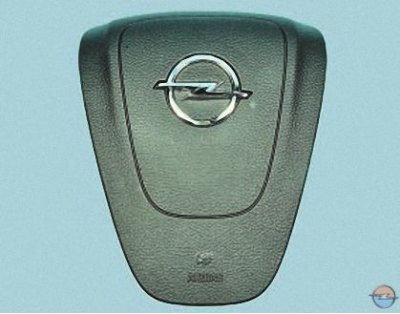
The SRS system includes the following elements:

  • driver airbag module, located in the steering wheel hub and consisting of a folded cushion shell and a gas generator;
  • front passenger airbag module, located in the instrument panel on the passenger side and consisting of a folded airbag shell and a gas generator;
  • driver and front passenger side airbag modules (installed depending on the vehicle configuration), located in the outer side parts of the backrests of the front seats and consisting of a folded cushion shell and a gas generator;
  • driver and front passenger curtain airbag modules (installed depending on the vehicle configuration), located under the front and rear body pillar trims and consisting of a folded cushion shell and a gas generator;
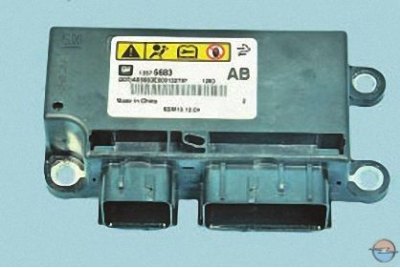
driver and front passenger curtain airbag modules (installed depending on the vehicle…

  • electronic control unit, installed under the dashboard console and controlling the system;
electronic control unit, installed under the dashboard console and controlling the system;

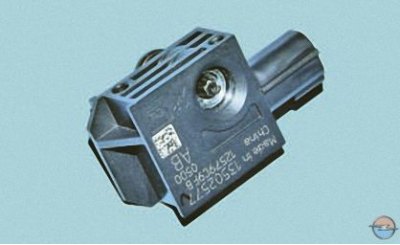
  • front and side impact sensors, transmitting acceleration information to the system control unit;
front and side impact sensors, transmitting acceleration information to the system control unit;


Material taken from an internet portal opelbook.ru


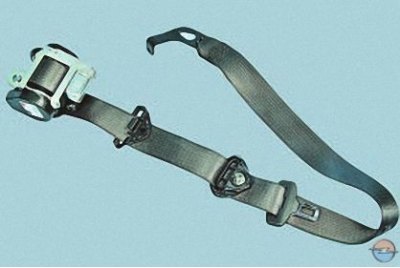
  • seat belts;
  • active headrests.

The force and direction of impact during a traffic accident is determined by the electronic control unit (ECU) of the passive safety system using impact sensors. Based on the signals from the sensors, the control unit activates the airbags.

When a certain force of impact occurs, the ECU, having received signals from the impact sensors, increases the belt tension before activating the airbags, issuing a command to the pyrotechnic elements of the pretensioners. The latter ensure a timely response to emergency deceleration of the car, pulling the driver and passenger to the seat backs, preventing their further movement forward or sideways by inertia and injury from the deployed airbag.

Notes:
  • The seat belt pretensioner mechanism is always activated before the airbag.
  • Additional elements of the passive safety system also include head restraints installed on the backs of the driver's, front passenger's and rear seats. The head restraints prevent damage to the cervical vertebrae of people sitting in the car in the event of a strong impact from behind and when the airbags are deployed.
  • Active head restraints automatically move forward when critical loads occur during an impact, minimizing the amplitude of the backward movement of a person's head after an impact.


Removal and installation of driver airbags, belts and impact sensors are described in this subsection, as the driver airbag must be removed for work related to the repair of the steering. To replace other system components, contact a specialized service, as these works require qualified personnel and special equipment.


This article is available at russian, bulgarian, belarusian, ukrainian, serbian, croatian, romanian, polish, slovak, hungarian
Checking the article: Trifonova Emilia

Share information:

Previous articles
Opel Astra J: Security systems
Next articles

Removal and installation the driver's airbag and its contact ring
Removal and installation seat belts
Electronic control unit of additional passive safety system
Removal and installation the shock sensor
Removal and installation the front passenger airbag switch
Design features of the anti-lock braking system (ABS)


See similar ones from other Opel car manuals:
▶ Passive safety system device Opel Insignia A (2008-2017)
▶ Opel Child Safety System Opel Corsa C (2000-2006, petrol)
▶ Design features and operating principle Opel Kadett E (1984-1995)
▶ Description of the design of the engine cooling system Opel Vectra C (2002-2008)
▶ Description of the control system design Opel Zafira A (1999-2005, petrol)
Link to this page in different formats

Visitor comments


No comments yet


How much will 31 + 19 =


Astra J (2009-2015, petrol) 
  • General information
  • Vehicle device
  • User manual
  • Faults en route
  • Maintenance
  • Power unit
  • Engine repair
  • Cooling and lubrication system
  • Engine power system
  • Exhaust system
  • Transmission
  • Clutch
  • Car gearbox
  • Drive shafts
  • Chassis
  • Front suspension
  • Rear suspension
  • Steering
  • Brake system
  • Wheels and tires
  • Body
  • Exterior
  • Interior
  • Doors and windows
  • Body Care
  • Heating and air conditioning
  • Security systems
  • Electrical equipment
  • Equipment and devices
  • Lighting and signaling
  • Power devices
  • Electrical circuits
Astra H (2004-2009) 
  • General information
  • Introduction to the guide
  • Troubleshooting
  • User manual
  • Maintenance
  • Power unit
  • Engine repair
  • Cooling and heating
  • Power and exhaust system
  • Ignition system
  • Launch and charge system
  • Transmission
  • Mechanical gearbox
  • Automatic gearbox
  • Drive shafts
  • Chassis
  • Brake system
  • Car suspension
  • Steering
  • Body
  • Interior
  • Exterior
  • Electrical equipment
  • Equipment and devices
  • Electrical circuits
Astra G (1998-2004) 
  • General information
  • Introduction to manual
  • User manual
  • Maintenance
  • Power unit
  • SOHC gasoline engines
  • DOHC gasoline engines
  • Diesel engines 1.7 and 2.0
  • Engine repair
  • Cooling system
  • Supply system
  • Injection system (gasoline)
  • Injection system (diesel)
  • Exhaust system
  • Charge and launch system
  • Ignition system (gasoline)
  • Preheat system (diesel)
  • Transmission
  • Manual gearbox
  • Automatic gearbox
  • Clutch
  • Drive shafts
  • Chassis
  • Brake system
  • Wheel suspension
  • Steering
  • Body
  • Exterior
  • Interior
  • Doors and windows
  • Ventilation and heating
  • Electrical equipment
  • Equipment and devices
  • Electrical circuits
Astra G (1998-2004, petrol) 
  • General information
  • User manual
  • Car care
  • Maintenance
  • Power unit
  • Single shaft engines
  • Twin shaft engines
  • Engine repair
  • Cooling and heating
  • Fuel and exhaust systems
  • Starting and charging system
  • Ignition system
  • Transmission
  • Clutch
  • Mechanical gearbox
  • Automatic gearbox
  • Drive shafts
  • Chassis
  • Brake system
  • Car suspension
  • Steering
  • Body
  • Interior
  • Exterior
  • Electrical equipment
  • Equipment and devices
  • Wiring diagrams Opel Astra
  • Wiring diagrams Opel Zafira
Astra F (1991-1998, petrol) 
  • General information
  • Maintenance
  • Power unit
  • Engine in car
  • Engine removed
  • Cooling system
  • Heating and ventilation
  • Fuel supply (carburetor)
  • Fuel supply (injector)
  • Emission control
  • Ignition system
  • Transmission
  • Clutch
  • Mechanical gearbox
  • Automatic gearbox
  • Drive shafts
  • Chassis
  • Brake system
  • Car suspension
  • Steering
  • Body
  • Exterior
  • Interior
  • Electrical equipment
  • Equipment and devices
  • Electrical circuits
OpelBook.ru © 2017–2026 · Mobile version · · Sitemap: EN BG BY UA RS HR RO PL SK HU · Feedback · Site search
Astra F, petrol · Astra G, petrol · Astra G · Astra H · Astra J, petrol · Corsa B · Corsa C, petrol · Corsa C · Insignia A · Kadett D · Kadett E · Omega A · Omega B · Omega B2 · Vectra A, petrol · Vectra A · Vectra B, petrol · Vectra B · Vectra C · Zafira A, petrol · Frontera A, petrol · Frontera B · Ascona C · Vivaro A ·
We want your visit to be comfortable 🤝! We use cookies 🍪 to make that happen.