


Contents: Starter/Reverse Light Interlock…⬇ Adjustment (without removing the…⬇ Sport mode switch ⬇ Winter mode switch ⬇ Kick-down mode switch ⬇ Transmission Processor Unit ⬇ Transmission shaft speed sensors ⬇
Starter/Reverse Light Interlock Switch
1. The switch is screwed into the front part of the transmission housing and performs two functions - it prevents the starter from turning on only in the N or P selector positions and turns on the reverse signal in the R selector position. If the starter turns on in positions other than N or P, then the switch is faulty or its adjustment is incorrect. If the rear light does not turn on either, then the switch should be adjusted. If the adjustment does not give a positive result, then replace the switch.
2. Set the selector to position N.
3. Remove the battery and tray.
4. Disconnect the cable from the lever on the transmission, unscrew the nut and remove the lever.
5. Disconnect the switch connector (is located in the wiring harness).
6. On 2.0L engines, remove the fluid level indicator by unscrewing the nut.
7. Bend back the lock washer and unscrew the gear selector shaft nut.
8. Loosen the bolts and remove the switch together with the plate and wires by pushing it upwards.
9. Installation is carried out in the reverse order. Replace the fluid level indicator gasket. Adjust the switch.
Adjustment (without removing the switch)
10. Adjust the transmission control cable.
11. Set the transmission selector to position N.
12. Remove the battery and tray.
13. Remove the control lever from the transmission by disconnecting the cable from it.
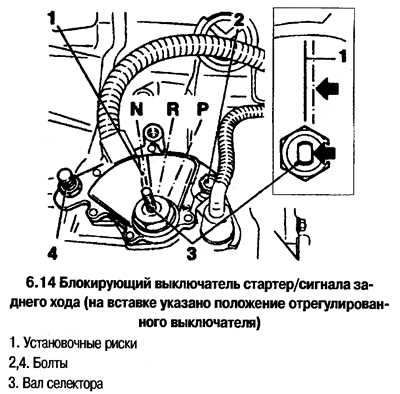
14. When the transmission selector is in position N, the flats on the selector shaft must be parallel to the marks on the switch (see photo). Otherwise, loosen the bolts and set the switch to the desired position.
Text was copied from the portal (OpelBook.ru)
15. Install the removed parts and battery.
Sport mode switch
16. Remove the selector.(to do this, remove the cover, disconnect the cable and unscrew the 4 bolts).
17. Push out the switch with a welding electrode inserted into the selector hole (see photo).
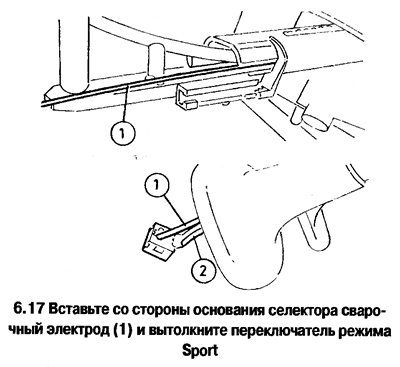
18. Label the wires and unsolder them from the switch. Remove the wires by pulling them out of the selector.
19. Installation is carried out in reverse order.
Winter mode switch
20. Remove the center floor section (Chapter 11). Loosen the mounting screws on the rear side of the floor section and remove the selector cover.
21. Remove the indicator panel from the latches, installed on the selector cover.
22. Disconnect the wires from the switch and remove the switch from the latches.
Kick-down mode switch
23. The switch is built into the throttle cable, the removal procedure for which is discussed in Chapter 4A.
Transmission Processor Unit
24. Remove the center floor section (Chapter 11) and the left heater air duct.
25. Remove the processor unit bracket from the latches on the heater casing and move the unit to the side (if necessary, cut the tourniquet binding). Disconnect the wires from the unit, remove the staples and remove the processor unit.
Transmission shaft speed sensors
26. On 2.0L models, the sensors are mounted on the top of the transmission case (see photo).
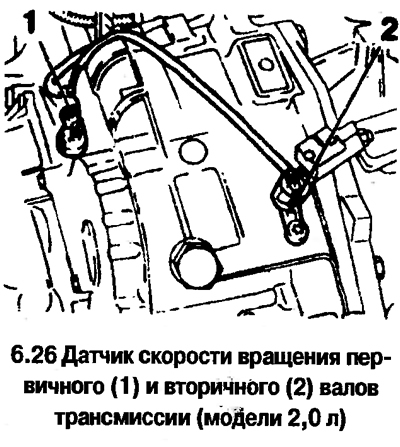
Remove the battery and tray, disconnect the wires from the sensors, unscrew the bolts and remove the sensors (each sensor is secured with a bolt).
27. On 1.4, 1.6 and 1.8 L models, the sensors are mounted in the rear upper part of the transmission case. Raise the front of the car, remove the left wheel and the protective panel of the wing. Disconnect the wires from the sensors, unscrew the bolts and remove the sensors.
Transmission Fluid Temperature Sensor (for AF20 transmission only, 2.0L models)
Attention! The transmission fluid temperature sensor on 1.4, 1.6 and 1.8 L models is changed at a car service center.
28. The sensor is screwed into the lower front part of the transmission housing.
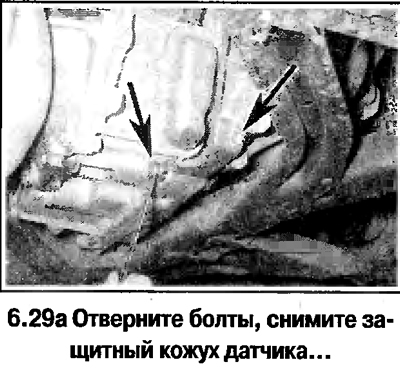
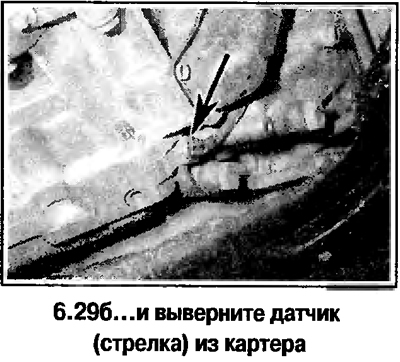
29. Raise the front of the car, disconnect the wire from the sensor (the connector is located in the harness next to the sensor), unscrew the bolts and remove the sensor protective cover. Unscrew the sensor from the crankcase (see photo).
Visitor comments