
OpelBook.ru
Cars AvtoVAZ Cars Mitsubishi Cars BMW Cars Mercedes Cars Nissan Cars Toyota Cars Chevrolet
English Русский
Български
Беларускі
Український
Српски
Hrvatski
Română
Polski
Slovenský
Magyar
 |  Sitemap  |  Contacts  |    


Main Astra Corsa Insignia Kadett Omega Vectra Zafira Others Articles
Omega A (1986-1993) Omega B (1993-1999) Omega B2 (1999-2003)
  • Main
  • Omega
  • Omega A
  • General information
  • User manual
  • Brake system

Brake system (Opel Omega A)

            0

Contents: Parking brake ⬇ Anti-lock braking system Opel ABS ⬇
Brake system


Brakes are the most important device that ensures traffic safety.

If the disc brake pads are new, it is recommended to break them in thoroughly to ensure continued high performance.

The front and rear brakes are independent of each other and have separate brake circuits.

If one of them fails, the car can be braked by the remaining working circuit. In this case, you will need to press the brake pedal with force until it stops. In this case, the braking distance increases.

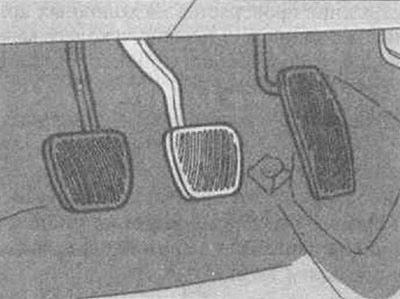
In such situations, it may be necessary to remove the mat from under the pedal to ensure full pedal travel.

Remember! When the engine is not running, after 1-2 presses of the brake pedal, the brake booster stops working.


The brake system itself is in good working order and continues to function. Additional physical effort will be required when pressing the pedal.

Material copied from this website (opelbook.ru)

Before each trip, check the serviceability of the brake lights. Immediately after starting to move at low speed, check the efficiency of the brakes, especially if water has gotten on them. Check the level and condition of the brake fluid in a timely manner.


Parking brake
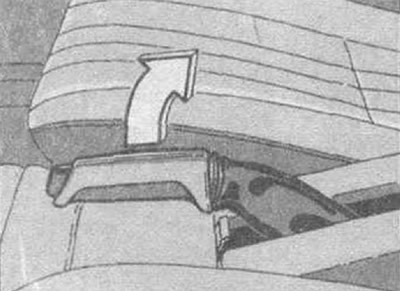


Parking brake


The mechanical parking brake operates only the rear wheel brakes and is designed to hold the car when stopped or parked. When tightened, it is fixed independently. It works independently of the foot brake. The system does not self-clean. In this regard, it is recommended to carry out such cleaning independently at certain intervals, for which it is necessary to slightly tighten the brake and drive in this state for about 300 meters.

Anti-lock braking system Opel ABS
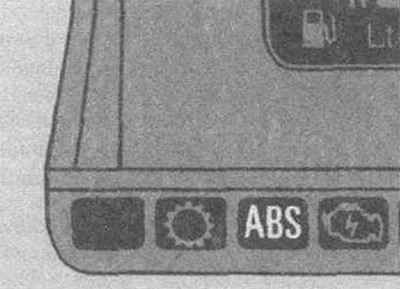


Anti-lock braking system Opel ABS


It is designed for constant monitoring of the braking system and, regardless of the road condition and the degree of tire adhesion to the road surface, prevents wheel locking.

As soon as one of the wheels is on the verge of locking, the ABS system immediately begins to regulate the distribution of braking forces, thereby ensuring the stability of the car and its reliable control.


In the event of extremely strong braking, for example on sharp turns or when turning the steering wheel sharply to avoid an obstacle, the ABS system allows you to do this without releasing the brake pedal.

At the same time, the presence of this reliable additional safety system should not be a reason for relaxed driving.

Traffic safety, especially within the city, primarily depends on the driver's responsible approach to choosing his own driving style.

The ABS warning light comes on when the ignition is turned on and goes out after a few seconds. If it does not go out or comes on while driving, the system is faulty. You need professional help.

The car's braking system itself remains functional even without the ABS system.

The ABS system is also disabled if the brake light and turn signal fuse fails.

In the ABS mode, it literally regulates the braking force every millisecond. This is reflected in the pedal and is noticeable by its pulsation, accompanied by a slight noise of the operating system.

At this time, on the one hand, it contributes to the stability of the car and its controllability, and on the other hand, it seems to warn about the need to select a driving speed that corresponds to real road conditions.

Immediately after the start of movement, the system carries out automatic self-monitoring. The self-diagnostic mode is accompanied by a barely noticeable noise.


This article is available at russian, bulgarian, belarusian, ukrainian, serbian, croatian, romanian, polish, slovak, hungarian
Checking the article: Zinoviev Kirill

Share information:

Previous articles
Opel Omega A: User manual
Next articles

Manual speed control device
Adjusting the vehicle's landing level
Electronically controlled chassis damping
Automatic transmission
Air Conditioning Control
Heating and ventilation control
Wheels and tires
Additional luggage rack on the roof of the body
Traction device
Fuel system of diesel engine
Starting the engine with outside help
Electronic equipment, ignition system


See similar ones from other Opel car manuals:
▶ Features of operation of the brake system Opel Astra G (1998-2004, petrol)
▶ Checking the brake system Opel Corsa B (1993-2000)
▶ Emergency Brake Assist System Opel Insignia A (2008-2017)
▶ Brake system Opel Kadett E (1984-1995)
▶ Technical characteristics of the brake system Opel Vectra A (1988-1995)
Link to this page in different formats

Visitor comments


No comments yet


How much will 37 + 39 =


Omega B2 (1999-2003) 
  • General information
  • User manual
  • Maintenance
  • Troubleshooting
  • Power unit
  • Petrol 4-cylinder
  • Petrol 6-cylinder
  • Engine overhaul
  • Diesel engines 2.0 l
  • Diesel engines 2.5 l
  • Cooling and heating
  • Injection system (gasoline)
  • Fuel system (diesel)
  • Fuel system
  • Exhaust system
  • Ignition system
  • Transmission
  • Clutch
  • Mechanical gearbox
  • Automatic gearbox
  • Main gear and shafts
  • Chassis
  • Brake system
  • Car suspension
  • Steering
  • Body
  • Body elements
  • Electrical equipment
  • Equipment and devices
  • Electrical circuits
Omega B (1993-1999) 
  • General information
  • User manual
  • Tips for the car owner
  • Maintenance (gasoline)
  • Maintenance (diesel)
  • Power unit
  • Petrol engine SOHC 2.0 l
  • Petrol engine DOHC 2.0 l
  • Petrol engines 2.5 and 3.0 l
  • Repair of gasoline engines
  • Diesel engine 2.0 l
  • Diesel engine repair 2.0 l
  • Diesel engine 2.5 l
  • Cooling and heating
  • Power system (petrol)
  • Emission reduction
  • Fuel system (diesel 2.0 l)
  • Fuel system (diesel 2.5 l)
  • Launch system
  • Ignition system
  • Transmission
  • Clutch
  • Mechanical gearbox
  • Automatic gearbox
  • Drive shafts
  • Chassis
  • Brake system
  • Wheel suspension
  • Steering
  • Body
  • Exterior
  • Interior
  • Doors and windows
  • Electrical equipment
  • Equipment and devices
  • Wiring diagrams (early)
  • Wiring diagrams (late)
Omega A (1986-1993) 
  • General information
  • User manual
  • Maintenance
  • Changes and additions
  • Troubleshooting
  • Power unit
  • Gasoline engines
  • Diesel engines
  • Cooling system
  • Fuel system (gasoline)
  • Fuel system (diesel)
  • Ignition system
  • Transmission
  • Clutch
  • Mechanical gearbox
  • Automatic gearbox
  • Cardan shaft
  • Drive shafts
  • Chassis
  • Brake system
  • Car suspension
  • Steering
  • Body
  • Exterior
  • Interior
  • Electrical equipment
  • Power devices
  • Lighting and appliances
  • Electrical circuits
OpelBook.ru © 2017–2026 · Mobile version · · Sitemap: EN BG BY UA RS HR RO PL SK HU · Feedback · Site search
Astra F, petrol · Astra G, petrol · Astra G · Astra H · Astra J, petrol · Corsa B · Corsa C, petrol · Corsa C · Insignia A · Kadett D · Kadett E · Omega A · Omega B · Omega B2 · Vectra A, petrol · Vectra A · Vectra B, petrol · Vectra B · Vectra C · Zafira A, petrol · Frontera A, petrol · Frontera B · Ascona C · Vivaro A ·
We want your visit to be comfortable 🤝! We use cookies 🍪 to make that happen.