


Do not open the radiator cap or remove the thermostat until the engine has completely cooled down!
Removal
Petrol models
Models with SOHC engine
1. Disconnect the negative cable from the battery.
2. Drain the cooling system (refer to Chapter Vehicle settings and routine maintenance).
If you are not going to add new fluid to the system, save the drained fluid for future use.
3. Remove the air cleaner assembly with air ducts (see Chapter Fuel, exhaust and emission control systems).
4. Loosen the mounting clamps and disconnect the upper radiator hose from the thermostat cover mounted on the right side of the cylinder head.
5. Remove the timing belt housing cover, timing belt with idler roller, camshaft gear and rear timing belt drive cover.
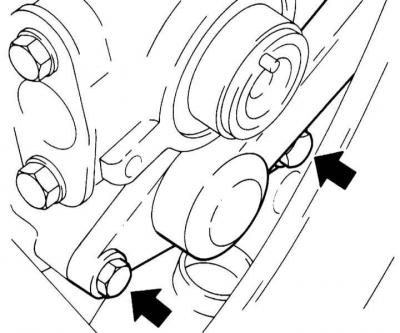
6. Remove the coolant hose from the thermostat housing, unscrew the mounting bolts and remove the thermostat cover. The thermostat is located on the side of the cylinder head, under the camshaft gear.
Thermostat cover mounting bolts
7. Remove the thermostat from the housing, remove the sealing ring - try to remember the installation position of the components.
DOHC engine models
1. Disconnect the negative battery cable (see Chapter Engine electrical systems).
2. Drain the cooling system (refer to Chapter Vehicle settings and routine maintenance).
If you are not going to add new fluid to the system, save the drained fluid for future use.
3. On 1.0 and 1.2 l engines remove the air intake sleeve. Place a container under the thermostat cover pipe.
4. Loosen the mounting clamps and disconnect the upper radiator hose from the thermostat cover.
5. Unscrew the mounting bolts and remove the housing together with the thermostat built into it 1.4 and 1.6 l engines remove the sealing ring.
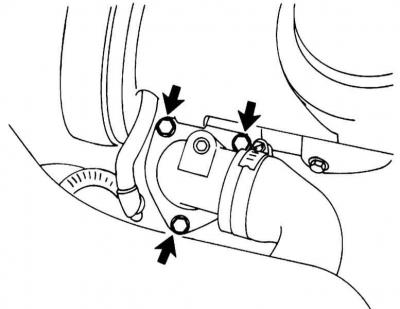
Thermostat housing mounting bolts for 1.4 and 1.6 l DOHC engines
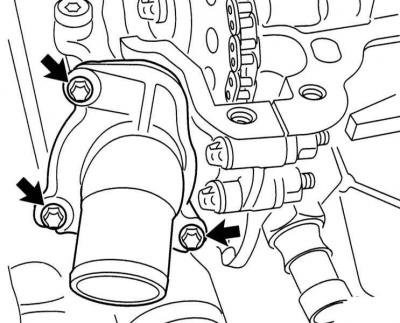
Thermostat housing mounting bolts for 1.0 and 1.2 l DOHC engines
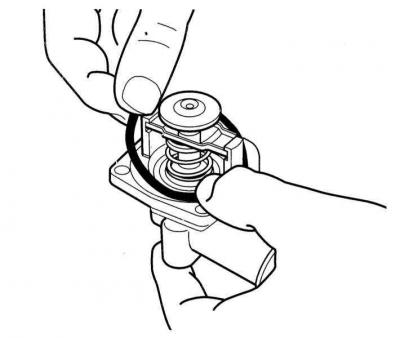
Removing the thermostat sealing ring
Diesel models
1. Remove the battery with the support bracket (see Chapter Engine electrical systems).
2. Set the parking brake, jack up the vehicle and place it on supports. If so equipped, remove the crankcase guard.
3. Drain the cooling system (refer to Chapter Vehicle settings and routine maintenance).
If you are not going to add new fluid to the system, save the drained fluid for future use.
4. Loosen the mounting clamps and disconnect the upper radiator hose from the thermostat cover mounted on the cylinder head.
5. Unscrew the mounting bolts and remove the thermostat cover from the housing.
Thermostat cover mounting bolts
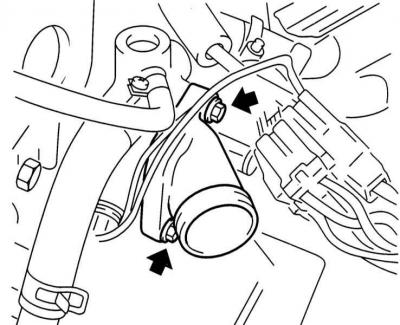
6. Remove the thermostat valve from the housing and remove the sealing ring.
Examination
1. Before you finally decide that the thermostat is out of order, check the coolant level in the system, the condition and tension of the drive belt (see Chapter Vehicle settings and routine maintenance), as well as the proper functioning of the temperature meter.
2. One of the possible reasons for the engine warming up too slowly (according to the meter readings) is the thermostat is stuck in the open position. Replace the thermostat with a new one.
3. If the engine overheats, feel the upper radiator hose with your hand. If the hose is not hot, the thermostat may be stuck in the closed position, blocking the circulation of coolant through the radiator. Replace the thermostat.
Never operate the vehicle with the thermostat removed! This may disrupt the feedback of the on-board processor, which will lead to increased toxicity of exhaust gases and excessive increase in fuel consumption.
4. If the upper hose is hot, this means that the coolant is circulating properly through the radiator, i.e. the thermostat is open. Refer to the materials in Section Troubleshooting.
5. The most accurate results are obtained by checking the thermostat on a workbench.
6. Remove the thermostat from the engine (see Chapter Engines).
7. Tie a piece of wire to the thermostat assembly and lower it into a container filled with water. Lower the thermometer there as well.
Checking the proper functioning of the thermostat
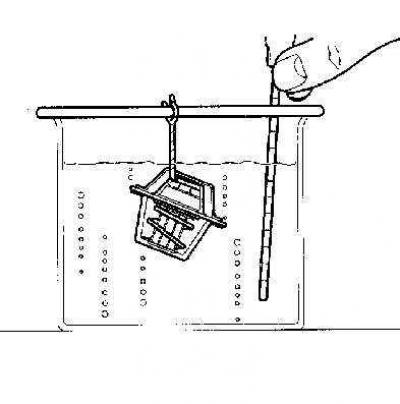
Make sure that the thermometer and thermostat do not come into contact with the walls and bottom of the container!
8. Start heating the water slowly, monitoring the change in the thermometer readings - the thermostat valve must operate in strict accordance with the requirements of the Specifications in Chapter Engine cooling, interior heating and air conditioning systems.
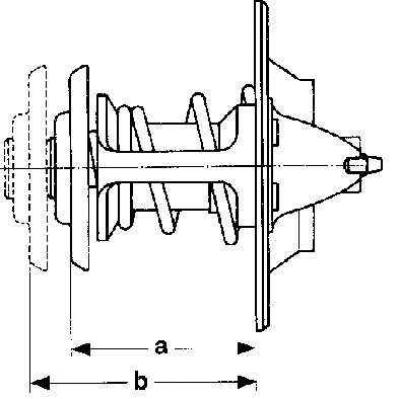
9. Estimate the value of the full opening of the valve - the nominal value is b - a = 8 mm.
Checking the complete opening of the thermostat valve
Installation
1. Installation is carried out in reverse order. Please note the following points:.
- Thoroughly clean the mating surfaces and replace the sealing elements;
- Place the thermostat into the housing, orienting it correctly;
- Tighten the cover mounting bolts to the required torque;
- Restore all hoses and wiring to their original connections (where necessary, reinstall the removed sensors);
- Fill the system with coolant (refer to Chapter Vehicle settings and routine maintenance);
- Start the engine, warm it up to operating temperature and check for leaks.
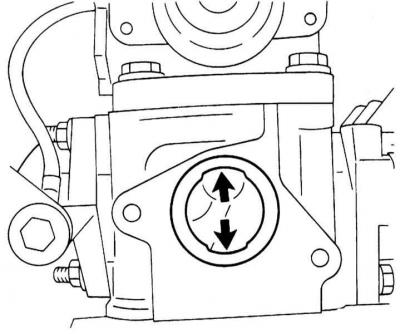
On OHC petrol engines the thermostat should fit into the grooves
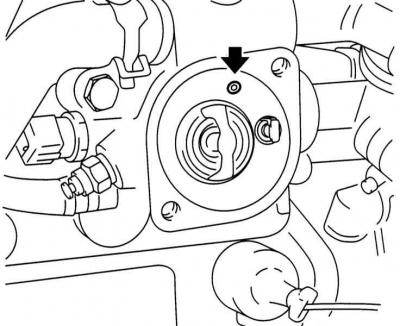
On diesel engines, the thermostat should be facing upwards
Visitor comments