
OpelBook.ru
Cars AvtoVAZ Cars Mitsubishi Cars BMW Cars Mercedes Cars Nissan Cars Toyota Cars Chevrolet
English Русский
Български
Беларускі
Український
Српски
Hrvatski
Română
Polski
Slovenský
Magyar
 |  Sitemap  |  Contacts  |    


Main Astra Corsa Insignia Kadett Omega Vectra Zafira Others Articles
Astra F (1991-1998, petrol) Astra G (1998-2004, petrol) Astra G (1998-2004) Astra H (2004-2009) Astra J (2009-2015, petrol)
  • Main
  • Astra
  • Astra G
  • Power unit
  • Cooling system
  • Removal and installation the cooling system radiator

Removal and installation the cooling system radiator (Opel Astra G)

            0

Contents: Removal ⬇ Examination ⬇ Installation ⬇
Do not proceed with the procedures until the engine has cooled down completely. See also warnings at the beginning of the section Antifreeze - general information.


Removal


Petrol models


1. On models without air conditioning, disconnect the negative battery cable (see Chapter Engine electrical equipment).

2. On models equipped with air conditioning, remove the battery with the support bracket (see Chapter Engine electrical equipment). Also remove the air cleaner assembly with air ducts.

3. On equipped with air conditioning Zafira models unscrew the mounting bolts and remove the front panel cover.
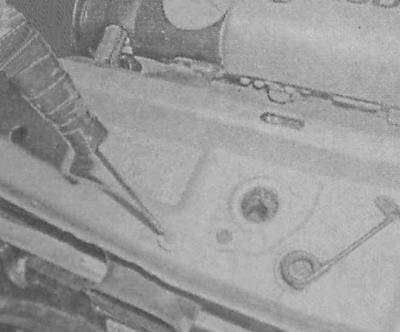
3. On equipped with air conditioning Zafira models unscrew the mounting bolts and remove the front…


4. Separate the intake resonator from the cover and from the intake air duct sleeve.
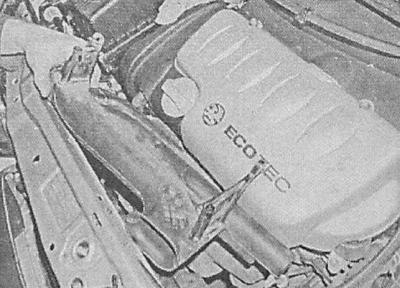
4. Separate the intake resonator from the cover and from the intake air duct sleeve.


5. Set the parking brake. Jack up the vehicle and place it on supports. If so equipped, remove the crankcase guard.


6. Drain the cooling system (see Chapter Routine maintenance).

7. Remove the fan assembly (see Checking the proper functioning, removing and installing the cooling system fan).

8. Loosen the fastening clamp and disconnect the upper hose connected to the radiator on the right.
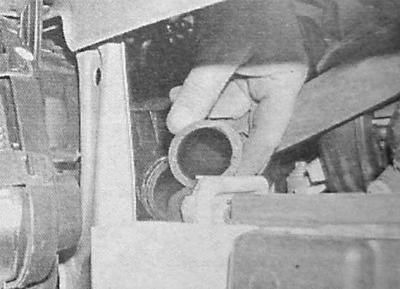
8. Loosen the fastening clamp and disconnect the upper hose connected to the radiator on the right.


9. Disconnect the lower hose (connected to the radiator on the left).

10. Also disconnect the expansion tank hose from the left side of the radiator.
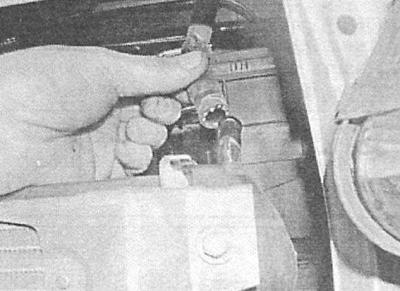
10. Also disconnect the expansion tank hose from the left side of the radiator.


11. On models with AT unscrew the mounting bolts and disconnect the ATF cooling hoses from the left radiator tank. Remove the copper sealing washers - be prepared to collect any spilled liquid (place suitable drain containers under the pipes). Try to remember the order in which all hoses are connected.


12. Remove the front bumper (see Chapter Body).

13. To secure the radiator while removing the lower support brackets, from the engine compartment, insert two welding electrodes or two screwdrivers into the side mounts of the radiator.

14. Unscrew the mounting bolts and separate the brackets for the lower supports of the assembly from the radiator, the brackets are removed together with the rubber cushions.

15. On models equipped with air conditioning, remove the bolts securing the air conditioning condenser to the front of the radiator, then tie the condenser to the front panel - do not disconnect the refrigeration lines!

16. Holding the radiator, remove its fixing elements (screwdrivers or electrodes), then, sliding it down, release the radiator from the supports and remove it from the engine compartment.
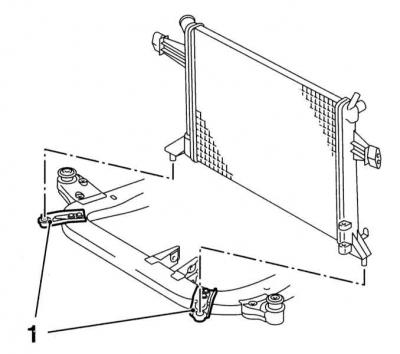
16. Holding the radiator, remove its fixing elements (screwdrivers or electrodes), then, sliding it…


17. If necessary, reinstall the attachments onto the new radiator.

Diesel models


1. Set the parking brake. Jack up the vehicle and place it on supports. If so equipped, remove the crankcase guard.

2. On DOHC engine models, remove the battery with the support bracket (see Chapter Engine electrical equipment), - do not forget to unscrew the bolt securing the wiring harness to the bracket.


3. Remove the front bumper (see Chapter Body).

4. On models with Y20DTH engines, remove the damper block mounted under the bumper. Also remove the intercooler assembly (see Chapter Power and exhaust systems).

5. Remove the engine cover, then on 1.7L models, remove the fan assembly from the rear of the radiator (see Checking the proper functioning, removing and installing the cooling system fan).

6. Remove the air cleaner, air intake duct and air mass meter sensor (see Chapter Power and exhaust systems).

7. On models equipped with air conditioning, disconnect the wiring from the A/C compressor, receiver/dryer, auxiliary fan, and cooling fan control unit. Disconnect the ground bus from the body element and move all wiring to the side.

8. Drain the cooling system (see Chapter Routine maintenance).

9. Disconnect the upper and lower hoses from the radiator. Disconnect the purge hose.

10. To secure the radiator while removing the lower support brackets, from the engine compartment, insert two welding electrodes or two screwdrivers into the side mounts of the radiator.

11. Unscrew the mounting bolts and separate the brackets for the lower supports of the assembly from the radiator, the brackets are removed together with the rubber cushions.

12. On models equipped with air conditioning, remove the bolts securing the air conditioner condenser to the front of the radiator, then tie the condenser to the dash panel - do not disconnect the refrigeration lines! Remove the bolts securing the intercooler support bracket.


13. Holding the radiator, remove its fixing elements (screwdrivers or electrodes), then, sliding it down, release the radiator from the supports and remove it from the engine compartment.

14. If necessary, reinstall the attachments onto the new radiator (cooling system fan and intercooler).

Examination


1. After removal from the vehicle, the radiator can be checked for signs of leaks, damage and violations of the internal permeability of the heat exchanger.

Text was copied from the portal (OpelBook.ru)

2. Insect and vegetation debris can be removed from the space between the heat exchanger plates by blowing with compressed air (don't forget to wear safety glasses!), or cleaning with a soft brush. Try not to bend the thin heat exchanger plates or cut your fingers on them. Before installation, the radiator should be flushed by spraying water into it from a garden hose (see Chapter Routine maintenance).

3. Check the condition of the radiator rubber supports; if necessary, replace any faulty components.

4. Small leaks can be sealed with a suitable sealant (follow the product manufacturer's instructions). Any more complex repairs should be carried out only in a specialized workshop using the necessary equipment.

Installation


Installation is performed in the reverse order of dismantling the components. Please note the following points:

1. Make sure that the rubber cushions of the lower radiator supports are installed correctly.

2. Make sure that all hoses are connected correctly and securely fastened with clamps.

3. Finally, fill the cooling system (see Chapter Routine maintenance) and inspection of its components for signs of developing leaks.


This article is available at russian, bulgarian, belarusian, ukrainian, serbian, croatian, romanian, polish, slovak, hungarian
Checking the article: Pavlovsky Nikolay

Share information:

Previous articles
Opel Astra G: Cooling system
Next articles

Removal, installation and checking of the thermostat operation
Maintenance of the cooling system (emptying, flushing and filling)
Disconnecting and replacing cooling system hoses
Antifreeze — general information
Cooling system specifications
General information about the cooling and heating system
Checking the proper functioning, removing and installing the cooling system fan
Checking the proper functioning, removal and installation of electrical components of the engine cooling system control circuit
Checking the condition of the water pump
Removal and installation the water pump


See similar ones from other Opel car manuals:
▶ Removal and installation the cooling system radiator Opel Corsa B (1993-2000)
▶ Removal and installation the cooling system radiator Opel Vectra C (2002-2008)
▶ Main electric fan (installed behind the cooling system… Opel Zafira A (1999-2005, petrol)
▶ Draining the cooling system Opel Insignia A (2008-2017)
▶ Carburetor engine cooling system Opel Kadett E (1984-1995)
Link to this page in different formats

Visitor comments


No comments yet


How much will 14 + 27 =


Astra J (2009-2015, petrol) 
  • General information
  • Vehicle device
  • User manual
  • Faults en route
  • Maintenance
  • Power unit
  • Engine repair
  • Cooling and lubrication system
  • Engine power system
  • Exhaust system
  • Transmission
  • Clutch
  • Car gearbox
  • Drive shafts
  • Chassis
  • Front suspension
  • Rear suspension
  • Steering
  • Brake system
  • Wheels and tires
  • Body
  • Exterior
  • Interior
  • Doors and windows
  • Body Care
  • Heating and air conditioning
  • Security systems
  • Electrical equipment
  • Equipment and devices
  • Lighting and signaling
  • Power devices
  • Electrical circuits
Astra H (2004-2009) 
  • General information
  • Introduction to the guide
  • Troubleshooting
  • User manual
  • Maintenance
  • Power unit
  • Engine repair
  • Cooling and heating
  • Power and exhaust system
  • Ignition system
  • Launch and charge system
  • Transmission
  • Mechanical gearbox
  • Automatic gearbox
  • Drive shafts
  • Chassis
  • Brake system
  • Car suspension
  • Steering
  • Body
  • Interior
  • Exterior
  • Electrical equipment
  • Equipment and devices
  • Electrical circuits
Astra G (1998-2004) 
  • General information
  • Introduction to manual
  • User manual
  • Maintenance
  • Power unit
  • SOHC gasoline engines
  • DOHC gasoline engines
  • Diesel engines 1.7 and 2.0
  • Engine repair
  • Cooling system
  • Supply system
  • Injection system (gasoline)
  • Injection system (diesel)
  • Exhaust system
  • Charge and launch system
  • Ignition system (gasoline)
  • Preheat system (diesel)
  • Transmission
  • Manual gearbox
  • Automatic gearbox
  • Clutch
  • Drive shafts
  • Chassis
  • Brake system
  • Wheel suspension
  • Steering
  • Body
  • Exterior
  • Interior
  • Doors and windows
  • Ventilation and heating
  • Electrical equipment
  • Equipment and devices
  • Electrical circuits
Astra G (1998-2004, petrol) 
  • General information
  • User manual
  • Car care
  • Maintenance
  • Power unit
  • Single shaft engines
  • Twin shaft engines
  • Engine repair
  • Cooling and heating
  • Fuel and exhaust systems
  • Starting and charging system
  • Ignition system
  • Transmission
  • Clutch
  • Mechanical gearbox
  • Automatic gearbox
  • Drive shafts
  • Chassis
  • Brake system
  • Car suspension
  • Steering
  • Body
  • Interior
  • Exterior
  • Electrical equipment
  • Equipment and devices
  • Wiring diagrams Opel Astra
  • Wiring diagrams Opel Zafira
Astra F (1991-1998, petrol) 
  • General information
  • Maintenance
  • Power unit
  • Engine in car
  • Engine removed
  • Cooling system
  • Heating and ventilation
  • Fuel supply (carburetor)
  • Fuel supply (injector)
  • Emission control
  • Ignition system
  • Transmission
  • Clutch
  • Mechanical gearbox
  • Automatic gearbox
  • Drive shafts
  • Chassis
  • Brake system
  • Car suspension
  • Steering
  • Body
  • Exterior
  • Interior
  • Electrical equipment
  • Equipment and devices
  • Electrical circuits
OpelBook.ru © 2017–2026 · Mobile version · · Sitemap: EN BG BY UA RS HR RO PL SK HU · Feedback · Site search
Astra F, petrol · Astra G, petrol · Astra G · Astra H · Astra J, petrol · Corsa B · Corsa C, petrol · Corsa C · Insignia A · Kadett D · Kadett E · Omega A · Omega B · Omega B2 · Vectra A, petrol · Vectra A · Vectra B, petrol · Vectra B · Vectra C · Zafira A, petrol · Frontera A, petrol · Frontera B · Ascona C · Vivaro A ·
We want your visit to be comfortable 🤝! We use cookies 🍪 to make that happen.