


- The sealing surface of the screwed cap is pressed tightly against the edge of the expansion tank opening. The pressure cannot decrease
- If the pressure in the cooling system exceeds 1.2-1.50 bar during heating, the high-pressure valve opens. A little steam can escape through it in order to balance the pressure.
- When cooling, the liquid is compressed again. As a result, a certain underpressure occurs in the cooling system. To equalize this underpressure, there is a second valve in the cover, through which atmospheric air can enter the system.
Checking the high pressure valve
Those who do not want to waste time on checking, in a suspicious case simply change the relatively inexpensive cap. In the workshop, the locking cap is checked with a pressure gauge:
- Increase the pressure using a pump.
- Between 1.2-1.50 bar the valve should open.
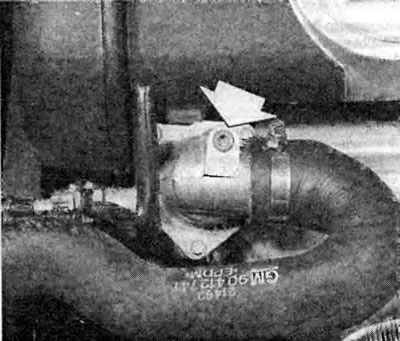
In 16V engines, to release air from the cooling system, unscrew the Allen bolt (arrow) on the connecting pipe.
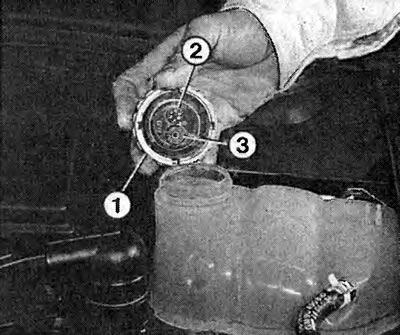
The high-pressure valve (2) and the low-pressure valve (3) are inserted into the sealing cap (1) of the cooling system. Information on the temporary check of the valves can be found in the text on this page.
Checking the low pressure valve with improvised means
The correct operation of the pressure relief valve can only be checked indirectly:
- After removing the shut-off cap, firmly clamp the thick water hose.
- Put the lid on and screw it on.
- Release the hose.
- If the squeezed hose becomes round again, the valve is working properly.
- If the coolant hoses are flat in the morning before the engine is first started, the low pressure valve is probably faulty.
Visitor comments