


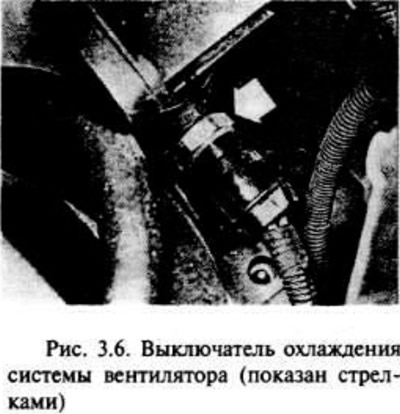
If the fan does not work, start the engine and bring it to normal operating temperature, then let it idle. If the fan does not turn on within a few minutes, turn off the ignition and disconnect the wiring plug from the fan switch. Connect the two contacts in the plug socket with a piece of wire and turn on the ignition. If the fan now works, the switch is probably faulty and should be replaced.
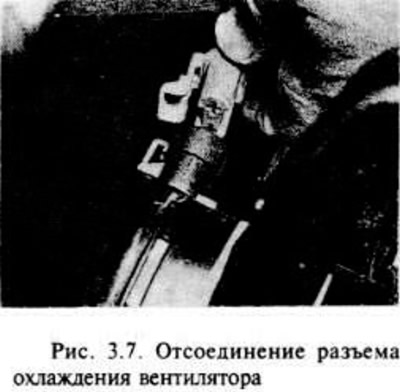
If the fan still does not turn on, check the voltage in the battery (brown and white switch wire); if there is no voltage, then there is a break in the circuit somewhere (possibly due to damage in the fan motor or a blown fuse). If there is no damage to the power supply, check for an open circuit between the brown wire of the switch and a short to body ground.
If the switch and wiring are in good condition, the damage should be looked for in the electric motor itself. It can be checked by disconnecting the flexible wiring from it and connecting it directly to a 12 V power source. If it still does not work, it must be replaced.
Disconnect the negative battery terminal.
Disconnect the wiring from the fan.
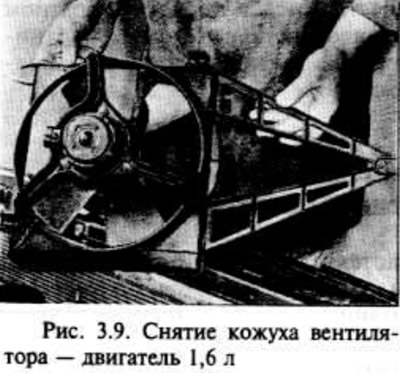
Remove the two fan shroud bolts, then tilt the assembly back slightly toward the engine and pull it up and away from the radiator.
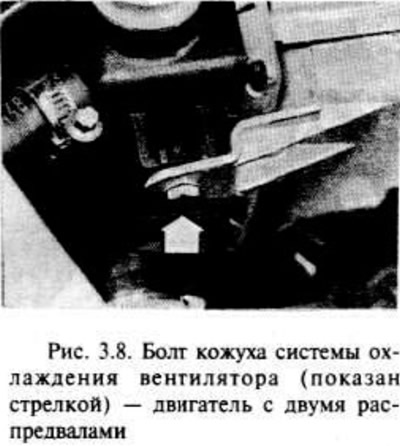
To remove the fan motor from the casing, unscrew the three nuts.
If the electric motor fails, it must be replaced.
Installation is carried out in the reverse order of removal, while it is necessary that the lower left end of the fan casing is in the clamp on the radiator.
After installation is complete, start the engine, bring it to normal operating temperature and check the operation of the fan.
Article posted on an online resource www.OpelBook.ru
Visitor comments