


If the float is in the highest position when the tank is full, the resistance in the sensor in the fuel tank is bridged, the bimetal in the indicator is completely heated and makes the arrow deflect to the end. As the contents in the fuel tank decrease, the float goes down, the resistance that increases due to this restrains the current flow to the bimetal, the arrow deflects less.
Troubleshooting
If the indication is incorrect due to a bent float arm, remove the fuel level sensor.
Bending the float rocker up reduces the indicator readings. Bending it down gives higher indicator readings. Bend the rocker carefully!
Checking the fuel level sensor: Disconnect the wire connector on the locking cap.
Connect the auxiliary wire to the blue/black wire connector and apply directly to ground.
Turn on the ignition briefly - if the arrow deviates towards "Full", the sensor is faulty.
[Source is on this resource: OpelBook.ru]
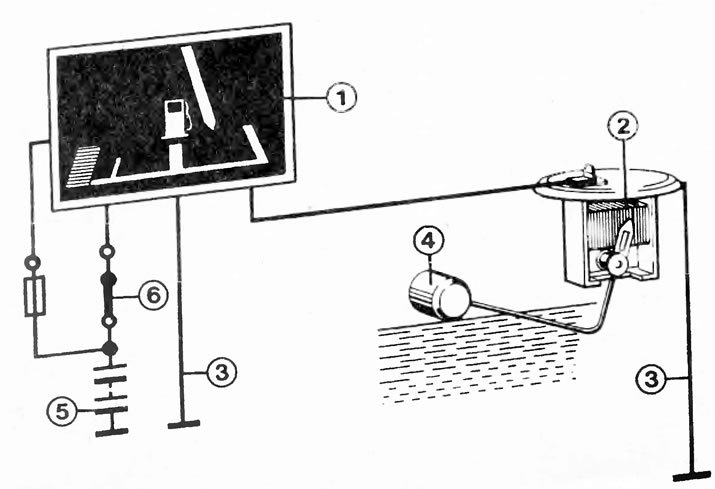
The fuel quantity indicator consists of:
1 - instrument scale with a bimetallic element located behind it;
2 - sensors with resistance;
3 - connections to ground;
4 - float;
5 - battery;
6 - ignition/start switch.
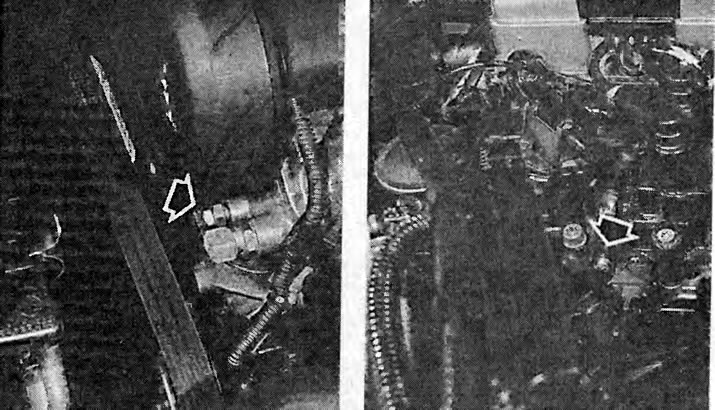
To check the temperature sensor functionality, disconnect the wire on the sensor and connect it to ground. Turn on the ignition briefly: the indicator needle should move along the scale. The photo on the left shows the temperature sensor in the model with a 1.6 l 16V engine. The photo on the right shows the temperature sensor in models with 1.8 and 2.0 l 16V engines.
If the arrow does not move, then either there is no conductivity in the blue/black wire to the instrument panel, or from the locking cap to the fuel level sensor, a defect in the printed circuit board or in the indicator device.
A faulty indicator device cannot be dismantled. In this case, the entire device body must be replaced.
Visitor comments