
OpelBook.ru
Cars AvtoVAZ Cars Mitsubishi Cars BMW Cars Mercedes Cars Nissan Cars Toyota Cars Chevrolet
English Русский
Български
Беларускі
Український
Српски
Hrvatski
Română
Polski
Slovenský
Magyar
 |  Sitemap  |  Contacts  |    


Main Astra Corsa Insignia Kadett Omega Vectra Zafira Others Articles
Vectra A (1988-1995, petrol) Vectra A (1988-1995) Vectra B (1995-2002, petrol) Vectra B (1995-2002) Vectra C (2002-2008)
  • Main
  • Vectra
  • Vectra B
  • Body
  • Exterior
  • Checking the anti-corrosion coating

Checking the anti-corrosion coating (Opel Vectra B)

            0

Contents: Maintenance work ⬇ Car underbody wash ⬇

Maintenance work


The protective layer on the underside of the car should be carefully checked and corrected where necessary. You can do this yourself if you have a reliable means for lifting the Vectra (lifting platform, ramp). It is best to buy underbody anti-corrosion coating from your Opel dealer. Not all underbody anti-corrosion coatings available in the trade are suitable for use on Opel models. For example, bitumen-based materials may have problems with adhesion.

Wash the underside of the vehicle thoroughly.

Look at the entire bottom with a bright lamp and find any defective areas.

Clean damaged areas of the anti-corrosion coating of the bottom with a spatula, scraper and wire brush until the metal is bare.

Sand down to bare metal as thoroughly as possible, removing any rust deposits.

Apply zinc dust paint to the cleaned surface as a primer.

Flat or larger areas are best treated with a spreadable underbody protector.

For work in hard-to-reach gaps and corners, it is better to use a sprayer with an anti-corrosion agent.

The best anti-corrosion coating is wax: it can be used as an additional preservation of the factory anti-corrosion coating of the bottom made of polyvinyl chloride, as well as for treating repaired areas.

Tip: When spraying anti-corrosion coating, cover the brakes with a sheet of paper or plastic film to avoid the grease cloud getting on them.


Tip: When spraying anti-corrosion coating, cover the brakes with a sheet of paper or plastic film to avoid the grease cloud getting on them.


Car underbody wash


An effective and inexpensive way to care for the underbody of a car, especially in winter, is to regularly wash the underbody with a strong stream of water. Salt in melt water and road dirt should not settle for a long time on the edges and corners of the underbody, as they bind moisture. The already hard-to-reach places never dry out completely, which ultimately greatly contributes to the appearance of rust. Thanks to the front fender liners in the wheel arches, the front fenders are well protected. A crust of dirt can form in the following places:
  • In the metal fold along the edge of the rear wheel arch cutouts.
  • In the rear wheel arches.
  • In the area where splashes from the rear wheels hit, to the right and left of the trunk or body.
  • Under the sides of the rear bumpers.

To wash the underside of your car, you need at least a hose sprayer. There are also curved sprayers (for example, the ARA company), from which you can spray the bottom of a parked car without getting too wet yourself. The best is some kind of steam jet unit, such as those available at petrol stations and car washes. Find out if there is such a self-service device near you.
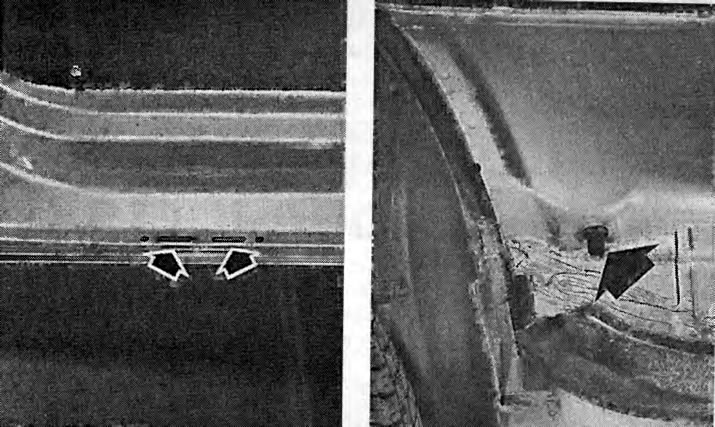
Left: there are drainage holes at the bottom edges of the doors through which any penetrating water…

Left: there are drainage holes at the bottom edges of the doors through which any penetrating water can drain.

Right: the photo shows where the left rear hose is located to drain water from the retractable roof.


Tip: Salt residue and moisture become especially aggressive as temperatures rise. Therefore, a car parked outside is less susceptible to corrosion than one parked in a heated garage.


This article is available at russian, bulgarian, belarusian, ukrainian, serbian, croatian, romanian, polish, slovak, hungarian
Checking the article: Shapovalov Yaroslav

Share information:

Previous articles
Opel Vectra B: Exterior
Next articles

Preservation of the car body
Glasses
Sliding roof
Rear lid/trunk lid
External view mirrors
Dismantling doors
Cleaning the water drainage holes
Checking the varnish


See similar ones from other Opel car manuals:
▶ Monitoring the condition of the anti-corrosion coating of… Opel Astra H (2004-2009)
▶ Monitoring the condition of the anti-corrosion coating of… Opel Corsa B (1993-2000)
▶ Checking the compression in the cylinders Opel Insignia A (2008-2017)
▶ Checking the cylinder head Opel Kadett E (1984-1995)
▶ Checking engine oil level — every 400 km Opel Omega A (1986-1993)
Link to this page in different formats

Visitor comments


No comments yet


How much will 23 + 47 =


Vectra C (2002-2008) 
  • General information
  • User manual
  • Vehicle device
  • Maintenance
  • Troubleshooting
  • Power unit
  • Engine repair
  • Cooling system
  • Power and control system
  • Engine electrics
  • Transmission
  • Clutch
  • Car gearbox
  • Drive shafts
  • Chassis
  • Car suspension
  • Steering
  • Brake system
  • Body
  • Exterior
  • Interior
  • Doors, locks and windows
  • Heating and ventilation
  • Electrical equipment
  • Equipment and devices
  • Headlights and lighting
  • Electrical circuits
Vectra B (1995-2002) 
  • General information
  • User manual
  • Weekly checks
  • Maintenance (gasoline)
  • Maintenance (diesel)
  • Troubleshooting
  • Power unit
  • SOHC gasoline engine
  • DOHC petrol engine
  • Diesel engine 1.7 liter
  • Diesel engine 2.0 liters
  • Engine repair
  • Cooling system
  • Fuel system (gasoline)
  • Fuel system (diesel)
  • Charging system
  • Launch system
  • Ignition and preheat
  • Transmission
  • Clutch
  • Mechanical gearbox
  • Automatic gearbox
  • Drive shafts
  • Chassis
  • Brake system
  • Wheel suspension
  • Steering
  • Body
  • Exterior
  • Interior
  • Doors and windows
  • Heating and ventilation
  • Electrical equipment
  • Equipment and devices
  • Electrical circuits
Vectra B (1995-2002, petrol) 
  • General information
  • Maintenance
  • Help with malfunctions
  • Power unit
  • Engine repair
  • Exhaust system
  • Cooling system
  • Fuel system
  • Multec injection system
  • Four point injection
  • Transmission
  • Clutch
  • Gearbox and drive
  • Chassis
  • Wheel suspension
  • Steering
  • Brake system
  • Wheels and tires
  • Body
  • Exterior
  • Interior
  • Electrical equipment
  • Fuses and electronics
  • Power devices
  • Ignition system
  • Lighting and signaling
  • Equipment and devices
  • Heating and ventilation
  • Electrical circuits
Vectra A (1988-1995) 
  • Power unit
  • Engine repair
  • Ignition system
  • Lubrication system
  • Cooling system
  • Injection system
  • Fuel system (carburetor)
  • Fuel system (diesel)
  • Exhaust system
  • Transmission
  • Clutch
  • Car gearbox
  • Chassis
  • Front suspension
  • Rear suspension
  • Steering
  • Brake system
  • Wheels and tires
  • Body
  • Exterior
  • Interior
  • Electrical equipment
  • Electrical circuits
Vectra A (1988-1995, petrol) 
  • General information
  • User manual
  • Maintenance
  • Power unit
  • SOHC engine
  • DOHC engine
  • Cooling and ventilation
  • Fuel system (carburetor)
  • Fuel system (injector)
  • Exhaust converter
  • Transmission
  • Clutch
  • Mechanical gearbox
  • Automatic gearbox
  • Drive shafts
  • Chassis
  • Brake system
  • Car suspension
  • Steering
  • Body
  • Body elements
  • Electrical equipment
  • Power devices
  • Equipment and devices
  • Electrical circuits
OpelBook.ru © 2017–2026 · Mobile version · · Sitemap: EN BG BY UA RS HR RO PL SK HU · Feedback · Site search
Astra F, petrol · Astra G, petrol · Astra G · Astra H · Astra J, petrol · Corsa B · Corsa C, petrol · Corsa C · Insignia A · Kadett D · Kadett E · Omega A · Omega B · Omega B2 · Vectra A, petrol · Vectra A · Vectra B, petrol · Vectra B · Vectra C · Zafira A, petrol · Frontera A, petrol · Frontera B · Ascona C · Vivaro A ·
We want your visit to be comfortable 🤝! We use cookies 🍪 to make that happen.