


Contents: Reception of radio stations in the…⬇ Reception of radio stations in the…⬇ Multipath noise ⬇ Static and unstable oscillation ⬇ Periodic decrease or attenuation of…⬇ Local overload ⬇ Noise from changing radio station ⬇
Use your car radio in accordance with the instructions supplied with your radio.
The car radio data is displayed on the display.
Reception of radio stations in the AM range
AM signals, due to their low frequency, can bend around objects and the earth's surface. In addition, signals can be reflected from the ionosphere and returned back to the ground. Because of these characteristics, AM signals from two radio stations operating on the same frequency can reach a radio receiver simultaneously.
Reception of radio stations in the FM range
The reception distance of FM radio stations is usually limited to 40-50 km in mono mode, which is slightly longer than in stereo mode. External factors can sometimes cause unstable FM reception even if the distance from the radio station is within 40 km.
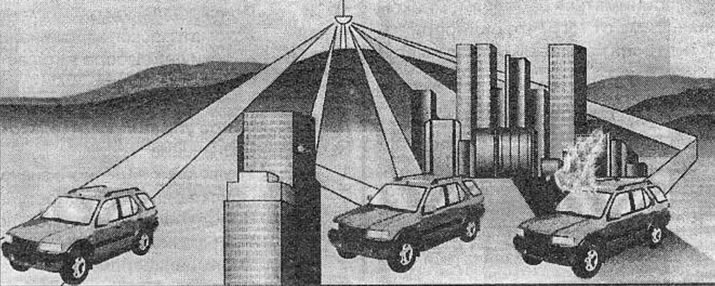
The strength of the FM signal is directly related to the distance between the transmitter and receiver. FM signals travel in straight lines, just like light. For example, they are reflected from objects in their path.
Atmospheric conditions can also affect FM reception. High humidity will result in poor reception. However, on cloudy days, radio reception may be better than on clear days.
Multipath noise
Due to the reflective characteristics of FM signals, direct and reflected signals reach the receiver at the same time. Signals may interfere with each other, resulting in momentary erratic oscillations or loss of sound.
Original source is on the website OpelBook
Static and unstable oscillation
When the transmitter signal is reflected from buildings, mountains or large hills, as well as the position of the antenna on the vehicle (usually with increasing distance from the transmitter) static or unstable sound vibrations may be heard. This can be reduced by adjusting the radio settings.
Periodic decrease or attenuation of the signal
As the vehicle moves away from the transmitter, its signals will periodically decrease and/or fade.
Local overload
When driving near the antenna of a transmitting radio station, a stronger signal can "drown out" a weaker one and be received by the radio receiver regardless of the fact that the radio receiver is tuned to a weak signal on a different frequency.
Noise from changing radio station
If a vehicle reaches the range of two strong radio stations on similar frequencies, the radio may switch to the second station and a switching noise will be heard for a short time.
Visitor comments