
OpelBook.ru
Cars AvtoVAZ Cars Mitsubishi Cars BMW Cars Mercedes Cars Nissan Cars Toyota Cars Chevrolet
English Русский
Български
Беларускі
Український
Српски
Hrvatski
Română
Polski
Slovenský
Magyar
 |  Sitemap  |  Contacts  |    


Main Astra Corsa Insignia Kadett Omega Vectra Zafira Others Articles
Frontera A (1991-1998, petrol) Frontera B (1998-2004) Ascona C (1981-1988) Vivaro A (2001-2014)
  • Main
  • Opel
  • Ascona C
  • Body
  • Doors and windows
  • Hatch Cover (Sliding/Tilting Type) — Replacement of Engines on-site

Hatch Cover (Sliding/Tilting Type) — Replacement of Engines on-site (Opel Ascona C)

            0

Contents: Glass panel ⬇ Control gasket ⬇ Gutter ⬇ Sun visor ⬇ Crankshaft drive ⬇ Wind reflector ⬇
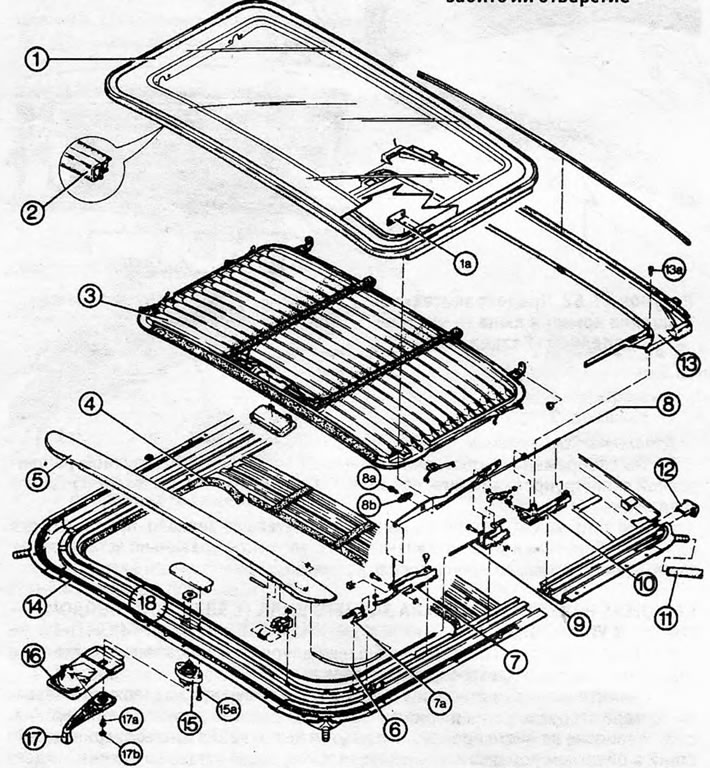
Figure 11.70. Detailed view of sliding/tilting hatch cover components 1. Glass panel; 1a. Clamp; 2.…

Figure 11.70. Detailed view of sliding/tilting hatch cover components 1. Glass panel; 1a. Clamp; 2. Rubber seal; 3. Sun visor; 4. Gasket; 5. Wind reflector; 6. Lift; 7. Front guide; 7a. Sliding block; 8. Sliding block guide; 8a. Screw; 8b. Locking plate; 9. Cable; 10. Gutter guide; 11. Drain hose; 12. Guide plug; 13. Drainage; 13a. Gutter screw; 14. Gasket; 15. Crankshaft drive; 15a. Screw; 16. Back plate of the handle; 17. Crank handle; 17a. Screw; 17b. Screw cover; 18. Frame;


1. The processes described in this Section do not require complete removal of the hatch structure from the vehicle.

Glass panel


2. Close the panel and slide the visor back completely. Remove the clips from the side guides.

3. Unscrew the panel from the side guides on both sides and remove it (see Figure 11.71).
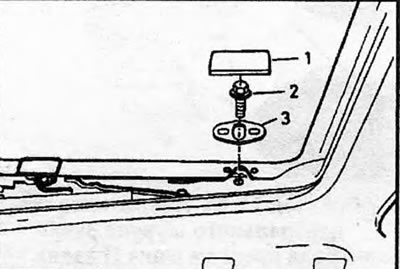
Figure 11.71. Sliding block guide design - cover (1), guide bolt (2) and locking plate (3) shown

Figure 11.71. Sliding block guide design - cover (1), guide bolt (2) and locking plate (3) shown


4. Before installing a new panel, measure the distance between the flanges. Bend flanges as necessary to achieve the required measurement (see Figure 11.72).
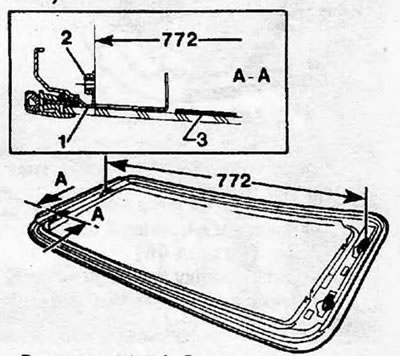
Figure 11.72. Distance between flanges when installing a panel (measurements are given in mm) 1.…

Figure 11.72. Distance between flanges when installing a panel (measurements are given in mm) 1. Flange; 2. Nut leaf; 3. Protective


5. Remove the protective sheet from the new panel and install it in place. Lift the panel to the "tilted" position and place it on its guides without securing it.

6. Before tightening the side rail screws, close the panel and adjust its position as shown in Figure 11.73, and then tighten the screws.
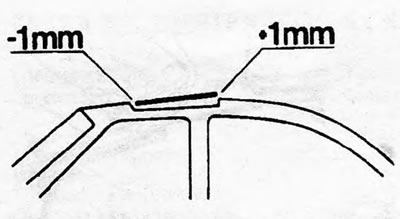
Figure 11.73. Glass panel installation position

Figure 11.73. Glass panel installation position


Control gasket


7. The "control gasket" is the rubber strip that surrounds the glass panel.


8. Remove the glass panel as described above.

9. Disconnect and remove the rubber sealing strip and clean off all old putty, taking care not to damage the glass.

10. Apply putty (GM 90140944, or similar) around the edge of the glass panel (see Figure 11.74).
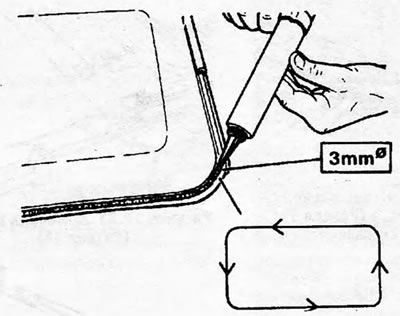
Figure 11.74 Apply putty to the glass panel as shown

Figure 11.74 Apply putty to the glass panel as shown


11. Install the new rubber strip, starting from the center of the left edge and working around the perimeter. Install the panel immediately and make sure the rubber strip is properly seated in the closed position. If the specified composition has been used, it will not set and harden for at least an hour, and during this time the position of the sealing strip can be slightly changed to ensure the most suitable placement. Make sure the panel is adjusted to the correct height (see point 6).

Gutter


12. Remove the glass panel as described above.

13. Remove the two Torx screws that secure the gutter. Remove the gutter from the slot in the roof (see Figure 11.75).
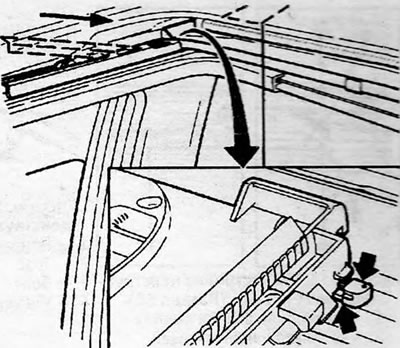
Figure 11.75. Removing the gutter - insert shows location of mounting tab

Figure 11.75. Removing the gutter - insert shows location of mounting tab


14. Install the gutter into the slot at a certain angle, inserting it so that the retaining protrusions enter the gutter guides.

15. Install and tighten the Torx screws.

16. Install and adjust the glass panel.

Sun visor


17. Remove the gutter as described above.

Text was copied from the portal: OpelBook.ru

18. Carefully release the four visor springs from the guides in the roof, using a plastic tool to avoid damage. Remove the visor from its guides (see Figure 11.76).
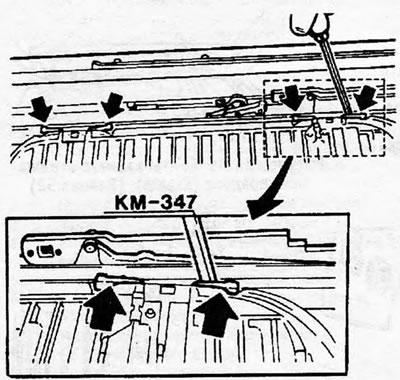
Figure 11.76. Position of sun visor retaining springs - indicated by arrows

Figure 11.76. Position of sun visor retaining springs - indicated by arrows


19. Reinstall by performing the above steps in reverse order. Make sure the ends of the springs fit into the guides.

Crankshaft drive


20. Unscrew the central fastening screw from the handle - the screw head is hidden by a plastic cap. Remove the handle and detach its back plate - be careful not to damage the headliner.

21. Loosen the two mounting screws and remove the crankshaft drive mechanism.

22. When installing a new crankshaft drive mechanism, adjust it as follows.

23. If the hatch cover is open, temporarily install the actuator and close the cover, then remove the actuator again.


24. Turn the drive gear by hand - not the control handle - until the locking pin appears from the housing (see Figure 11.77).
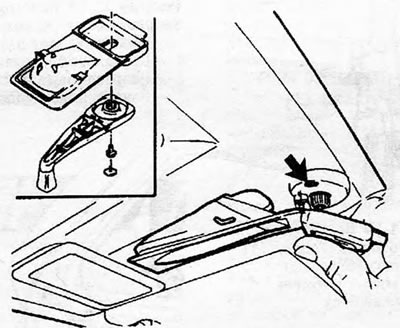
Figure 11.77. Construction of the crank drive and handle (the arrow indicates the position of the…

Figure 11.77. Construction of the crank drive and handle (the arrow indicates the position of the locking pin)


25. Install and secure the crankshaft drive with the locking pin facing forward. Install the back plate and handle.

Wind reflector


26. Remove the glass panel as described above.

27. Using the handle, slide the side blocks back until the wind deflector can be accessed and removed.

28. Transfer the lifters and bearing blocks to the new reflector; secure them with spring clips (see Figure 11.78).
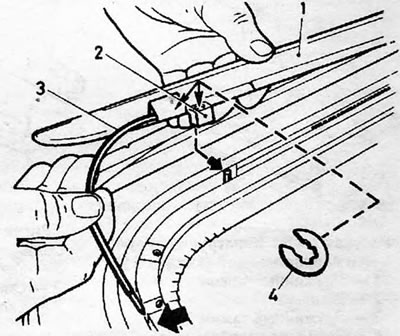
Figure 11.78. Wind deflector mounting design.; 1. Wind reflector; 2. Fastening; 3. Lift spring; 4.…

Figure 11.78. Wind deflector mounting design.; 1. Wind reflector; 2. Fastening; 3. Lift spring; 4. Retaining clamp


29. Install the new wind deflector, return the side units back to the closed position and replace the glass panel.


This article is available at russian, bulgarian, belarusian, ukrainian, serbian, croatian, romanian, polish, slovak, hungarian
Checking the article: Kornev Georgy

Share information:

Previous articles
Opel Ascona C: Doors and windows
Next articles

Sunroof (Sliding/Tilting Type) — Operation and Maintenance
Sunroof (Sliding Type) — Operation, Removal and Installation
Roof hatch (removable type) — operation description
Fixed side glass — removal and installation
Opening side window — removal and installation
Rear window or rear door glass — removal and installation
Sunroof (sliding/tilting type) — removal and installation (entire structure)
Sunroof (sliding/tilting type) — replacement of parts (with the structure removed from the vehicle)


See similar ones from other Opel car manuals:
▶ Removal and installation the fuel tank filler pipe hatch… Opel Astra J (2009-2015, petrol)
▶ Controls for the lifting and sliding hatch drive Opel Corsa C (2000-2006)
▶ Cylinder head cover for 1.4 and 1.6 DOHC engines — removal,… Opel Zafira A (1999-2005, petrol)
▶ Luggage compartment cover Opel Insignia A (2008-2017)
▶ Technical characteristics of the valve timing mechanism of… Opel Kadett E (1984-1995)
Link to this page in different formats

Visitor comments


No comments yet


How much will 50 + 16 =


Vivaro A (2001-2014) 
  • General information
  • User manual
  • Power unit
  • Petrol engine F4R
  • Diesel engine F9Q
  • Diesel engine G9U
  • Transmission
  • Clutch and drive shafts
  • Manual gearbox
  • Chassis
  • Front suspension
  • Rear suspension
  • Brake system
  • Body
  • Exterior
  • Interior
  • Electrical equipment
  • Heating and ventilation
  • Air conditioner
  • Equipment and devices
  • Electrical diagrams
Ascona C (1981-1988) 
  • General information
  • Maintenance
  • Power unit
  • Gasoline engines
  • Diesel engines
  • Cooling system
  • Fuel and exhaust system
  • Contact ignition system
  • Contactless ignition system
  • Transmission
  • Clutch
  • Mechanical gearbox
  • Automatic gearbox
  • Drive shafts
  • Chassis
  • Steering
  • Brake system
  • Car suspension
  • Body
  • Exterior
  • Interior
  • Doors and windows
  • Electrical equipment
  • Equipment and devices
  • Power devices
  • Electrical circuits
Frontera B (1998-2004) 
  • General information
  • User manual
  • Maintenance
  • Power unit
  • Petrol engines 2.2 l
  • Petrol engines 3.2 l
  • Diesel engines 2.2 l
  • Cooling system
  • Fuel system (petrol)
  • Fuel system (diesel)
  • Ignition system
  • Transmission
  • Clutch
  • Manual gearbox MUA5C
  • Automatic gearbox 4L30E
  • Chassis
  • Suspension and axles
  • Steering
  • Brake system
  • Body
  • Exterior
  • Interior
  • Doors, locks and windows
  • Heating and air conditioning
  • Electrical equipment
  • Power devices
  • Equipment and devices
  • Lighting and signaling
  • Electrical diagrams
Frontera A (1991-1998, petrol) 
  • General information
  • Introduction to guide
  • User manual
  • Maintenance
  • Power unit
  • Engine repair
  • Lubrication system
  • Cooling system
  • Power and exhaust system
  • Engine electrics
  • Transmission
  • Clutch
  • Mechanical gearbox
  • Cardan shafts
  • Chassis
  • Brake system
  • Front suspension
  • Rear suspension
  • Steering
  • Body
  • Repair and care
  • Electrical equipment
  • Equipment and devices
  • Electrical circuits
OpelBook.ru © 2017–2026 · Mobile version · · Sitemap: EN BG BY UA RS HR RO PL SK HU · Feedback · Site search
Astra F, petrol · Astra G, petrol · Astra G · Astra H · Astra J, petrol · Corsa B · Corsa C, petrol · Corsa C · Insignia A · Kadett D · Kadett E · Omega A · Omega B · Omega B2 · Vectra A, petrol · Vectra A · Vectra B, petrol · Vectra B · Vectra C · Zafira A, petrol · Frontera A, petrol · Frontera B · Ascona C · Vivaro A ·
We want your visit to be comfortable 🤝! We use cookies 🍪 to make that happen.