


Contents: Removal ⬇ Installation ⬇
Removal
1. Block the rear wheels, apply the handbrake and place the drive mode selector lever in position N. Jack up the front of the car and secure it on axle stands. Loosen the mounting screws and remove the lower cover from under the engine. Disconnect the negative cable from the battery.
Caution: On models with Opel Anti-Theft Warning System (ATWS), the negative battery cable must be removed within 15 seconds of turning off the ignition to prevent the hazard warning lights from activating.
2. Disconnect the front end of the propeller shaft from the transmission flange (see Section 8) and remove the vibration damper (where is available). Move the propeller shaft to the right of the transmission unit and tie it to the bottom of the car.
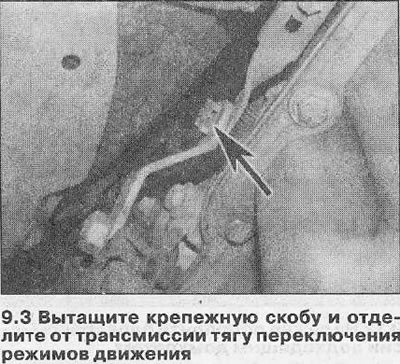
3. Remove the retaining clips, separate the shift rod from the transmission unit and lever, and remove it (see illustration). Be careful not to lose the lever pivot bushings.
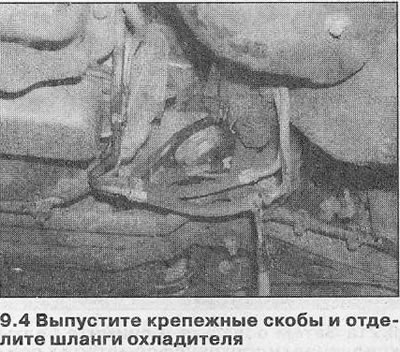
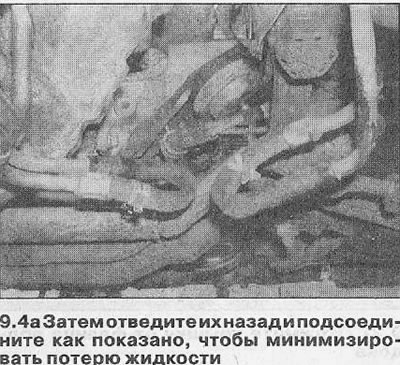
4. Locate the hoses connected to the transmission fluid cooler tubes coming out of the block. Clean off any dirt, then loosen the clamps and disconnect both hoses. Minimize fluid loss by bending the hoses back and connecting them securely to the adjacent tubes (see illustrations).
5. Disconnect the wiring harness connector from the transmission output shaft speed sensor (see illustration 8.50), which is located at the rear of the block. Separate the sensor wiring from the transmission.
Cars with 4-cylinder engine
6. On single overhead camshaft (SOHC) engines, disconnect the wiring connector from the ignition control module (see the relevant section). Loosen and remove the module bracket mounting bolts, marking the location of the engine lifting eye, then release the wiring harness. Remove the module and bracket from the cylinder head. Release the high-voltage wiring from the mounting brackets and move the assembly away from the transmission unit.
7. On all models, disconnect the oxygen sensor wiring connector from the transmission module and unplug it.
8. Loosen and remove the front exhaust section bracket bolt, then unscrew the bolts securing the front section to the intermediate section and separate them from each other.
9. On one-piece oil pan models, loosen and remove the bolts securing the brackets to the transmission case and the cylinder block walls. Remove both brackets from the engine, then remove the lower torque converter cover from the base of the transmission case.
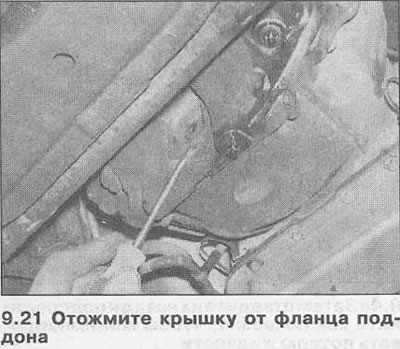
10. On models with a two-piece oil pan, remove the cover from the oil pan flange to gain access to the drive plate bolts.
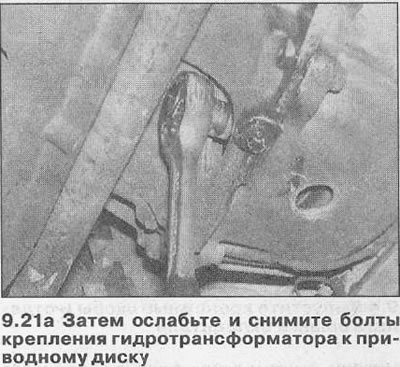
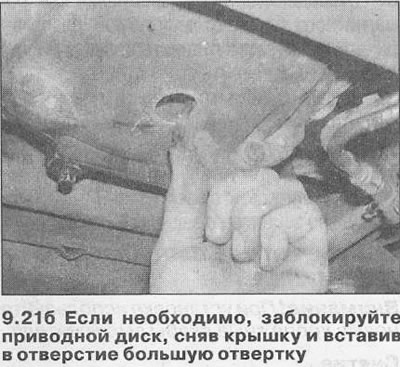
11. Loosen and remove the visible torque converter to drive plate mounting bolts, then use a socket and extension rod to rotate the crankshaft pulley and remove the remaining bolts (only six bolts). To lock the disc, remove the cover from the base of the torque converter housing and insert a large screwdriver into the hole.
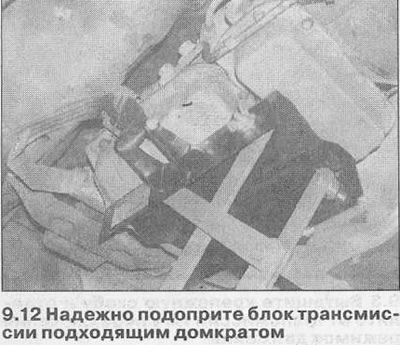
12. Support the transmission with a jack, placing a piece of wood between them, and lift the jack to transfer the weight of the transmission onto it (see illustration).
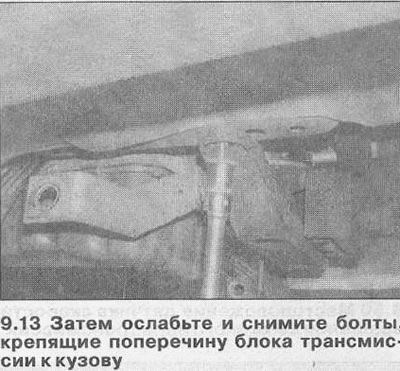
13. Loosen and remove the bolts securing the transmission unit rear suspension crossmember to the vehicle body (see illustration).
14. Lower the transmission block slightly and disconnect the breather hose from the top wall of the block.
15. Trace the wiring from the shift lever position sensor and disconnect its connector. Unclip the connector and move it away from the transmission housing. If the connector mounting bracket breaks during removal, purchase a new one.
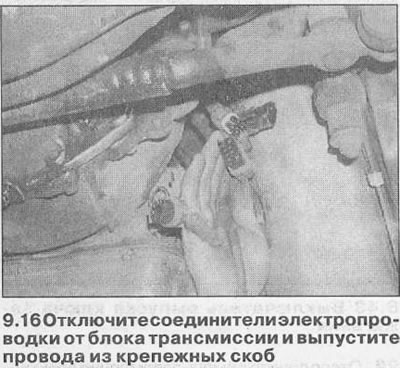
16. Release the retaining clips and disconnect the wiring connectors from the transmission housing wall (see illustration). Release all electrical wiring from the mounting brackets, having previously marked how it runs, and move the wires away from the transmission.
17. Loosen and remove all bolts securing the transmission case to the engine! Note the location of each bolt and bracket to make installation easier. Also make sure that all components are disconnected and away from the transmission so that they do not interfere with the removal procedure.
18. To prevent the torque converter from falling out when removing the transmission, push it completely into the crankcase.
19. Move the jack and transmission rearward to remove the block from the locating pins. Carefully lower the jack and slide the block out from under the vehicle. Remove the locating pins from the transmission or engine if they are loose and store them away from the work area.
Cars with 6-cylinder engine
20. Remove both front sections of the exhaust system (see the relevant section).
21. Remove the cover from the oil pan flange to gain access to the torque converter mounting bolts. Loosen and remove the visible torque converter to drive plate mounting bolts, then use a socket and extension rod to rotate the crankshaft pulley and remove the remaining bolts (only six bolts)To lock the disc, remove the cover from the base of the torque converter housing and insert a large screwdriver into the hole (see illustrations).
22. Remove the transmission as described in steps 12-19.
Installation
23. Perform installation in reverse order, paying attention to the following.
- a) If a new transmission unit is being installed, drain the cooler and blow out the cooler lines using low pressure air.
- b) Check the torque converter centering pin and crankshaft bushing for damage and signs of wear. Clean off any dirt or rust, then lubricate the bushing and pin with a small amount of molybdenum grease (Opel recommends using composition 19 48 568).
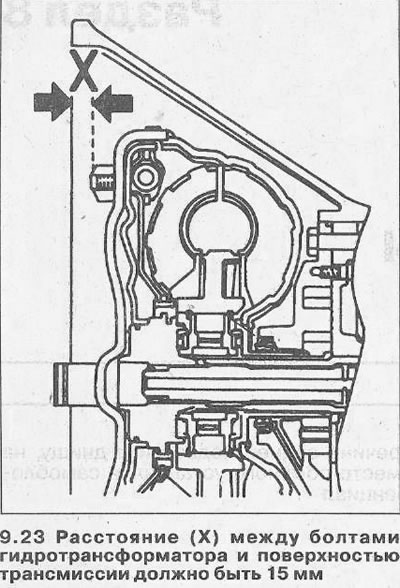
- c) Before installation, ensure that the torque converter is correctly engaged with the transmission by measuring the distance from the torque converter mounting bolts to the drive plate to the transmission contact surface. It should be 15 mm (see illustration).
- d) Place the dowel pins back in place and install the transmission. Be very careful not to let the entire weight of the unit hang on the torque converter. Install the mounting bolts and tighten them to the torque specified in the Specifications.
- d) Align the torque converter with the drive plate, then install the torque converter mounting bolts and tighten them only lightly at this point. Working in a diagonal sequence, tighten the bolts to the torque specified in the Specifications.
- e) Ensure that the transmission wiring/hoses are routed correctly and secured with all clamps.
- g) Remove all traces of blocking compound from the threads of the rear transmission crossmember mounting bolts to the body. Apply a few drops of fresh blocking compound (Opel recommends using composition 15 10 181) onto the threads of each bolt, install them and tighten them to the tightening torque specified in the Specifications.
- h) Tighten all nuts and bolts to the torque specified in the Specifications (where given).
- i) Finally, fill the transmission with the type and amount of fluid specified in the Specifications (see Chapter 2) and adjust the drive mode selector rod as described in Chapter 3.
Visitor comments