


- 9 mm socket wrench for unscrewing the bleed nipple of the brake mechanism hydraulic drive,
- transparent hose,
- container for collecting brake fluid.
Materials required:
- approximately 0.5 liters of DOT 4 specification brake fluid.
Brake fluid absorbs moisture from the air through the pores in the brake hoses. Over time, this leads to a decrease in the boiling point of the brake fluid. In such cases, when the brakes are heavily loaded, vapor locks may form in the pipelines, which significantly impairs the functioning of the brake system.
Brake fluid should be replaced every 2 years, preferably in the spring. If you drive frequently in mountainous terrain, the brake fluid should be replaced at shorter intervals.
1. Remove the brake fluid from the reservoir, leaving a layer of liquid about 10 mm thick.
Caution! Do not empty the reservoir completely, so that air does not get into the brake system. Otherwise, the brake system will have to be bled and air removed in a workshop. This is especially true for cars with ABS.
2. Fill the reservoir with fresh brake fluid up to the "MAX" mark.
3. Remove the dust cap from the bleed nipple on the brake mechanism of the right rear wheel. Clean the nipple, put a suitable clean and fairly transparent hose on it, the other end of which is lowered into a container half filled with brake fluid (see illustration).
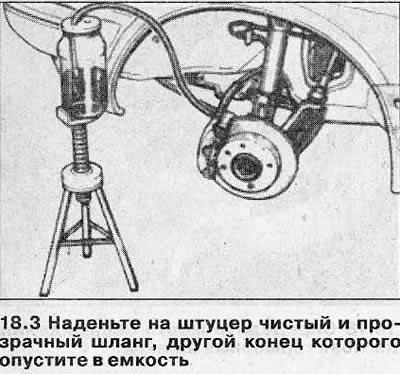
4. Ask an assistant to press the brake pedal several times until resistance is felt. While holding the brake pedal pressed, unscrew the brake bleeder nipple of the right rear wheel with an overhead wrench and allow the brake fluid to drain.
5. Tighten the nipple when the brake pedal reaches the forward extreme position and rests on the floor, and release the pedal.
Caution! When removing air, constantly monitor the amount of fluid in the expansion tank and refill it. Do not allow the bottom of the tank to become exposed, otherwise air will enter the brake system again.
In a similar manner, remove the old brake fluid from the remaining calipers, strictly following the specified order for bleeding the hydraulic drive.
Pumping order:
1 - rear right wheel brake mechanism,
2 - rear left wheel brake mechanism,
3 - front right wheel brake mechanism.
4 - front left wheel brake mechanism.
Attention! The leaking brake fluid must be clear and without air bubbles.
6. Fill the brake system reservoir to the "MAX" mark.
7. Remove air from the clutch hydraulic system.
Visitor comments