


Contents: Removal the crankshaft ⬇ Checking the axial play of the…⬇ Checking the crankshaft axial play…⬇ Checking the crankshaft axial play…⬇ Installing the crankshaft ⬇
Warning: When installing the crankshaft bearing caps, new bolts must be used.
Location of main bearing cap identification marks
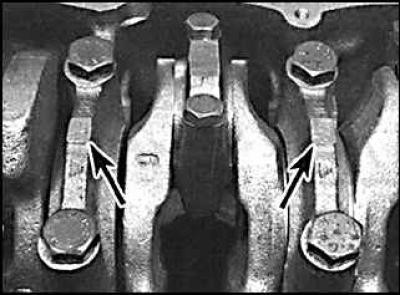
Bearing caps
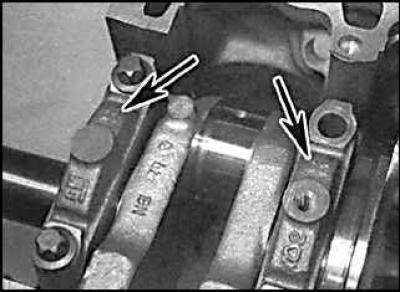
Bearing caps N1 and N₂ only (indicated by arrows) have factory markings.
Removal the crankshaft
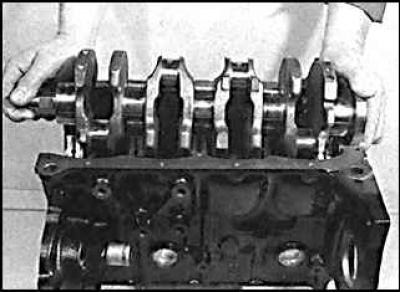
1. Remove the crankshaft sprocket, chains and flywheel.
2. Unscrew the bolts gradually and evenly and remove the main bearing block from the base of the main bearing caps.
3. Remove the pistons and connecting rods.
4. Check the crankshaft axial clearance.
5. Mark the main bearing caps 1 through 5.
6. Gradually and consistently unscrew the main bearing cap bolts.
7. Remove the main bearing caps together with the liners.
8. Remove the crankshaft and remove the rear crankshaft oil seal. Remove the upper main bearing shells.
Checking the axial play of the crankshaft
The crankshaft axial play is checked when it is installed in the engine cylinder block.
Checking the crankshaft axial play using a dial indicator
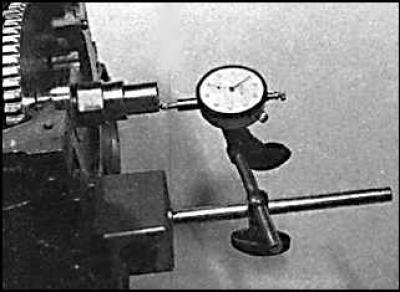
The axial play is checked using a dial indicator, the bracket of which is mounted on the engine cylinder block, and the measuring tip rests on the end of the crankshaft. By moving the crankshaft from stop to stop along the axis, measure the axial play. The measurement result indicates the need to use new thrust half rings.
Checking the crankshaft axial play using feeler gauges
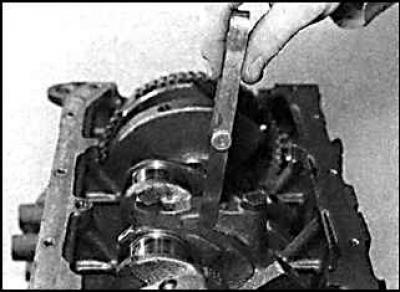
If a dial indicator is not available, the crankshaft axial play can be measured with a feeler gauge blade by moving the crankshaft to one side until it stops and measuring the clearance between main bearing No.2 and the crankshaft.
1. Clean the crankshaft using a suitable solvent and dry it with compressed air.
2. Check the crankshaft main and connecting rod journals for wear, corrosion and cracks.
3. Wear of the connecting rod journal is characterized by metallic knocks during engine operation, especially under load at low speeds and a decrease in oil pressure.
4. Wear of the crankshaft main journals is characterized by strong engine vibration and metallic knocking, which increases with increasing engine speed, as well as a decrease in oil pressure.
5. Check the crankshaft journals for roughness. Any noticeable roughness indicates that the crankshaft needs to be reground or replaced.
6. If the crankshaft has been reground, check for burrs around the oil holes. If there are any, remove them with a fine file or scraper and thoroughly clean the holes and passages of chips.
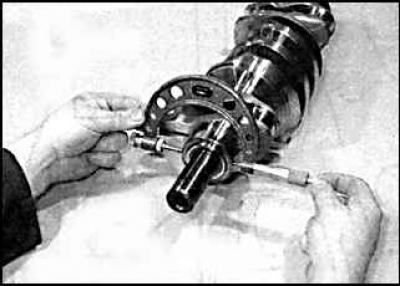
7. Using a micrometer, measure the diameter of the main and connecting rod journals of the crankshaft and compare the results with the technical requirements. Measure the journals at several points both along the diameter and along the length of the journal, which will allow you to identify ovality and taper, if they are present.
8. Inspect the oil seal contact surfaces at each end of the crankshaft for wear or other damage. If the journal wear from the seal is severe, the crankshaft may need to be replaced.
(Material copied from this website: «opelbook.ru»)
9. On some engines, if the crankshaft journals have been reground to the oversize size, it is necessary to install oversized bearings.
Installing the crankshaft
1. Remove the crankshaft from the cylinder block.
2. Clean the rear of the bearing and its installation location in the cylinder block and main bearing caps. Install the bearings in their places.
3. Lubricate the working surface of the bearing with clean engine oil and install the crankshaft into the engine cylinder block.
4. Measure the crankshaft axial clearance.
5. Lubricate the lower shells in the main bearing caps with clean engine oil and check that the tabs on the shells are in the grooves in the cap. Install the first through fourth main bearing caps and screw them in loosely.
6. Make sure the rear bearing cover is clean and dry, then apply a bead of sealant to the grooves on each side of the cover and install the cover on the engine block.
7. Lubricate the crankshaft bearing cap bolts with clean engine oil, insert them into the caps and tighten by hand.
8. Gradually and in a diagonal sequence from the center to the edge, tighten the bearing cap mounting bolts in several steps.
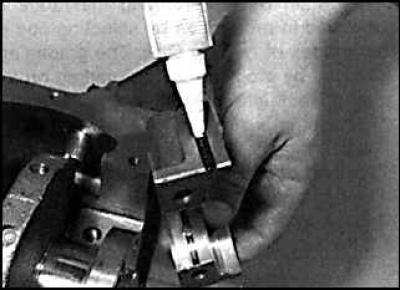
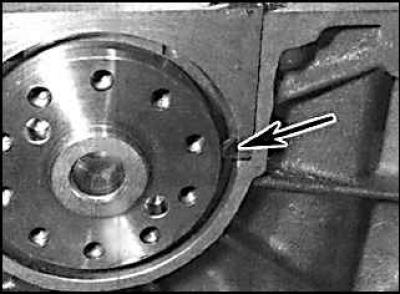
9. After tightening the main bearing cap bolts, press the sealant into the groove of the rear crankshaft cover. Fill the groove with sealant until the sealant appears from the hole shown by the arrow. Wipe off excess sealant.
10. Check that the crankshaft rotates smoothly and without sticking.
11. Install the pistons with connecting rods.
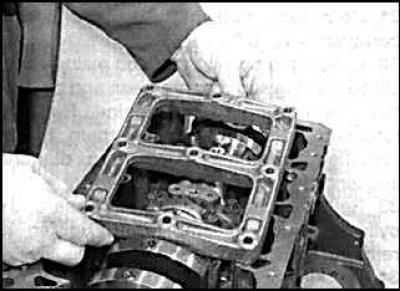
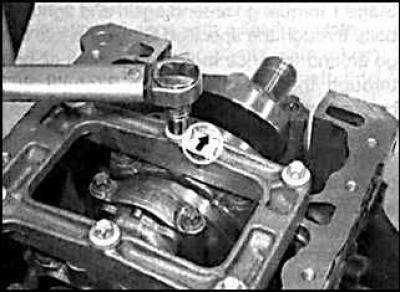
12. Check that the bearing caps and main bearing block are clean and dry. Mount the main block on the engine with the tube on the block facing the timing chain. Then install the bolts and tighten the bolts to the specified torque in a diagonal sequence from the center to the edge.
13. Install a new left crankshaft oil seal, then install the flywheel, chains, sprockets and cylinder head.
Visitor comments