


Note: This job will require a torque wrench capable of measuring high hub nut torque values.
1. Block the front wheels, then jack up the rear of the car and secure it on axle stands.
2. Remove the bolts securing the drive shaft to the rear hub. Remove the spring washers.
3. Lift the drive shaft away from the hub.
4. Remove the rear wheel.
5. Disconnect the hydraulic brake hose from the suspension on the trailing arm by pulling the stop.
6. Unscrew and remove the brake caliper.
7. Loosen the mounting screw and remove the brake disc.
8. Using a socket wrench through the hole in the hub drive flange, unscrew the mounting bolts of the drum brake shield. Note that the upper bolts are shorter and have a stop.
9. Insert the wheel bolts and, using a long hub clamp rod, loosen the center nut on the hub (photo).
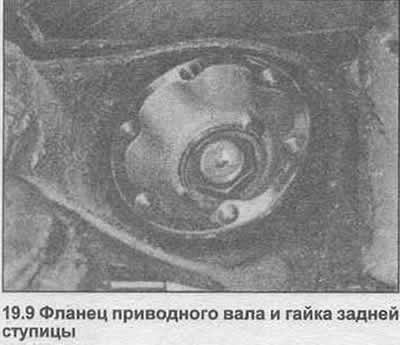
10. Remove the drive shaft flange using a suitable extractor.
11. Press the rear hub out of the bearing using a suitable extractor bolted to the trailing arm.
12. Remove the snap ring from the trailing arm, then press out the bearing using the extractor again.
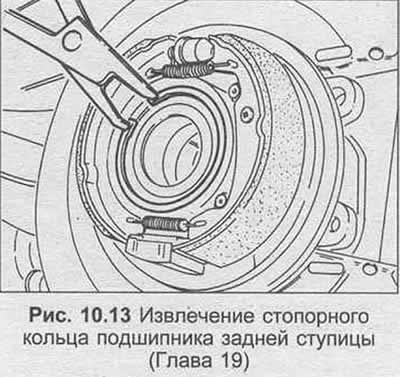
13. If the inner bearing track remains on the hub, remove it with an extractor.
14. Clean all components and inspect them for wear and damage. Install a new bearing.
15. Press the new bearing into the wishbone, forcing the outer race in. Use a long bolt and shims if necessary.
16. Install the bearing and snap ring.
17. Place the wheel bearing and gently tap the bearing into the rear hub, hitting the outer edge.
18. Install the drive shaft flange onto the hub.
19. Install the hub nut and tighten it to the specified tightening torque Specification.
[The article was published on the website: OpelBook.ru]
20. Installation is carried out in reverse order, answering the following points:
- a) Tighten all nuts and bolts to the specified tightening torque Specification.
- b) Adjust the handbrake.
Visitor comments