


Note: For diesel engines, a compression gauge with a larger measurement range, up to approximately 40 bar, is used.
The pressure in the cylinders must differ from each other by a maximum of 1.0 bar (diesel 1.5 bar). A difference in pressure of one or more cylinders of more than 1 bar and, accordingly, 1.5 bar for diesel engines indicates defective valves, worn piston rings or cylinder walls. In this case, you should consider overhauling or replacing the engine.
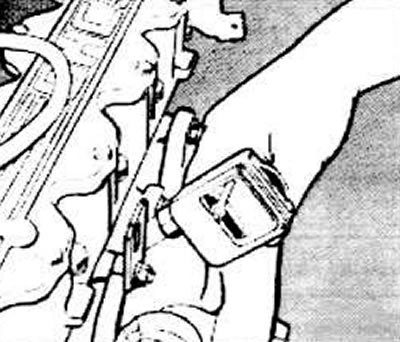
Check with warm engine. Coolant temperature about +80°C, oil over 70°C
Turn off the ignition. Disconnect the cable from terminal 15 of the ignition coil.
Engines with fuel injection remove all plugs from the injection valves (injectors), to stop the fuel supply.
Remove all spark plug tips. There is a special clamp for this, for example HAZET 1849.
Blow out the spark plug recesses with compressed air and unscrew the spark plugs.
Turn the engine over several times with the starter to remove combustion products.
Note: Put the gearbox in neutral and apply the handbrake. Insert the compression gauge into the spark plug hole or screw it in.
Fully depress the gas pedal and keep it in this position throughout the entire test.
Turn on the starter for about 4 seconds until the instrument readings stop increasing the battery must be fully charged. The engine speed must reach 300 rpm.
Check all cylinders and compare readings.
Tighten the spark plugs to 20 Nm and put on the cables.
Connect the cable to terminal 15.
Place the plugs on the injection valves.
Visitor comments