


Contents: Gearbox indicator ⬇ Starting the engine ⬇ Easytronic gearbox control with…⬇ Starting the car ⬇ Switching between automatic and…⬇ Speed Shift Mode ⬇ Moving the gearshift lever to…⬇ Electronically controlled driving…⬇ Forced downshift ⬇ Additional engine braking ⬇ Automatic mode. ⬇ Manual mode. ⬇ Stop ⬇ Parking the car ⬇ Pulling the car out when it slips ⬇ Precise maneuvering ⬇
The Easytronic automated manual transmission allows manual operation (manual mode) or automatic (automatic mode) gear shifting, with automatic clutch control provided in both modes.
Gearbox indicator
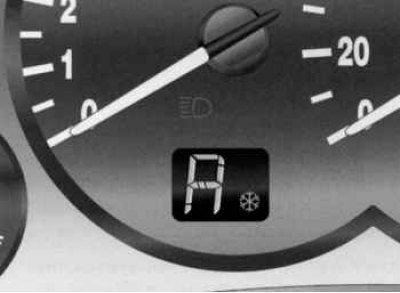
The mode and gear engaged are indicated on the display.
Starting the engine
The engine can only be started when the brake pedal is depressed. The gear indicator shows the N symbol. When the brake pedal is not depressed, the N symbol flashes.
It is not necessary to shift into neutral before starting the engine. Even if a gear is engaged, the gearbox automatically shifts into neutral before starting the engine. This may cause a slight delay in starting the engine.
Easytronic gearbox control with gearshift lever
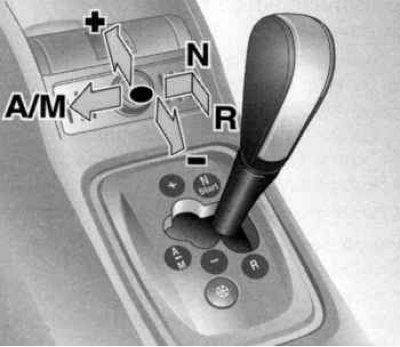
The gearshift lever should always be moved in each direction until it stops. After each action, it automatically returns to the middle position, so it is necessary to watch the gear/mode indication on the gearbox indicator.
Starting the car
Press the brake pedal, release the parking brake, move the gearshift lever to position A. The Easytronic system will switch to automatic mode and engage first gear (second gear if winter mode is on). The gearbox indicator will show the symbol A1 (A2 if winter mode is on).
This also occurs when, after starting the engine with the brake pedal depressed, the gearshift lever is moved to the + or - position for the first time.
Once the brake is released, the car will start moving.
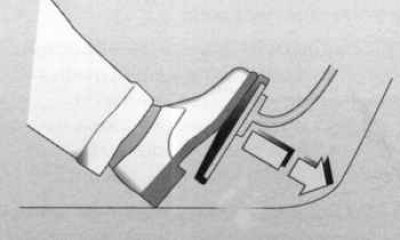
You can also start moving without pressing the brake if you press the accelerator pedal immediately after moving the gearshift lever. If you do not press it, the gear will not engage (symbol A will flash). Move the gearshift lever to position N and start moving by applying the brake and then moving the gearshift lever to position A.
In automatic mode, gear shifting is performed automatically depending on road conditions.
Switching between automatic and manual mode
In manual mode, gears are shifted manually. The gear indicator shows the letter M and the engaged gear.
If the engine speed is too low, the Easytronic transmission automatically shifts down to a lower gear, even in manual mode. This prevents the engine from stalling.
Speed Shift Mode
If a higher gear is selected when the speed is too low or a lower gear when the speed is too high, no shifting occurs. This prevents the revs from becoming too low or too high.
By repeatedly moving the gearshift lever at short intervals, gears can be skipped.
If automatic mode is engaged, when the gearshift lever is moved to the + or – position, the Easytronic gearbox switches to manual mode and shifts up or down accordingly. The gear indicator shows the M symbol and the currently engaged gear.
Moving the gearshift lever to position R
Reverse mode can only be engaged when the vehicle is stationary.
Press the brake pedal, release the parking brake, move the gearshift lever to position R. Reverse gear will be engaged. The gear indicator will display the R symbol.
Once the brake is released, the car will start moving.
You can also reverse without pressing the brake if you press the accelerator pedal immediately after moving the gear lever. If you do not press it, the gear will not engage (r symbol flashes). Move the gearshift lever to position N and start moving by first applying the brake and then moving the gearshift lever to position R.
Electronically controlled driving modes
In automatic mode, the temperature control program after a cold start by delaying the switching (at high revs) automatically quickly brings the catalyst to the temperature required for optimum reduction of harmful exhaust emissions.
Adaptive modes automatically adjust gear shifting to suit driving conditions, such as when towing a trailer, with a heavy load or on hills.
When the "SPORT" mode is engaged, the shift time is reduced and shifting occurs at higher revs (if the speed controller is not turned on).
Forced downshift
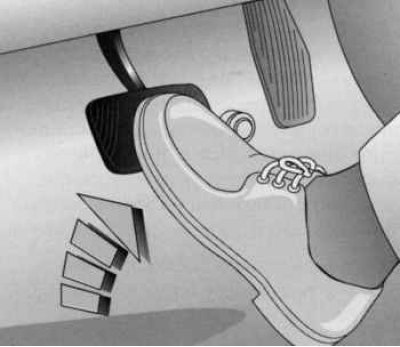
Pressing the accelerator pedal below the resistance point causes the transmission to downshift at speeds below a certain value. Full engine power must be used to accelerate.
Note: Manual gear shifting is not possible when the accelerator pedal is depressed.
In the engine speed range close to the upper limit, the gearbox shifts to a higher gear when the accelerator pedal is depressed, even in manual mode.
Without pressing the accelerator pedal, this automatic switching does not occur in manual mode.
When starting off in the "SPORT" mode with forced downshifting, the drive wheels slip slightly. This ensures maximum acceleration of the car.
Additional engine braking
Automatic mode.
When descending, the Easytronic gearbox switches to higher gears only at higher speeds. When braking, the Easytronic gearbox shifts to a lower gear in a timely manner.
Manual mode.
To take advantage of the engine's braking capabilities when going downhill, shift into a lower gear in good time.
Stop
In both automatic and manual modes, when the car stops, first gear is automatically engaged (second gear when winter mode is on) and the clutch is disengaged. In position R, reverse gear remains engaged.
If the driver's door is opened while the engine is running and the brake pedal is not pressed, a warning signal sounds: move the gearshift lever to position N and apply the parking brake.
When stopping on an incline, be sure to apply the parking brake or press the main brake pedal. Do not hold the vehicle in gear by increasing the engine speed to prevent overheating of the gearbox.
When overheated, the clutch automatically engages.
For longer stops, such as in a traffic jam or at a crossing, turn off the engine.
Parking the car
Before leaving the vehicle, apply the parking brake and then remove the key from the ignition.
The last gear engaged (indication on the gearbox indicator) remains engaged. In position N, the gear is not engaged.
After the ignition is switched off, the Easytronic gearbox stops responding to movements of the gear lever.
If you do not remove the ignition key, the battery may discharge if the car is parked for a long time.
If the parking brake is not applied, the parking brake indicator will flash for a few seconds after the ignition is turned off.
If the driver's door is opened with the engine off and the parking brake not applied, a warning signal sounds and the same indicator flashes. In this case, turn on the ignition, engage the gear, then turn off the ignition and apply the parking brake.
Pulling the car out when it slips
To pull a vehicle stuck in sand, mud, snow or a ditch, move the gearshift lever back and forth between the R and A (or "+" and "–" positions) while lightly pressing the accelerator pedal. If possible, keep the engine speed low and avoid jerking the accelerator pedal.
Note: Use the above method only in the exceptional cases indicated.
Precise maneuvering
For precise maneuvering, such as when parking, entering a garage, etc., you can use the "sliding" feature with the gear engaged when releasing the main brake pedal.
Never press the accelerator and brake pedals at the same time.
To protect the Easytronic gearbox from damage if the clutch overheats, the creep function is automatically switched off.
Visitor comments