OpelBook.ru
Cars AvtoVAZ Cars Mitsubishi Cars BMW Cars Mercedes Cars Nissan Cars Toyota Cars Chevrolet
English Русский
Български
Беларускі
Український
Српски
Hrvatski
Română
Polski
Slovenský
Magyar
 |  Sitemap  |  Contacts  |    


Main Astra Corsa Insignia Kadett Omega Vectra Zafira Others Articles
Astra F (1991-1998, petrol) Astra G (1998-2004, petrol) Astra G (1998-2004) Astra H (2004-2009) Astra J (2009-2015, petrol)
  • Main
  • Astra
  • Astra J
  • Power unit
  • Cooling and lubrication system
  • Changing engine oil and oil filter

Changing engine oil and oil filter (Opel Astra J)

            0

According to the manufacturer's recommendation, engine oil should be replaced after 1 year of operation or 15 thousand km of mileage (whichever comes first).

Note: Under severe operating conditions in a large city or very dusty area, replace the oil and oil filter element every 10,000 km.


You will need: motor oil, replacement oil filter element, clean cloth, container (not less than 5 l) for draining oil, TORX T45 key, 24 mm socket head, ratchet, articulated extension.

Note. The manufacturer recommends using motor oils of quality level ACEA A3/B4 or A3/B3 or higher, viscosity class SAE 0W-30, 0W-40, 5W-30 or 5W-40. When selecting oil, use Fig. 1.
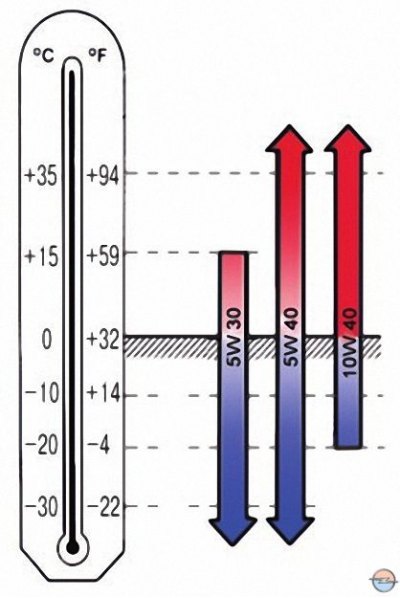

Fig. 1. Recommendations for selecting engine oil by viscosity depending on climatic conditions

Fig. 1. Recommendations for selecting engine oil by viscosity depending on climatic conditions


Helpful tips:
  • Drain the oil after driving while the engine is still hot. If the engine is cold, start it and warm it up to operating temperature.
  • Fill with the same brand of oil as the oil that was in the engine. If you still decide to change the brand of oil, flush the lubrication system with flushing oil or oil of the brand that will be used. To do this, after draining the old oil, fill with new oil up to the lower mark of the oil dipstick. Start the engine and let it idle for 10 minutes. Drain the oil and only then replace the filter element of the oil filter. Now you can fill with new oil to the required level (to the upper mark on the dipstick).


Caution: Do not pour used oil onto the ground.


Caution: Do not pour used oil onto the ground.


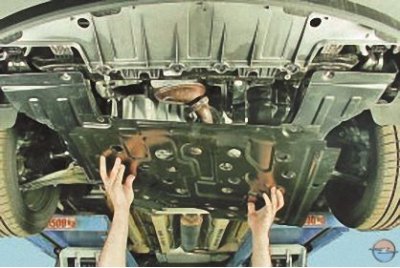
1. Remove the engine crankcase guard (see Removal and installation mudguards and engine crankcase protection).
1. Remove the engine crankcase guard (see Removal and installation mudguards and engine crankcase…


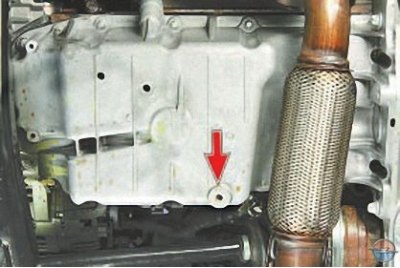
2. Clean the engine oil pan drain plug with a wire brush and then with a rag.
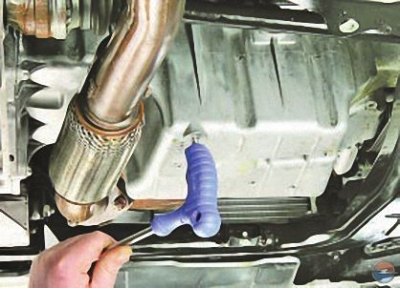
2. Clean the engine oil pan drain plug with a wire brush and then with a rag.


Text was copied from the portal [opelbook.ru]

3. Unscrew the drain plug, having first placed a container underneath to catch the drained oil…
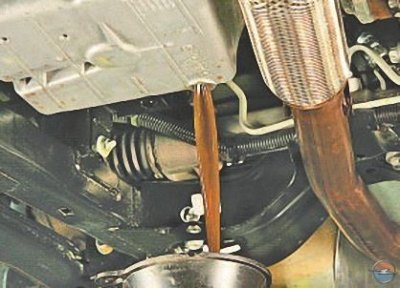


3. Unscrew the drain plug, having first placed a container underneath to catch the drained oil…


4. …and drain the oil.

Warning! Be careful: the oil is hot!


5. Screw the cap back on.
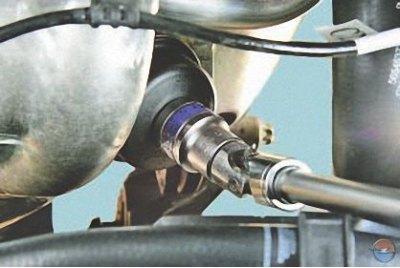
5. Screw the cap back on.


6. Unscrew the oil filter cap…
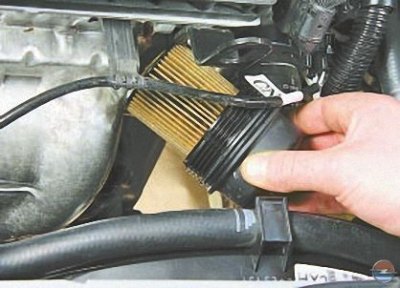
6. Unscrew the oil filter cap…


7. …and remove it together with the filter element.

Note: The oil filter is installed on the front of the engine block in the area of the 4th cylinder.
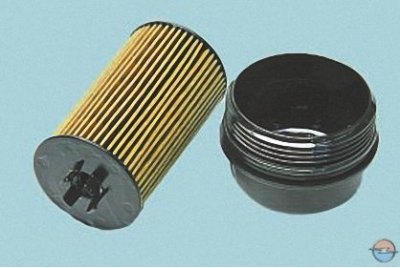

Note: The oil filter is installed on the front of the engine block in the area of the 4th cylinder.


8. Remove the filter element from the cover, wash the cover with gasoline to remove deposits and dry.
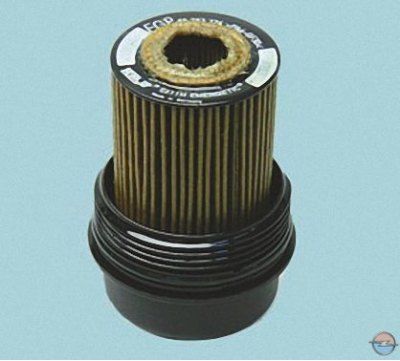


8. Remove the filter element from the cover, wash the cover with gasoline to remove deposits and…


Attention! Remember the position in which the filter element was installed in the cover so that you can install the new element in the same way.

Attention! Remember the position in which the filter element was installed in the cover so that you…


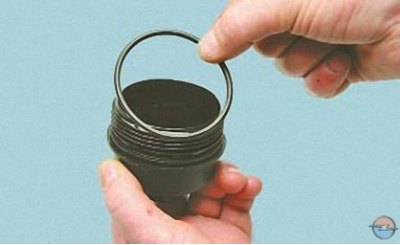
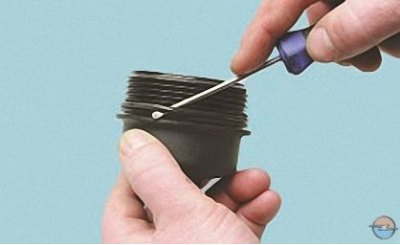
9. Pry it off with a screwdriver..

9. Pry it off with a screwdriver..


10. …remove the rubber sealing ring from the lid.
10. …remove the rubber sealing ring from the lid.


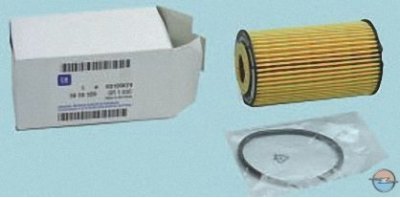
Note: Be sure to replace the sealing ring with a new one, it is included in the filter element kit.
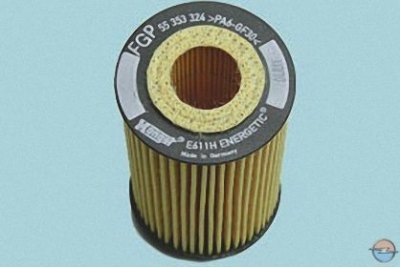


Note: Be sure to replace the sealing ring with a new one, it is included in the filter element kit.


Pay attention to the marking of the filter element. Purchase a new element with the same marking.

11. Install the oil filter element in the reverse order of removal.
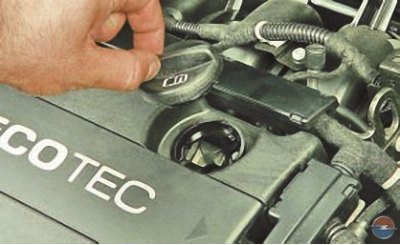
11. Install the oil filter element in the reverse order of removal.


12. Unscrew the oil filler cap.
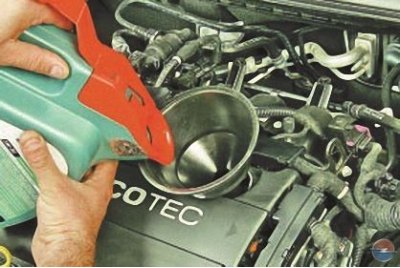
12. Unscrew the oil filler cap.


13. Fill with clean engine oil (see Checking the level and adding oil to the lubrication system).

14. Wait 3-5 minutes to allow the oil to drain into the crankcase, remove the oil level indicator (dipstick).
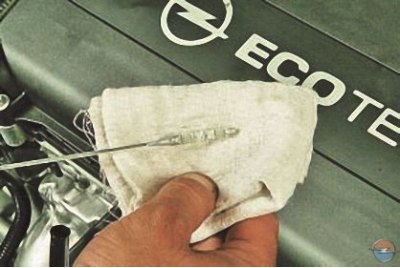


14. Wait 3-5 minutes to allow the oil to drain into the crankcase, remove the oil level indicator…


15...wipe it with a clean cloth and put it back in place.

16. Remove the pointer (dipstick) again. The oil film level should be between the two marks at the end of the dipstick. If the oil level does not reach the lower mark, top up the oil.

17. Add oil to the engine, monitoring its level with the dipstick. Before removing the dipstick, wait 2-3 minutes to allow the oil to drain into the crankcase.

18. Once the oil level reaches the required level, tighten the filler cap.

19. Start the engine and let it idle for a few minutes (the low oil pressure warning light should go out 2–3 seconds after the engine starts). While the engine is running, check for oil leaks from the drain plug and oil filter cap. Stop the engine, check the oil level, add oil if necessary, tighten the plug and filter cap.

20. Install the engine crankcase guard (see Removal and installation mudguards and engine crankcase protection).


This article is available at russian, bulgarian, belarusian, ukrainian, serbian, croatian, romanian, polish, slovak, hungarian
Checking the article: Trifonova Emilia

Share information:

Previous articles
Opel Astra J: Cooling and lubrication system
Next articles

Features of the lubrication system design
Removal and installation the oil pump
Removal and installation the oil filter housing
Design features of the cooling system
Possible malfunctions of the cooling system
Checking the cooling system hoses and connections
Replacing the coolant


See similar ones from other Opel car manuals:
▶ Changing engine oil and oil filter Opel Corsa B (1993-2000)
▶ Changing engine oil and oil filter Opel Vectra C (2002-2008)
▶ Changing engine oil and oil filter Opel Frontera A (1991-1998, petrol)
▶ Oil Filter Replacement — 2.8L Petrol Engine Opel Insignia A (2008-2017)
▶ Engine oil and filter change — every 7500 km Opel Omega A (1986-1993)
Link to this page in different formats

Visitor comments


No comments yet


How much will 38 + 14 =


Astra J (2009-2015, petrol) 
  • General information
  • Vehicle device
  • User manual
  • Faults en route
  • Maintenance
  • Power unit
  • Engine repair
  • Cooling and lubrication system
  • Engine power system
  • Exhaust system
  • Transmission
  • Clutch
  • Car gearbox
  • Drive shafts
  • Chassis
  • Front suspension
  • Rear suspension
  • Steering
  • Brake system
  • Wheels and tires
  • Body
  • Exterior
  • Interior
  • Doors and windows
  • Body Care
  • Heating and air conditioning
  • Security systems
  • Electrical equipment
  • Equipment and devices
  • Lighting and signaling
  • Power devices
  • Electrical circuits
Astra H (2004-2009) 
  • General information
  • Introduction to the guide
  • Troubleshooting
  • User manual
  • Maintenance
  • Power unit
  • Engine repair
  • Cooling and heating
  • Power and exhaust system
  • Ignition system
  • Launch and charge system
  • Transmission
  • Mechanical gearbox
  • Automatic gearbox
  • Drive shafts
  • Chassis
  • Brake system
  • Car suspension
  • Steering
  • Body
  • Interior
  • Exterior
  • Electrical equipment
  • Equipment and devices
  • Electrical circuits
Astra G (1998-2004) 
  • General information
  • Introduction to manual
  • User manual
  • Maintenance
  • Power unit
  • SOHC gasoline engines
  • DOHC gasoline engines
  • Diesel engines 1.7 and 2.0
  • Engine repair
  • Cooling system
  • Supply system
  • Injection system (gasoline)
  • Injection system (diesel)
  • Exhaust system
  • Charge and launch system
  • Ignition system (gasoline)
  • Preheat system (diesel)
  • Transmission
  • Manual gearbox
  • Automatic gearbox
  • Clutch
  • Drive shafts
  • Chassis
  • Brake system
  • Wheel suspension
  • Steering
  • Body
  • Exterior
  • Interior
  • Doors and windows
  • Ventilation and heating
  • Electrical equipment
  • Equipment and devices
  • Electrical circuits
Astra G (1998-2004, petrol) 
  • General information
  • User manual
  • Car care
  • Maintenance
  • Power unit
  • Single shaft engines
  • Twin shaft engines
  • Engine repair
  • Cooling and heating
  • Fuel and exhaust systems
  • Starting and charging system
  • Ignition system
  • Transmission
  • Clutch
  • Mechanical gearbox
  • Automatic gearbox
  • Drive shafts
  • Chassis
  • Brake system
  • Car suspension
  • Steering
  • Body
  • Interior
  • Exterior
  • Electrical equipment
  • Equipment and devices
  • Wiring diagrams Opel Astra
  • Wiring diagrams Opel Zafira
Astra F (1991-1998, petrol) 
  • General information
  • Maintenance
  • Power unit
  • Engine in car
  • Engine removed
  • Cooling system
  • Heating and ventilation
  • Fuel supply (carburetor)
  • Fuel supply (injector)
  • Emission control
  • Ignition system
  • Transmission
  • Clutch
  • Mechanical gearbox
  • Automatic gearbox
  • Drive shafts
  • Chassis
  • Brake system
  • Car suspension
  • Steering
  • Body
  • Exterior
  • Interior
  • Electrical equipment
  • Equipment and devices
  • Electrical circuits
OpelBook.ru © 2017–2026 · Mobile version · · Sitemap: EN BG BY UA RS HR RO PL SK HU · Feedback · Site search
Astra F, petrol · Astra G, petrol · Astra G · Astra H · Astra J, petrol · Corsa B · Corsa C, petrol · Corsa C · Insignia A · Kadett D · Kadett E · Omega A · Omega B · Omega B2 · Vectra A, petrol · Vectra A · Vectra B, petrol · Vectra B · Vectra C · Zafira A, petrol · Frontera A, petrol · Frontera B · Ascona C · Vivaro A ·
We want your visit to be comfortable 🤝! We use cookies 🍪 to make that happen.