


Removal
1. Remove the gearbox.
2. Mark the position of the clutch master assembly in relation to the flywheel using a marker or paint.
.
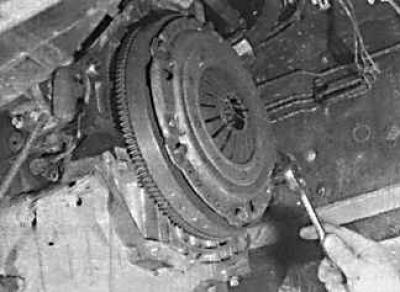
3. Gradually loosen the clutch master assembly bolts in a diagonal sequence, turning each bolt half a turn until the spring force is released and the bolts can be removed by hand.
(Text copied from an internet website: www.opelbook.ru)
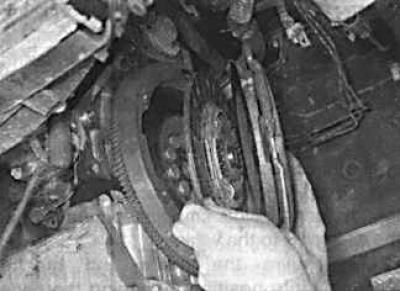
4. Remove the clutch master assembly and clutch disc.
Examination
1. Check the clutch disc linings for wear, mechanical damage or oil contamination.
2. If these defects are present, the clutch disc must be replaced.
3. If the friction linings are in good condition and not worn down to the grooves, the damper springs are securely fastened and the riveted connections are not loose, then the clutch disc can be installed in the car.
4. If the clutch disc is contaminated with oil, check the left crankshaft or transmission input shaft oil seal. Replace the seals if necessary before installing a new clutch disc.
5. Check the drive disc assembly for wear on the pressure plate, mechanical damage, reliability of the riveted joint, damage to the clutch diaphragm spring. If the diaphragm spring is worn or damaged, or there is a suspicion that the elasticity of the spring has changed, then it is necessary to replace the drive disc assembly.
6. Check the working surfaces of the pressure plate and flywheel that mate with the clutch disc linings. They should be clean, flat and free of scratches and wear.
7. Check the pressure bearing, which should rotate easily, evenly and quietly. The working surface of the bearing, which acts on the pressure spring, should be smooth, without cracks, local corrosion or wear. If these defects are present, the clutch slave cylinder must be replaced.
Installation
Installation is performed in the reverse order of removal. In this case, use a mandrel to center the clutch disc so that the primary shaft of the gearbox passes through the grooves in the center of the clutch disc.
Visitor comments