


Warning: Carrying out battery checks and maintenance requires some special precautions. Remember that the hydrogen released by the electrolyte is a highly explosive gas. Do not smoke or approach the work area with an open flame or a lit cigarette! Do not forget that the electrolyte itself is diluted sulfuric acid, which can cause severe chemical burns if it gets into your eyes or on exposed areas of the body. The electrolyte can also easily damage the fabric of clothing and the paintwork of body panels!
Caution: When disconnecting the battery, always disconnect the negative cable first - it should be the last cable to be connected! Please read the instructions and recommendations in Chapter 5.
1. The 12-volt battery installed in the vehicle is located under the hood in the left front part of the engine compartment and consists of six cans, which contain positive and negative plates (lamellas) immersed in a sulfuric acid solution. The main task of the battery is to generate the current necessary to start the engine, ignite/activate the glow plugs and for lighting, as well as to provide power to other on-board or auxiliary consumers of electrical energy.
2. Modern batteries, subject to minimum maintenance requirements (see below) and when used under normal conditions do not require additional maintenance and are designed, on average, for 4 years.
3. When installing additional electrical and electronic equipment on the vehicle, the load on the battery may increase and a battery with a higher capacity may be required - consult an Opel service station about the possibility of using such a battery.
Attention: The battery charging system is designed for strictly defined capacity values! Installing a battery with either too much or too little capacity will result in its premature failure - strictly follow the recommendations of specialists, if necessary, make the appropriate adjustments at an Opel service station.
4. If you do not plan to use the car for 30 days or more, disconnect the negative cable from the battery to prevent its premature discharge, and in winter, at very low outside temperatures, it is recommended to remove the battery and store it in a room with a positive (but not high, up to +10°C) temperature.
Note: After connecting the battery, it is necessary to enter the security code of the infotainment system, reset the chronometer and set the date on the information display and, if equipped, synchronize the electric windows and sunroof (see Chapter "Controls and operating techniques").
5. The quality of the contact between the battery terminals and the connecting wires is of particular importance for ensuring reliable engine starting and long-term trouble-free operation of the battery. Every time you look under the hood of the car, check the reliability and completeness of their contact and fully tighten the fasteners.
6. A conscientious attitude to the implementation of routine preventive maintenance procedures for the battery is the only guarantee of a quick and trouble-free engine start. Before starting battery maintenance, make sure that you have all the necessary materials and tools at hand to ensure the safety of the work (see accompanying illustration), try to use only non-sparking tools.
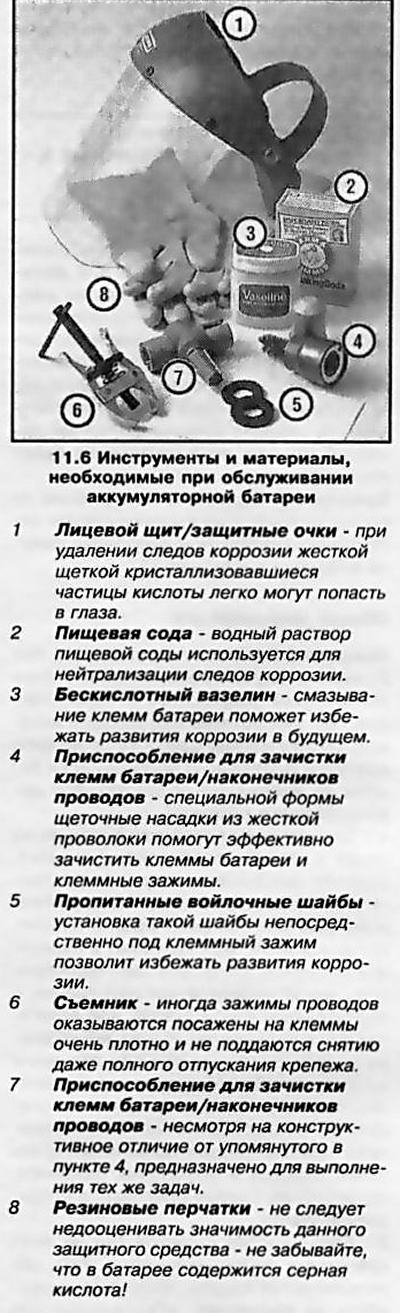
7. Before starting work, be sure to turn off the engine and all electrical consumers. Disconnect the negative cable from the battery. When servicing the battery, wear protective glasses and gloves, and do not allow children to approach the work area.
(Text copied from an internet website: opelbook.ru)
Visitor comments