


Service
8. First of all, examine the external condition of the battery. If the positive battery terminal with the clamp put on it is equipped with a rubber protective cover, make sure that the latter is not damaged. The cover must completely cover the metal components of the terminal connection. Check the condition and reliability of the fastening of the terminal connections, inspect the cover and battery cover for cracks and other mechanical damage. Make sure that the clamping bolts are securely fastened. Assess the condition of the insulation of the battery wires along their entire length.
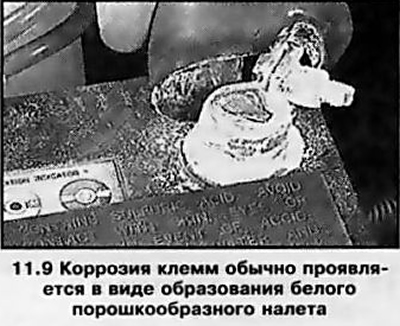
9. If traces of corrosion in the form of a white powdery coating are found on the surface of the battery (see accompanying illustration), especially near the terminal locations, it is necessary to remove the battery from the vehicle for a thorough external cleaning. The procedure for removing and installing the battery is given in Chapter 5, Section 9.
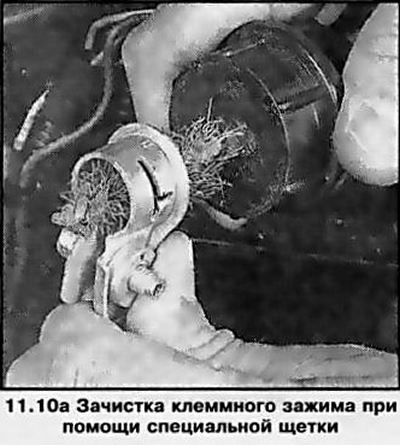
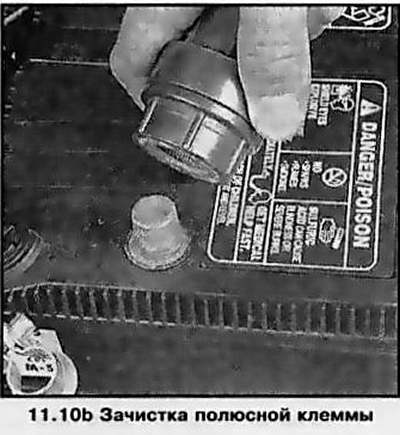
10. Carefully clean the contact surfaces of the wire terminal clamps and battery terminals with special brushes (see accompanying illustrations) using a 10% solution of baking soda/technical soda. Clean the battery terminals with the same solution and wash the surface of its cover. Make sure that the solution does not get inside the jars. Clean in a protective mask/glasses and rubber gloves to avoid getting acid particles in your eyes and on your hands. Also try to choose appropriate clothing that you won't mind throwing away later. After finishing cleaning, wipe all battery surfaces with a clean, slightly damp towel/rag soaked in the soda solution.
11. Check the condition of the battery tray and the clamping bar mounting studs. Wash the tray with a solution of baking soda, - treat the areas damaged by corrosion with a zinc-based primer or special compounds designed to protect against corrosion and reduce the effects of acid.
12. Before installing the battery, make sure that no tools or materials are left on the tray.
13. To protect the terminal connections from corrosion, it is recommended to put specially treated felt washers on the battery terminals. After connecting the wires, cover the terminal assemblies with acid-free petroleum jelly. Remember that the negative wire is always connected last!
14. Ensure that the clamp fasteners are tightened securely.
Charger
15. Continuous charging of the battery is performed by the generator current with the engine running. In case of a long break in the operation of the vehicle (more than 1 month), if there are any faults in the charging system, if the engine is started frequently in unfavorable conditions, or if the battery is approaching its end of service life, it may be necessary to charge it by removing it from the vehicle.
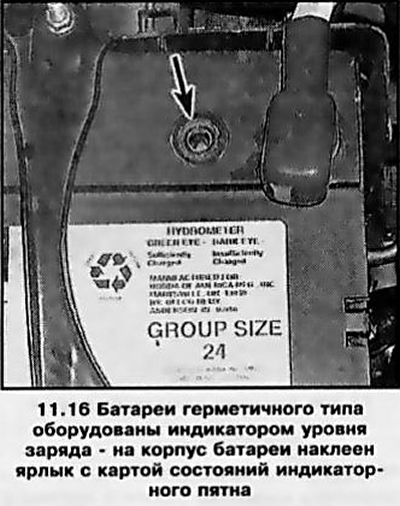
16. Almost all sealed maintenance-free batteries equipped with a charge level indicator (see accompanying illustration). Compare the color of the indicator spot in the viewing window with the indicator status map printed on a special label pasted to the battery case. Some batteries are placed in a sealed case and equipped with a built-in hydrometer, allowing you to visually determine the battery charge level by the color of the color spot, the color of which is specified in the battery operating instructions. Check the battery condition regularly, and charge it in a timely manner if necessary.
Warning: During charging, highly flammable and fire hazardous hydrogen is released in the battery jars! Do not smoke or approach the charging area with an open flame. Wear protective glasses when approaching the battery installation area. Before connecting or disconnecting the battery from the charger, make sure that the device is disconnected from the power supply. Charge the battery in a well-ventilated area.
Note: The authors of this Manual recommend charging the battery outside the vehicle, as the gas released during the procedure is chemically aggressive to paintwork. Remember that performing a quick charge without disconnecting the wires from the battery may cause failure of the vehicle's electrical components.
17. Charging a discharged battery should be carried out in accordance with the instructions of the charger manufacturer, in a well-ventilated room equipped with all safety measures for working with batteries. If the device is equipped with a selector switch, make sure that it is set to 12 V. If the appropriate conditions are not available, it is advisable to seek assistance from an Opel service station.
18. During charging, all battery can neck caps (if any are provided) must be open. Before removing the plugs, clean the adjacent surfaces from dust and dirt, do not allow foreign particles to enter the battery jars.
Checking the electrolyte level
19. For batteries with filler holes, it is necessary to periodically, especially in hot weather, check the electrolyte level in the cans.
Caution: Do not allow the battery to operate for a long time with an insufficient electrolyte level - this may lead to overcharging of the battery, destruction of the plates and a significant reduction in its service life!
20. The electrolyte level is checked visually, through the translucent plastic battery case. The level in all sections of the battery should be between the MIN and MAX marks on the battery case.
21. If the electrolyte level is not visible through the housing, check it through the filler holes of the battery sections; it should reach the lower edge of the filler hole sleeve or cover the internal mesh of the battery can (depending on the battery design).
22. If necessary to adjust the electrolyte level, add the required amount of distilled water.
Note: Do not add too much water; excess electrolyte is removed using a special hand pump (bulb).
Warning: Electrolyte is an acid solution! It should be collected in special containers and disposed of properly! If you do not have sufficient experience or the appropriate capabilities, leave the operation of adjusting the electrolyte level to service station specialists!
23. After completing the level adjustment, close the filler holes tightly and wipe the battery surfaces with a rag soaked in an alkaline solution.
[Original source on the website: OpelBook.ru]
Visitor comments