


The appearance and location of individual elements in vehicles of various modifications may differ from those shown in the accompanying illustration.
Location of controls on the car dashboard
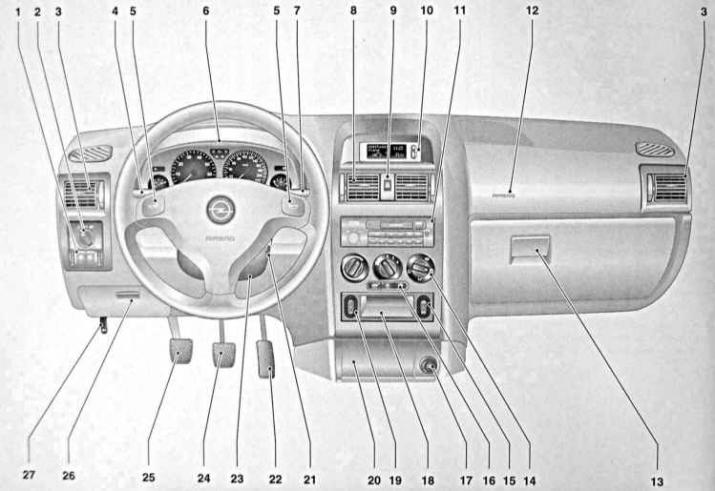
1 — Headlight beam leveling regulator, fog light and rear fog light switches, instrument lighting intensity regulator
2 — Switch for controlling the operation of external lighting devices/switching on the instrument lighting
3 — Side air vents for the interior ventilation/heating system
4 — Left steering column switch for controlling the turn signals, selecting the headlight mode, high beam signaling/controlling the cruise control
5 — Icons for horn button designation
6 — Instrument cluster
7 — Right steering column switch for controlling the operation of windshield washers and (with appropriate equipment) headlight lenses/on-board processor mode switch
8 — Deflectors of the central air ducts of the ventilation/heating system of the passenger compartment
9 — Hazard warning switch
10 — Display of digital clock/outside air temperature gauge/radio/infotainment system/on-board processor
11 — Radio/Infotainment System
12 — Passenger airbag module cover
13 - Glove box
14 — Control panel for heating/ventilation/air conditioning systems
15 — Switch for controlling the operation of the electric window lifter (convertible models)
16 — Switches for selecting air circulation modes and turning on the rear window heating
17 — Cigarette lighter/on-board power socket
18 - Stuff pocket
19 — Switch for controlling the operation of the electric drive of the convertible top (convertible models)
20 - Ashtray
21 — Ignition/steering column lock
22 — Gas pedal
23 — Steering column adjustment control handle
24 — Brake pedal
25 — Clutch pedal
26 — Glove box/fuse box
27 — Hood lock latch release drive lever
Layout of control lamps/indicator lights and control and measuring instruments on the vehicle instrument panel
The arrow shows the location of the digital display setting button.
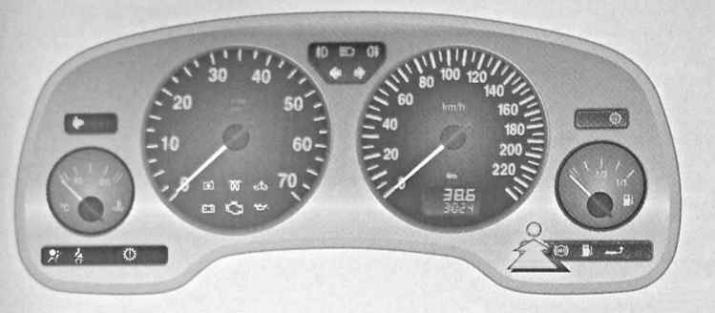
Instrument cluster
Instrument panel control lamps and indicator lights
The completeness of the instrument panel with control lamps and indicator lights depends on the vehicle modification.
Automatic headlight leveling control indicator lamp

The control lamp is located on the left side of the instrument cluster above the temperature gauge and briefly lights up when the ignition is turned on and should go out a few seconds after the engine is started. Activation of the control lamp while driving indicates a malfunction of the regulator. To eliminate the causes of the failure, contact the specialists of the car service.
Supplemental Restraint System (SRS) Warning Light

This indicator lamp serves to alert the driver to failures in the electrical circuits of the additional safety systems SRS (airbags, emergency seat belt tensioners)
Warning light: "Don't forget to fasten your seat belts!"

The brief activation of the indicator lamp when the ignition is turned on is accompanied by an audible signal and serves as a warning to the driver and passengers about the need to fasten their seat belts before starting to move.
Brake system/ hydraulic clutch indicator light

If the indicator lamp continues to light when the ignition is on, you should check that the parking brake is fully released. The activation of this lamp may also indicate a drop in the working fluid level in the master cylinder reservoir or clutch hydraulic cylinder.
Electronically controlled engine cooling system warning light

The indicator lamp comes on briefly when the ignition is switched on and should go out a few seconds after the engine has started. Activation of the lamp while driving indicates a fault in the engine cooling circuit or air conditioning. The electronic control system is automatically switched to emergency mode, which allows driving to continue. Check the coolant level (see Chapter Routine maintenance). To eliminate the causes of the failure, contact the car service specialists.
Engine pre-glow control lamp (diesel models)

This indicator lamp is activated only when the diesel engine pre-heating system is activated at low ambient temperatures.
Electronic Engine Management Systems/Automatic Transmission/Ignition Lock Indicator Light

The control lamp briefly lights up when the ignition is turned on and should go out a few seconds after the engine has started. If the lamp does not turn off, this indicates a malfunction in the electronic engine control system or AT. The control system automatically switches to emergency operation mode, which may be accompanied by a certain increase in fuel consumption and a decrease in the engine power. Contact a car service specialist for help.
In some cases, the fault can be corrected by turning off the ignition and attempting to start the engine again.
If the lamp starts flashing when you turn on the ignition, then there is a malfunction in the engine start interlock system, turn the ignition key to the extreme left position, remove it from the lock, then insert it again and try again. If necessary, try using a spare key or contact a car service specialist for help.
Charge indicator light

The indicator lamp briefly lights up when the ignition is turned on and should go out a few seconds after the engine has started. If the lamp does not turn off, this indicates a fault in the charging system. Stop driving and turn off the ignition. Check the tension of the alternator drive belt, the reliability of the fastening of the terminal connections of the alternator wiring, and the tightness of the tightening of the alternator mounting bolts.
On models equipped with Z12XE, Y20DTL, Y20DTH and Y22DTR engines, the possibility of malfunction of the power unit cooling system cannot be ruled out. If necessary, contact car service specialists for help.
Malfunction Indicator Lamp (Check Engine / MIL)

The indicator lamp briefly lights up when the ignition is turned on and should go out a few seconds after the engine has started. If the lamp does not turn off, this indicates a malfunction of the engine or a malfunction of one of the exhaust gas toxicity reduction system units. Try to avoid sudden acceleration and high engine speeds when driving further. At the first opportunity, seek help from car service specialists.
When the light comes on in flashing mode while driving, it warns the driver of a failure that could lead to the failure of the catalytic converter; you should immediately seek help at the nearest service station.
Oil pressure warning light

The indicator lamp lights briefly when the ignition is switched on and should go out a few seconds after the engine has started. Brief activations of the lamp are also allowed when the engine is idling. If the indicator lamp fails to turn off after the engine has started/lights up while driving, immediately turn off the engine and check the engine oil level and pressure. If necessary, adjust the oil level (see Chapter Routine maintenance). Have the engine condition diagnosed at the vehicle manufacturer's authorized service station as soon as possible.
Fog light activation indicator lamp

The indicator lamp comes on when the fog lights are activated and remains lit until the fog lights are turned off.
High beam activation indicator lamp

The indicator has a characteristic purple glow and is activated when the car's headlights are switched to high beam mode (constant or signal).
Rear fog light activation indicator light

The indicator lamp comes on when the rear fog lights are activated and remains on until the latter are switched off.
Direction indicator lights

The activation of the corresponding indicator occurs when the right or left turn signals are switched on. Switching on the hazard warning lights causes both indicators to operate simultaneously.
A noticeable increase in the frequency of flashing indicates that one of the turn signal lamps has failed.
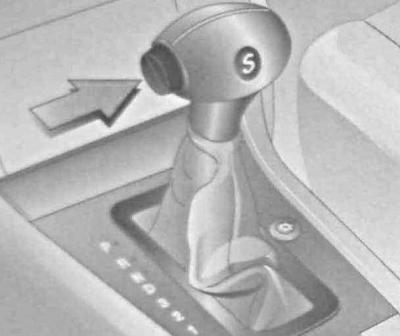
Control lamp for switching AT to sport mode (with the appropriate vehicle configuration)

On models with the corresponding configuration, the activation of this control lamp accompanies the AT switching to sport mode.
Anti-slip System (TCS)/ Anti-skid system (ESP)warning light

The indicator lamp lights briefly when the ignition is switched on and should go out a few seconds after the engine has started. When the lamp goes out, it indicates that the ESP/TCS electronic stabilization systems have become active. The flashing of this indicator lamp confirms that the traction control process has been activated when the ESP/TCS systems are activated.
The activation of electronic stability control systems may be accompanied by a slight decrease in engine power (the noise level produced by the engine will change). The possibility of automatic braking of the car cannot be ruled out either.
The ESP system serves to prevent the risk of losing control of the vehicle in emergency situations and its activation should remind the driver of the need to match the speed limit to the condition of the road surface.
Anti-lock Brake System (ABS) Warning Light

The indicator lamp briefly lights up when the ignition is turned on and should go out a few seconds after the engine has started. When the lamp goes out, the ABS self-diagnosis procedure is complete and the system is in an active state.
The ABS self-diagnosis process may be accompanied by specific sounds. If the lamp fails to turn off or if it triggers while driving, this indicates that the self-diagnosis system has detected faults in the ABS circuit. The brake system then switches to normal operation mode, which means that you can continue driving without any problems. To troubleshoot, contact the vehicle manufacturer's authorized service station for help.
The built-in ABS self-diagnostic system allows you to significantly simplify the process of finding and eliminating the causes of system failures.
If the ABS and brake system warning lights come on at the same time, stop driving immediately, gradually reduce speed, move the vehicle out of traffic and park on a safe section of the road. Braking should be done with extreme caution, avoiding sudden pressure on the pedal.
Fuel reserve indicator light

When this indicator lamp lights up continuously, it means that the fuel supply is running low and you should refuel the vehicle as soon as possible. When the lamp flashes, it means that the fuel supply has been completely used up.
Try not to let the fuel run out completely! This warning applies especially to diesel models, where removing air from the fuel system is a rather labor-intensive procedure.
Trailer direction indicator light

When towing a trailer, this indicator light turns on in flashing mode when the turn signals are activated. The frequency of the indicator flashes coincides with the frequency of the flashes of the main indicator lamps. Failure of the lamp of any of the turn signals on the trailer or vehicle leads to the failure of the indicator to operate.
Seat occupancy detection indicator lamp


The seat occupancy indicator lamp is integrated into the front ceiling light assembly.
The installation of a special seat for the carriage of young children, manufactured by Opel, in the right front seat should automatically disable the passenger airbag. If the employment indicator light is not activated when the Danish seat is installed, the child seat should be moved to one of the rear seats. When the warning light flashes, it indicates that the child seat transponder is not installed correctly or that the child seat transponder is defective.If necessary, contact the specialists of the vehicle manufacturer's service station for help.
Meters and indicators
Tachometer
The tachometer is a meter that measures the engine speed. The tachometer dial is mounted on the left side of the central part of the instrument panel (see illustration Layout of control lamps/indicator lights and control and measuring instruments on the vehicle instrument panel) and allows you to determine the engine crankshaft speed in revolutions per minute (the reading from the scale should be multiplied by 100). The maximum permissible values are given in Specifications to the Chapter Routine maintenance.
Speedometer
The speedometer shows the current speed of the vehicle. The speedometer dial is mounted on the right side of the central part of the instrument panel (see illustration Layout of control lamps/indicator lights and control and measuring instruments on the vehicle instrument panel).
Odometer
The odometer is used to record the total mileage of the vehicle. The odometer readings are displayed in the lower field of the digital display, mounted in the lower part of the speedometer dial (see illustration Layout of control lamps/indicator lights and control and measuring instruments on the vehicle instrument panel).
When the ignition is off, the total mileage display is switched on by briefly pressing the setting button and remains active for about 15 seconds.
Current mileage counter
The counter is designed to record the current mileage of the car from the moment of zeroing its own readings. The counter readings are displayed in the upper field of the digital display, mounted in the lower part of the speedometer dial (see illustration Layout of control lamps/indicator lights and control and measuring instruments on the vehicle instrument panel). The counter is reset by pressing the setting button for 2 seconds when the current mileage indication is activated (models with a multifunctional digital display, see below) (see ibid).
Multifunctional digital display built into the speedometer dial
On some models, a multifunctional digital display is mounted in the speedometer dial, allowing the display in its upper field to show, in addition to the current mileage counter readings, the time of day and service interval indication.
Switching between display modes is done by briefly pressing the setting button (see illustration Layout of control lamps/indicator lights and control and measuring instruments on the vehicle instrument panel).
The brightness of the display indication is adjusted by the same regulator as the intensity of the instrument lighting (see illustration Location of controls on the vehicle instrument panel). The chronometer readings are adjusted using the same setting button, pressing it for 2 seconds in the time indication mode leads to the transition to the mode of adjusting the hour readings first (adjusted by short presses of the button), then - after another 2-second holding of the button - minutes. Exit from the adjustment mode is also performed by holding the setting button pressed for 2 seconds.
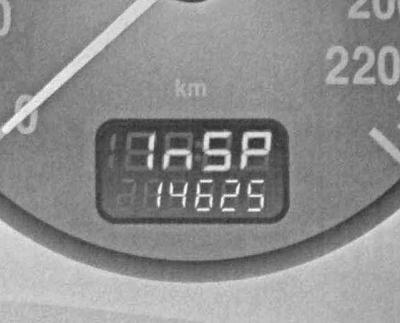
If, when the ignition is turned on, the reading is displayed in the upper field of the multi-function digital display 1_SP, therefore, within one week, or after no more than 500 km of mileage, the next service maintenance of the car should be performed.
Periods of vehicle downtime with the battery disconnected are not taken into account by the routine maintenance interval recorder.
Engine coolant temperature gauge
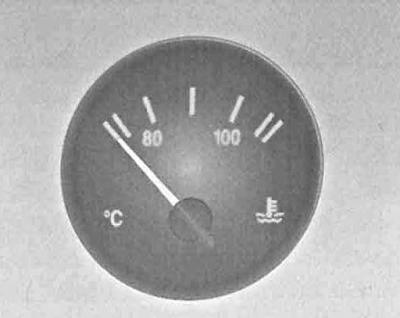
The engine coolant temperature gauge is mounted on the left side of the instrument panel and serves to monitor the temperature characteristics of the power unit.
For design reasons, the coolant temperature can only be monitored when the coolant level in the system is at a certain level. The engine's entry into the normal operating temperature mode is confirmed by the pointer moving to the middle position (between 80 and 100 marks).
When the engine is running, the cooling system is under excess pressure, so the meter readings may briefly rise above the 100°C mark. If the pointer moves into the red range of the scale, this indicates overheating. You should immediately stop driving, turn off the engine and check the coolant level (if necessary, make the appropriate adjustment, see Chapter Routine Maintenance). Another reason for overheating may be a failure of the cooling system fan to operate. Check the proper operation of the corresponding sensor switch.
Fuel gauge
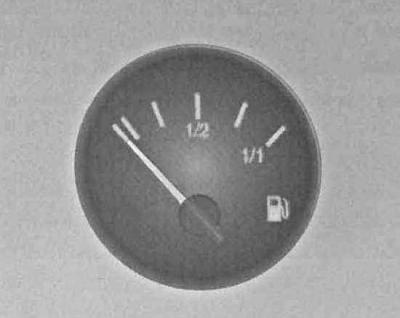
The fuel gauge is located on the right side of the instrument panel. After the fuel tank is completely filled, the gauge needle leaves the position corresponding to maximum filling only after a certain mileage of the vehicle. When the needle drops to the limits of the red range of the measuring scale/the fuel reserve indicator lamp is triggered, the vehicle should be refueled at the first opportunity.
Try not to let the fuel run out completely! This warning applies especially to diesel models, where removing air from the fuel system is a rather labor-intensive procedure.
Due to the fact that there is always a certain amount of fuel left in the tank, the actual volume of a full tank may differ slightly from the nominal value in the smaller direction.
Controls located on the instrument panel and steering column
Switch for controlling the operation of external lighting devices/daytime running lights/instrument lighting
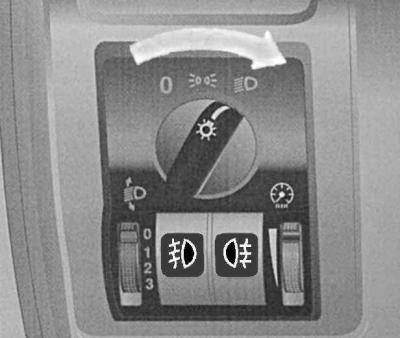
o — Off
 — Side lights and instrument lighting are on
 — Low beam headlights are added to the side lights (the instrument lighting remains on)
Using this switch (see illustration Location of controls on the car dashboard and External view of the switch for controlling the operation of external lighting devices/daytime running lights/instrument lighting) the running lights and instrument panel lighting are switched on. In position 0 of the rotary switch handle, all external lights and instrument panel lighting remain off.
On models equipped with daytime running lights (DRL), when the ignition is on and the switch is in position 0, the headlights are automatically switched to low beam mode, but the instrument lighting is not activated.

When the handle is moved to the middle position, the parking lights and rear license plate lights are turned on, and the instrument panel lighting and interior functional switches are activated.

To switch the vehicle's headlights to low beam mode, turn the switch handle to the extreme right position.
Switching the headlights to permanent high beam mode using the left steering column switch (see below) can only be done in this position of the rotary knob.

Pulling the rotary handle towards you forces the interior lighting to turn on.
The brightness of the instrument lighting is adjusted using a switch mounted on the right under the handle and marked on top with a pictogram in the form of a symbolic image of a dial gauge of a wheel-lever potentiometer (see illustration External view of the switch for controlling the operation of external lighting devices/daytime running lights/instrument lighting).
Fog light and rear fog light switches
The push-button switches for controlling the operation of the fog lights and rear fog lights are located directly under the handle of the switch for controlling the operation of the external lighting devices, between the wheel potentiometer for adjusting the intensity of the instrument lighting and the tilt controller for the optical axes of the headlights (see illustration External view of the switch for controlling the operation of external lighting devices/daytime running lights/instrument lighting).

This button is used to turn the fog lights on and off.
When the headlights are on, a control lamp built into the switch button is activated.

This button is used to turn on/off the rear fog lights.
When the lights are on, a control lamp built into the switch button is activated.
Headlight optical axis direction regulator
The wheel-lever switch is mounted on the left under the handle of the switch for controlling the operation of the external lighting devices (see illustration External view of the switch for controlling the operation of external lighting devices/daytime running lights/instrument lighting) and is marked with a pictogram at the top.
The adjustment is made by moving the switch lever to one of four standard positions with the low beam headlights on. With the correct adjustment of the headlight tilt relative to the body, the risk of blinding drivers of oncoming and passing vehicles is eliminated.
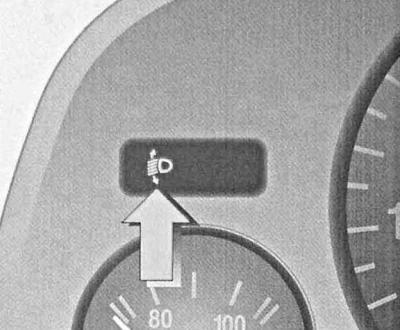
The adjustment diagram is presented in Specifications at the beginning of the Chapter. Failures in the operation of the headlight position correctors are indicated by the activation of a special control lamp mounted in the instrument cluster above the temperature gauge assembly.
Depending on the vehicle's equipment, the range of change of the tilt of the optical axes of the headlights between positions 2 and 3 of the switch may be very narrow.
Left steering column switch
The left steering column switch is used to select the operating mode of the headlights (low/high beam), high beam signaling is performed, and the direction indicators are activated.
In normal position (closer to the steering wheel) the headlights are in the low beam mode (with the corresponding position of the rotary handle of the switch for controlling the operation of the external lighting devices, see above item. Switch for controlling the operation of external lighting devices/daytime running lights/instrument lighting). To switch the headlights to high beam mode, you should press the switch lever away from you, moving it to the second stationary position - the corresponding indicator lamp on the instrument panel will work (see above item. High beam activation indicator lamp). Return the switch to its original position (normal) this position turns off the high beam and switches the headlights to low beam mode.
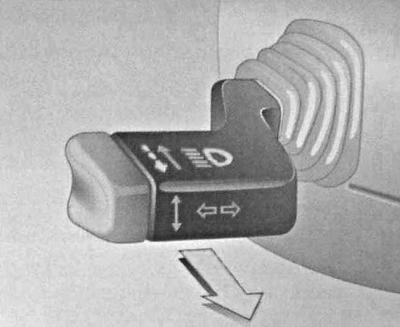
To briefly turn on the high beam headlights to give a light signal, pull the left steering column switch lever towards you.
High beam signaling can be performed in any position of the rotary handle of the external lighting control switch (see illustration External appearance of the switch for controlling the operation of external lighting devices/daytime running lights/instrument lighting).
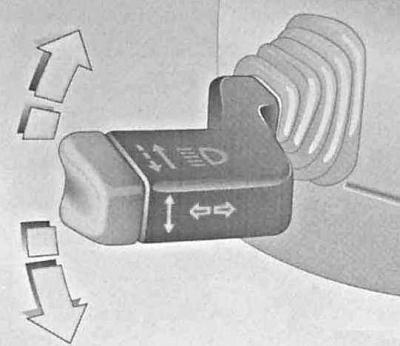
Moving the left steering column switch lever to the upper or lower stationary position (until it clicks) activates the corresponding turn signal indicators.
The direction indicators are switched off automatically when the lever is returned to the neutral (middle) position when the steering wheel is returned to the straight-ahead position. There is also the option of switching on the indicators briefly (for example, to warn about a change in traffic lanes), - you should move the lever up or down without making it click - in this case, the indicators will turn off when you release the lever.
Activation of the direction indicators is accompanied by the activation of the corresponding indicator lights on the instrument panel (see above item Rear fog light activation indicator lamp) and distinct clicks emitted by the breaker.
Right steering column switch
On models equipped with a multi-function graphic information display, buttons for switching display modes are built into the end of the right steering column switch lever (see below).
This switch controls the operation of the windshield wipers and the supply of windshield washer fluid.
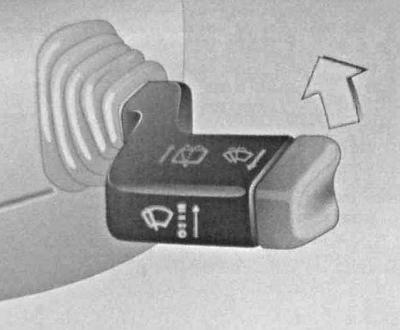
The models under consideration use two types of windshield wiper control switches: with automatic control (with rain sensor) and without. In both versions, the right steering column switch lever can move in the vertical plane with installation in one of four stationary positions, pictograms corresponding to each of the positions are applied to the front side of the switch. The difference is that when selecting the second from the bottom position of the switch lever, in one case the windshield wipers are switched to the normal interval operation mode, while in the second, the rain sensor determines the amount of water on the surface of the windshield and automatically adjusts the period of operation of the brushes.
"O" — Windscreen wipers are off
"–" — Intermittent/automatic windshield wiper operation
"–" — Continuous low-speed windshield wiper operation
"=" — Continuous high-speed windshield wiper operation
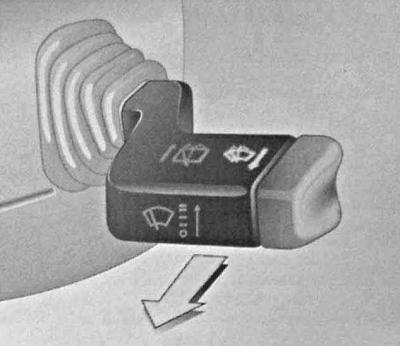
Pulling the right steering column switch towards you turns on the supply of washer fluid to the windshield and headlight lenses (if the latter are included). When supplying fluid to the windshield, the windshield wipers perform several working cycles.
In the automatic control version (see above), the washer fluid supply should be periodically turned on to keep the rain sensor's working field clean.
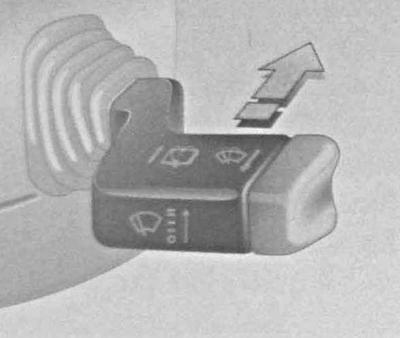
To turn on the rear window wiper/washer on the Hatchback and Estate models, pull the right steering column stalk lever away from you. There are two operating positions for the lever, the first of which turns on only the windshield wiper, while the second (hold the lever down until it stops) additionally, the supply of washer fluid to the glass is activated.
In the first operating position, the rear window wiper will operate in interval mode with a fixed delay; in the second, it will operate continuously.
Hazard warning switch
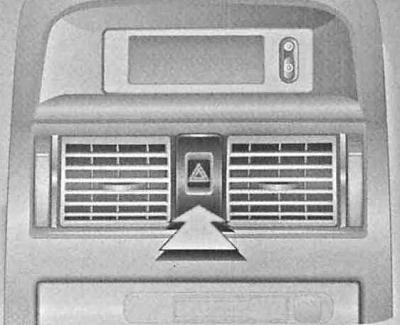
The hazard warning light switch is located in the central part of the instrument panel between the central air vent grilles (see illustration Location of controls on the car dashboard). Switching on the alarm system results in simultaneous activation of all direction indicators in normal flashing mode, and is also accompanied by the operation of the corresponding control lamps on the instrument panel and inside the switch button. The frequency of flashes is the same as when the direction indicators are operating due to the use of a common interrupter.
Sound signal
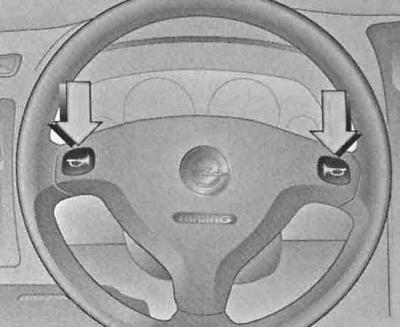
To turn on the horn, simply press the central pad of the steering wheel, marked with pictograms depicting a horn.
Switch for heated rear window and outside rearview mirrors
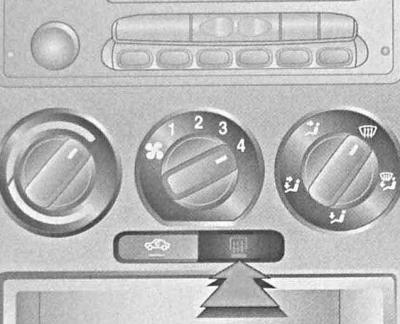
The rear window/rear view mirror defroster switch is mounted in the lower part of the heating/ventilation/air conditioning control panel. The button has a pictogram on the outside and a control lamp inside that remains lit as long as the heaters are on.
A timer is built into the heating circuit, which automatically switches off the power supply to the heating elements after the control period (15 minutes) has expired. This option allows avoiding excessive discharge of the battery, which is inevitable due to the high energy capacity of the heating elements.
Radio Remote Control Switches
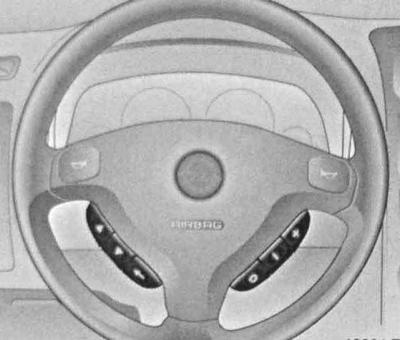
If the vehicle is equipped accordingly, the radio remote control buttons are located on both sides of the steering wheel hub.
 Search for the next active frequency in ascending order
 Search for the next active frequency in descending order
 In radio reception mode: tuning to a specified broadcast frequency; in CD mode (with appropriate equipment): play the installed CD from the beginning
"" — Increase volume
"-" — Decrease volume
"ABOUT" — Switching from radio reception mode to tape recorder or compact player mode (with appropriate equipment)
Switches for controlling the operation of the electric drive of the outside rear-view mirrors
On models with manual outside mirrors, their position is adjusted using levers located on the inside of the mirror bases - see Elements of vehicle safety systems.
On models equipped with electric adjustment of the outside rear-view mirrors, the switch for controlling the operation of the electric drive is located on the inside of the front doors of the car where they adjoin the instrument panel. The mirror to be adjusted is selected by moving the upper slide switch to the appropriate side. The actual adjustment is performed using the lower rotary switch. Do not forget to return the slide switch to the middle position after completing the adjustment (neutral) position to avoid the risk of accidentally disturbing the required position of the mirror.
Visitor comments