OpelBook.ru
Cars AvtoVAZ Cars Mitsubishi Cars BMW Cars Mercedes Cars Nissan Cars Toyota Cars Chevrolet
English Русский
Български
Беларускі
Український
Српски
Hrvatski
Română
Polski
Slovenský
Magyar
 |  Sitemap  |  Contacts  |    


Main Astra Corsa Insignia Kadett Omega Vectra Zafira Others Articles
Vectra A (1988-1995, petrol) Vectra A (1988-1995) Vectra B (1995-2002, petrol) Vectra B (1995-2002) Vectra C (2002-2008)
  • Main
  • Vectra
  • Vectra A
  • General information
  • User manual
  • Automatic transmission control

Automatic transmission control (Opel Vectra A)

            0

Contents: Electronic travel control in…⬇ Shift lever positions P, R and N ⬇ Position "D" ⬇ Step 3 ⬇ Step 2 ⬇ Step 1 ⬇ Assistance when starting from a place ⬇ Forced reverse gear shifting…⬇ Additional engine braking ⬇ Stop ⬇ "Pulling out" ⬇ Precise maneuvering ⬇
After starting the engine and accordingly before engaging the gear, use the brake. Otherwise, the car will grind. Do not press the accelerator pedal and the brake pedal at the same time. With a 4-speed gearbox. In the "D" position, you can drive almost always.

Smooth and even pressure on the gas pedal results in early gear shifting with economical fuel consumption. Mechanical shifting is necessary only in exceptional cases. Select "3", "2" and "1" gears only if you want to avoid shifting to a higher gear or when braking with the engine.

As soon as the traffic situation allows, shift into "D".
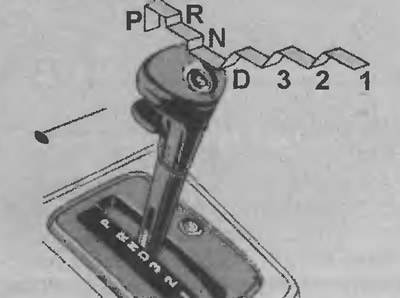
As soon as the traffic situation allows, shift into «D».


Electronic travel control in position "D"


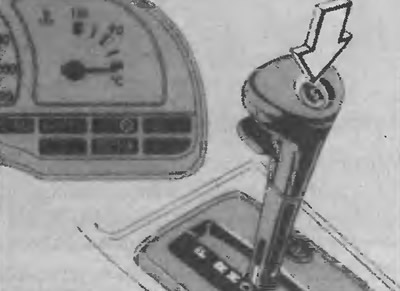
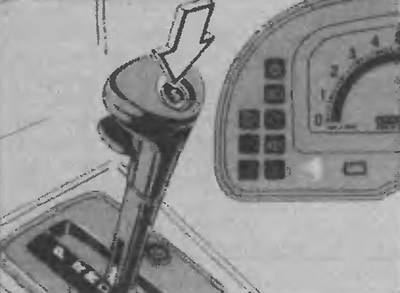
  • Sports program, higher engine shaft speeds: press the "S" key (the symbol is lit )
  • Economy program press again key "S"

Economy program press again key «S»


Economy program press again key «S»


Mechanical switching is possible:


  • 1 = 1st gear
  • 2 = 3rd gear
  • 3 = 3rd gear
  • D = 4th gear

Shift lever positions P, R and N


  • P = Parking position. Front wheels locked. Only when vehicle is completely stopped and parking brake applied.
  • R = reverse. Engage only when the vehicle is completely stopped.
  • N = neutral position and, accordingly, idle position.

The engine starts in position "P" or "N". When changing gears, do not press the accelerator pedal.

Position "D"


D = long-term position for driving under normal conditions in gears 1st to 4th.

4th gear is the highest gear. When driving in this gear, the engine speed, fuel consumption and noise are reduced.

After starting the engine and shifting into position "D", the automatic transmission is set to the economical driving program.

Step 3


3 = Position for driving in 1st, 2nd and 3rd gear. Even when driving at high speeds, the gearshift lever remains in position 3. However, do not exceed the maximum permissible speed in 3rd gear.

Step 2


2 = position for driving in 1st and 2nd gear, e.g. when driving in the mountains; in this case the gearbox does not switch to 3rd and 4th gears.

Step 1


1 = position for maximum braking force, e.g. on steep descents, the gearbox does not shift to gears higher than 1.

(Article posted on an online resource: OpelBook)

Assistance when starting from a place


If you have difficulty driving on a slippery road surface, press the key to start moving (switches only in position "D" - control of inclusion ). The car will move in 3rd gear.

The start assist is automatically switched off at speeds above 80 km/h.
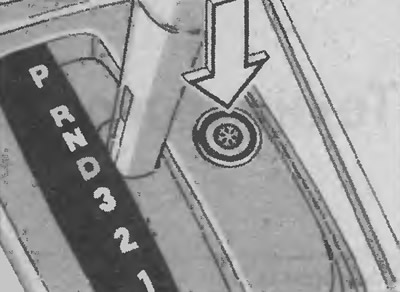


The start assist is automatically switched off at speeds above 80 km/h.


In addition, disconnection is possible when:
  • pressing the key
  • manual switching on "R", "3", "2" or "1"
  • strong gas for more than 2 seconds or turning off the ignition

Forced reverse gear shifting (Kickdown)


Pressing the accelerator pedal past the resistance point: when the speed drops below a certain value, the transmission shifts to a lower gear to make the most of the engine's power.
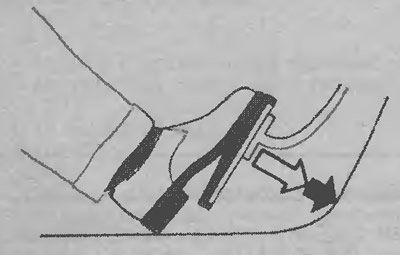
Pressing the accelerator pedal past the resistance point: when the speed drops below a certain…


Important note: If the vehicle does not accelerate as usual or if the accelerator pedal cannot be fully depressed, damage has occurred. The symbol flashes . Contact a service station immediately.


Additional engine braking


To use the engine braking functions when going downhill, engage "3", "2" gears in a timely manner, or, if the situation requires, "1".

The braking action is particularly effective in "1" gear. If "1" gear is engaged at a very high speed, the gearbox will continue to operate in 2nd gear until the point at which, for example, by braking, the transition point to 1st gear is reached.

Stop


The gear engaged when stopped with the engine running can be retained.

When stopping on slopes, always use the parking or service brake - do not try to hold the vehicle by increasing the RPM while in gear.

When stopping for long periods, such as in traffic jams or at crossings, turn off the engine.

Before leaving the vehicle, first apply the parking brake, then shift to position "P" and remove the key from the ignition switch.

"Pulling out"


To pull out a car stuck in sand, mud, snow, lightly press the gas pedal and constantly switch the gear lever between the "D" and "R" positions. Keep the engine speed as low as possible, avoid sharply increasing the gas. The method described above should be used only in rare cases.
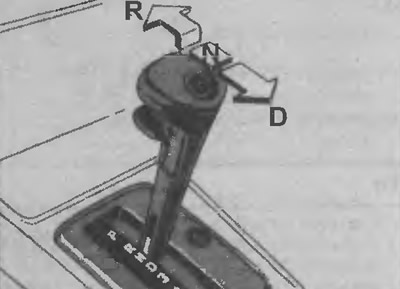
To pull out a car stuck in sand, mud, snow, lightly press the gas pedal and constantly switch the…


Precise maneuvering


For precise maneuvering, such as when parking, entering a garage, etc., you can use the slope slide. The speed of movement is regulated by slightly releasing the brake pedal.

Never press the gas and brake pedals at the same time.
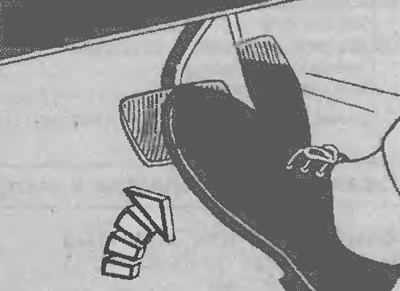
Never press the gas and brake pedals at the same time.


This article is available at russian, bulgarian, belarusian, ukrainian, serbian, croatian, romanian, polish, slovak, hungarian
Checking the article: Chernov Alexander

Share information:

Previous articles
Opel Vectra A: User manual
Next articles

Air conditioner device and control
Heating and ventilation system
Sliding sunroof
Windows doors
Interior lighting
External lighting


See similar ones from other Opel car manuals:
▶ Automatic transmission mode shift control Opel Astra H (2004-2009)
▶ Automatic transmission control mechanism device Opel Kadett E (1984-1995)
▶ Electronic control unit of automatic transmission —… Opel Zafira A (1999-2005, petrol)
▶ Automatic Transmission Fluid Replacement (ATF) Opel Corsa B (1993-2000)
▶ Automatic lighting control Opel Insignia A (2008-2017)
Link to this page in different formats

Visitor comments


No comments yet


How much will 27 + 20 =


Vectra C (2002-2008) 
  • General information
  • User manual
  • Vehicle device
  • Maintenance
  • Troubleshooting
  • Power unit
  • Engine repair
  • Cooling system
  • Power and control system
  • Engine electrics
  • Transmission
  • Clutch
  • Car gearbox
  • Drive shafts
  • Chassis
  • Car suspension
  • Steering
  • Brake system
  • Body
  • Exterior
  • Interior
  • Doors, locks and windows
  • Heating and ventilation
  • Electrical equipment
  • Equipment and devices
  • Headlights and lighting
  • Electrical circuits
Vectra B (1995-2002) 
  • General information
  • User manual
  • Weekly checks
  • Maintenance (gasoline)
  • Maintenance (diesel)
  • Troubleshooting
  • Power unit
  • SOHC gasoline engine
  • DOHC petrol engine
  • Diesel engine 1.7 liter
  • Diesel engine 2.0 liters
  • Engine repair
  • Cooling system
  • Fuel system (gasoline)
  • Fuel system (diesel)
  • Charging system
  • Launch system
  • Ignition and preheat
  • Transmission
  • Clutch
  • Mechanical gearbox
  • Automatic gearbox
  • Drive shafts
  • Chassis
  • Brake system
  • Wheel suspension
  • Steering
  • Body
  • Exterior
  • Interior
  • Doors and windows
  • Heating and ventilation
  • Electrical equipment
  • Equipment and devices
  • Electrical circuits
Vectra B (1995-2002, petrol) 
  • General information
  • Maintenance
  • Help with malfunctions
  • Power unit
  • Engine repair
  • Exhaust system
  • Cooling system
  • Fuel system
  • Multec injection system
  • Four point injection
  • Transmission
  • Clutch
  • Gearbox and drive
  • Chassis
  • Wheel suspension
  • Steering
  • Brake system
  • Wheels and tires
  • Body
  • Exterior
  • Interior
  • Electrical equipment
  • Fuses and electronics
  • Power devices
  • Ignition system
  • Lighting and signaling
  • Equipment and devices
  • Heating and ventilation
  • Electrical circuits
Vectra A (1988-1995) 
  • Power unit
  • Engine repair
  • Ignition system
  • Lubrication system
  • Cooling system
  • Injection system
  • Fuel system (carburetor)
  • Fuel system (diesel)
  • Exhaust system
  • Transmission
  • Clutch
  • Car gearbox
  • Chassis
  • Front suspension
  • Rear suspension
  • Steering
  • Brake system
  • Wheels and tires
  • Body
  • Exterior
  • Interior
  • Electrical equipment
  • Electrical circuits
Vectra A (1988-1995, petrol) 
  • General information
  • User manual
  • Maintenance
  • Power unit
  • SOHC engine
  • DOHC engine
  • Cooling and ventilation
  • Fuel system (carburetor)
  • Fuel system (injector)
  • Exhaust converter
  • Transmission
  • Clutch
  • Mechanical gearbox
  • Automatic gearbox
  • Drive shafts
  • Chassis
  • Brake system
  • Car suspension
  • Steering
  • Body
  • Body elements
  • Electrical equipment
  • Power devices
  • Equipment and devices
  • Electrical circuits
OpelBook.ru © 2017–2026 · Mobile version · · Sitemap: EN BG BY UA RS HR RO PL SK HU · Feedback · Site search
Astra F, petrol · Astra G, petrol · Astra G · Astra H · Astra J, petrol · Corsa B · Corsa C, petrol · Corsa C · Insignia A · Kadett D · Kadett E · Omega A · Omega B · Omega B2 · Vectra A, petrol · Vectra A · Vectra B, petrol · Vectra B · Vectra C · Zafira A, petrol · Frontera A, petrol · Frontera B · Ascona C · Vivaro A ·
We want your visit to be comfortable 🤝! We use cookies 🍪 to make that happen.