


Contents: Automatic mode ⬇ Set temperature ⬇ Manual settings ⬇ Removal moisture and frost from glass ⬇ Heated rear window, heated outside…⬇ Turning the air conditioning…⬇ Air distribution ⬇ Air flow ⬇ Air circulation mode ⬇ Air conditioning with the engine off ⬇
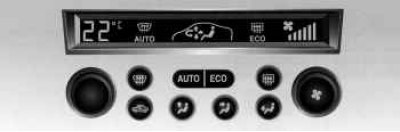
Provides maximum comfort in any weather and outside temperature at any time of the year.
To ensure a constant and comfortable climate in the car, the temperature of the incoming air, as well as the flow and distribution of air, are automatically adjusted depending on the outside atmospheric conditions.
Automatic compensation is performed for temperature changes due to external influences, such as sunlight.
With cooling on (air conditioning compressor) air cooling and dehumidification is performed.
If cooling or dehumidification is not required, press the "ECO" button to save fuel.
In automatic mode, climate control maintains optimal parameters in almost any conditions. If necessary, climate control parameters can be adjusted manually.
The climate control functions are fully available only when the engine is running.
At low outside temperatures cooling (air conditioning compressor) automatically turns off.
Automatic mode
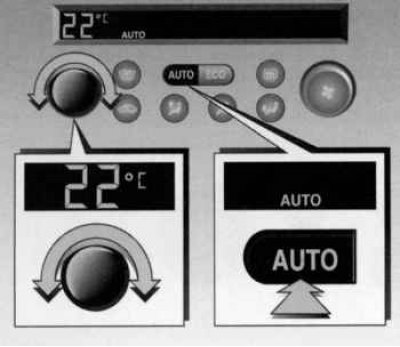
Initial setting for maximum comfort:
- press the "AUTO" key;
- open all air nozzles;
- turn on the air conditioning compressor;
- using the regulator, pre-set the temperature to 22°C.
If necessary, the set temperature can be set to a higher or lower value.
If the air conditioning compressor is switched off (the display shows "ECO"), the level of comfort and safety may decrease.
All air nozzles are automatically adjusted in automatic mode, so they must be kept open at all times.
Set temperature
The set temperature can be set using the left regulator to values from 16°C to 28°C.
For reasons of comfort, change the set temperature only by small values.
When the temperature is set below 16°C, the air conditioner indicator displays "LO": the climate control constantly operates at maximum cooling power; temperature control is not performed.
When setting the temperature above 28°C, the air conditioner indicator displays "HI": the climate control constantly operates at maximum heating power; temperature control is not performed.
The set temperature setting remains stored in memory after the ignition is turned off.
Manual settings
In special circumstances (for example, when the glass is icy or fogged up) climate control parameters can be adjusted manually.
Manual settings remain stored in memory after the ignition is switched off.
Removal moisture and frost from glass
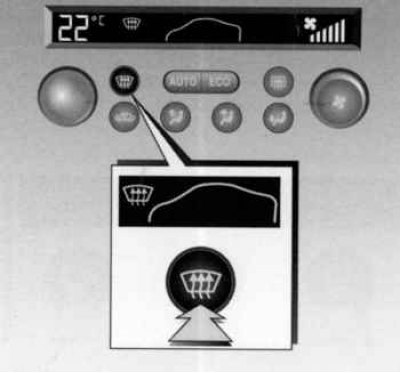
Press the key, the icon will appear on the air conditioner indicator
 .
.
Warning! Failure to follow these rules may result in fogged windows and accidents due to reduced visibility.
Temperature, air distribution and blowing are automatically adjusted to quickly defrost and dry the glass.
Return to automatic mode: press the key
 or the "AUTO" key.
Heated rear window, heated outside mirrors
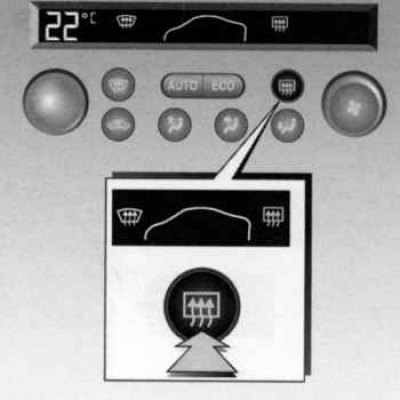
Press the key on the air conditioner indicator and the icon will appear
 .
.
Note: Heating only works when the engine is running.
The rear window and outside mirrors are quickly cleared of frost and moisture.
The heating switches off automatically after about 15 minutes. To switch off early: press the button again
 .
.
Turning the air conditioning compressor on and off
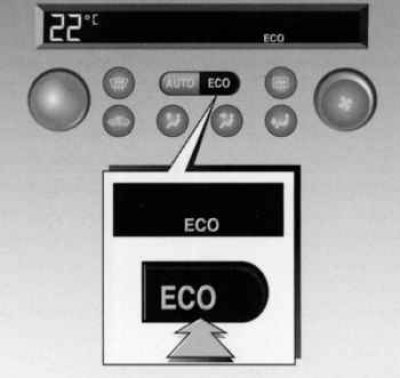
Press the "ECO" button, the "ECO" icon will appear on the air conditioner indicator.
Fuel saving mode. In this mode, cooling (air conditioning compressor) off.
There is no cooling or dehumidification of the incoming air, which limits the comfort provided by the climate control. This can lead, for example, to fogging of the windows.
To return to the cooling mode, press the "ECO" button, the indicator lamp goes out.
Air distribution
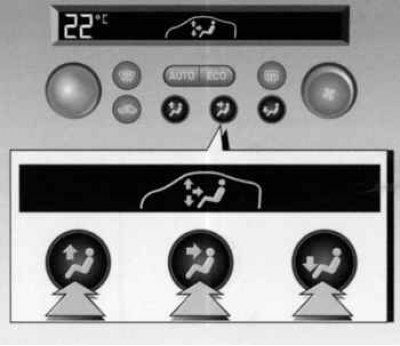
Press one or more of the following keys, the corresponding symbol appears on the air conditioner indicator:
 : air distribution to the windscreen and front side windows.
 : air distribution to the vehicle passengers through adjustable air vents.
 : air distribution into the lower space of the passenger compartment.
To return to automatic mode: press the corresponding keys again or the "AUTO" key.
Air flow
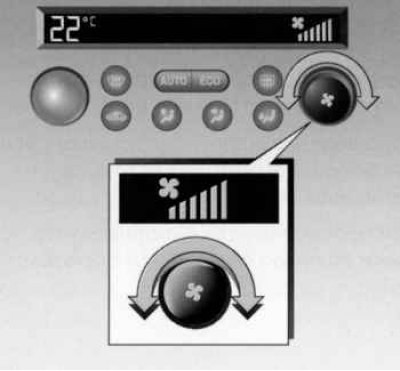
The air flow is regulated by the right regulator. The set blowing force is shown by bars.
To turn off the air conditioning and climate control, turn the right control to the left until the indicator goes out.
To turn on, turn the knob to the right.
To return to automatic mode, press the "AUTO" key.
Air circulation mode
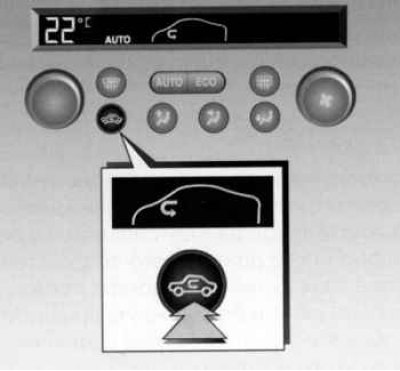
The air circulation system prevents outside air from entering the passenger compartment, while at the same time pumping in the interior air.
Press the key on the air conditioner indicator and the icon will appear
 .
.
In the air circulation mode, air exchange is limited. The quality of the air inside the cabin deteriorates over time, which can lead to fatigue in passengers. In the non-cooling mode, the air humidity increases, and the windows may fog up. Therefore, turn on the air circulation mode only for a short time.
To turn off the air circulation mode, press the button again
 .
.
Air conditioning with the engine off
When the vehicle is stationary and the ignition is switched off, the heat or cold still present in the system can be used to condition the air in the passenger compartment, for example when stopping at a railway crossing.
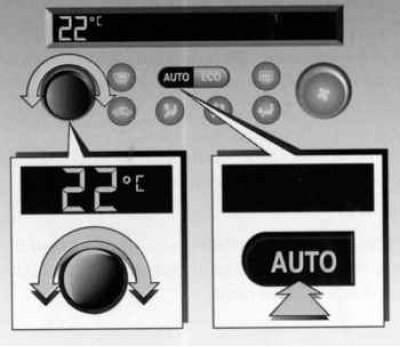
To do this, press the "AUTO" button with the ignition off, the set temperature appears on the air conditioner indicator. The temperature is adjusted by the left regulator.
The duration of air conditioning is limited.
To end early, press the "AUTO" key.
Visitor comments