


1. Disconnect the wire from the negative terminal of the battery.
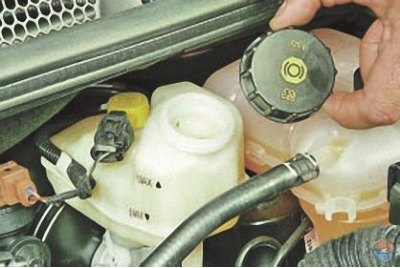
2. Remove the cap from the brake master cylinder reservoir…
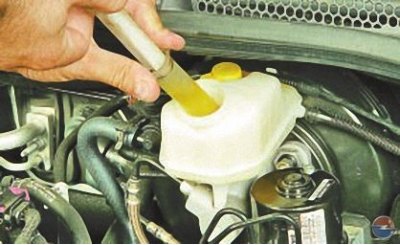
3. …and pump out, for example, using a large medical syringe, the brake fluid from the section of the master cylinder reservoir that supplies the clutch release hydraulic drive.
Note: The reservoir, common to the brake and clutch master cylinders, consists of three separate sections: two for the separate brake hydraulic circuits and one for the clutch hydraulic circuit.
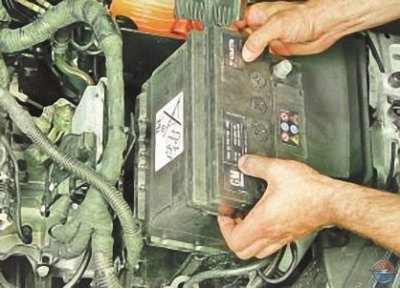
4. Remove the battery (see Removal and installation the battery).
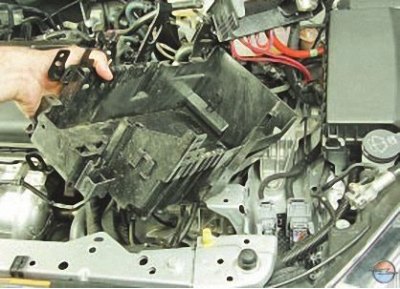
5. Remove the battery mounting shelf (see Removal and installation the battery mounting shelf).
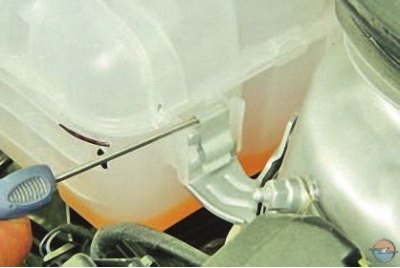
6. Use a screwdriver to pry the expansion tank mounting clip off the bracket…
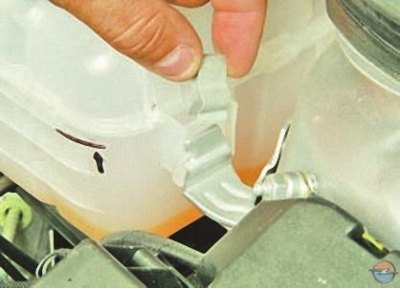
7. …remove the retainer…
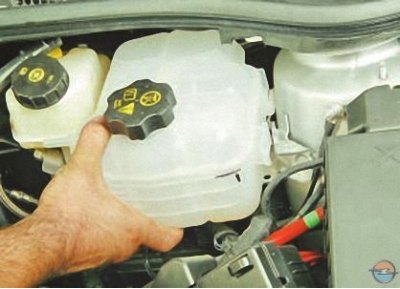
8. …and move the tank to the side without disconnecting the hoses from it and without draining the coolant.
Note: Removal of the expansion tank is necessary to gain access to the clutch master cylinder.
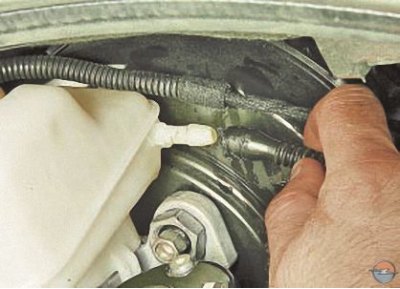
9. Disconnect the clutch release master cylinder feed hose from the master brake cylinder reservoir pipe.
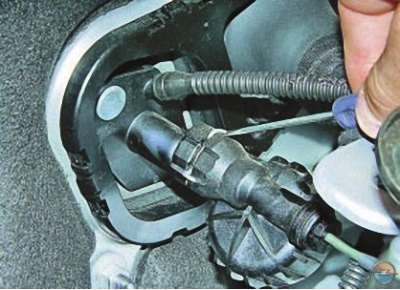
10. Use a screwdriver to pry up the spring retainer of the clutch release master cylinder damper...
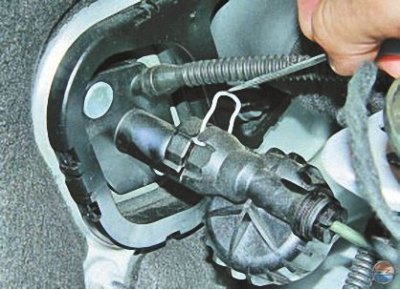
11. …raise the lock to its highest position…
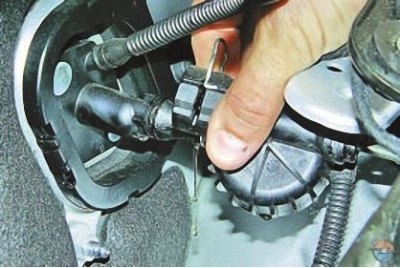
12. …and disconnect the damper from the master cylinder.
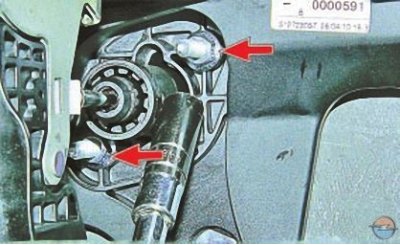
13. Under the instrument panel, unscrew the two nuts securing the clutch release master cylinder to the body panel.
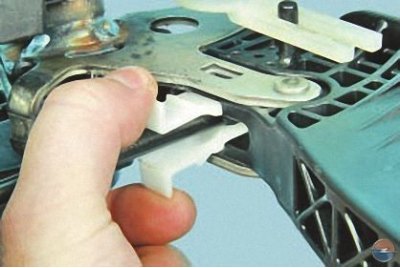
14. Disconnect the clutch master cylinder push rod from the clutch pedal by squeezing the push rod retainer tabs…
Note: For clarity, shown with the pedal assembly removed.
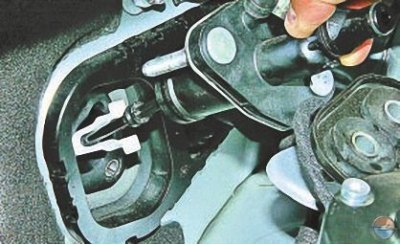
15. …and remove the master cylinder.
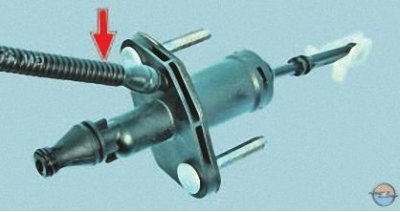
16. Disconnect the feed hose from the master cylinder.
17. Install the parts in the reverse order of removal and bleed the hydraulic drive (see Bleeding the clutch release hydraulic drive).
Visitor comments