


Contents: Cooling system (1.4L engines) ⬇ Cooling system (1.6L engines) ⬇ Cooling system (1.8L engines) ⬇ Examination ⬇
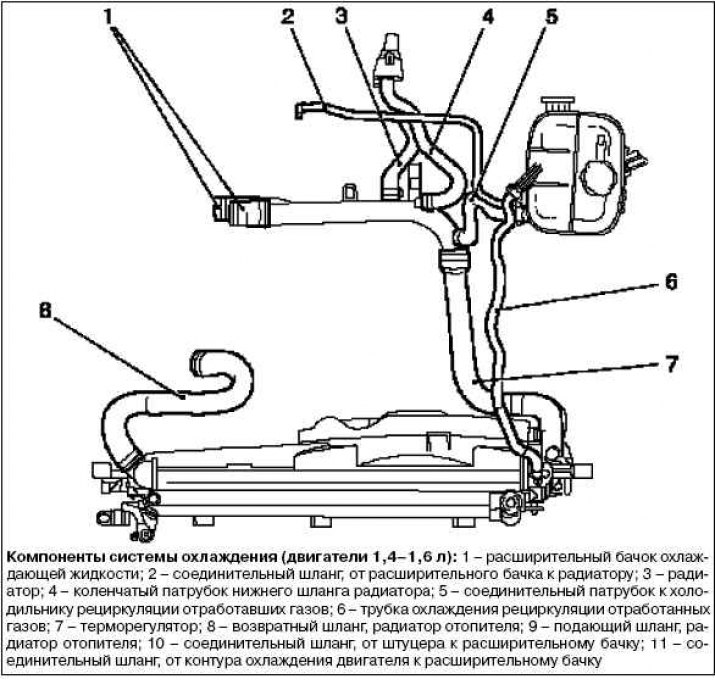
Cooling system (1.4L engines)
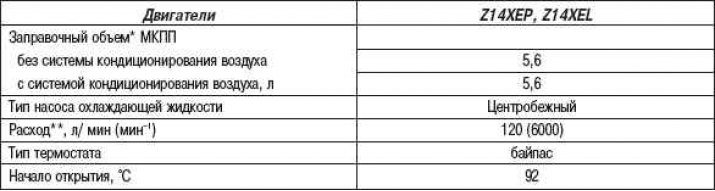
* use only antifreeze 19 40 656/ 90 297 545 (blue) before my 2001 and only antifreeze 19 40 650/ 09 194 431 (red) with my 2001 in a 50% mixture with water.
** at coolant temperature 20°c/68°f.
Cooling system (1.6L engines)
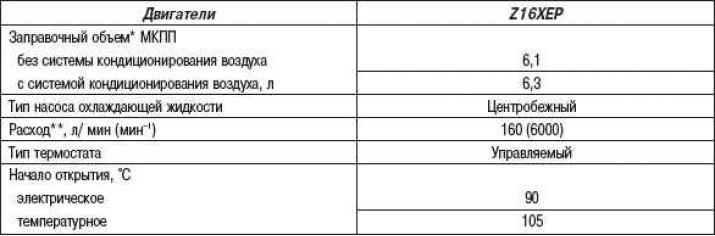
* use only antifreeze 19 40 650/ 09 194 431 (red) in a 50% mixture with water.
** at a coolant temperature of 20°C.
Cooling system (1.8L engines)
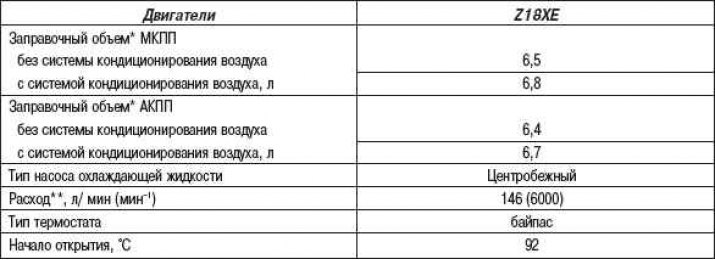
* use only antifreeze 19 40 656/ 90 297 545 (blue) before my 2001 and only antifreeze 19 40 650/ 09 194 431 (red) with my 2001 in a 50% mixture with water.
** at coolant temperature 20°c / 68°f.
Examination
Always use antifreeze 1940650/9194431 (red). Make sure the concentration is: 50% water and 50% antifreeze. Antifreeze not only protects the entire cooling system from freezing, but also protects all parts washed by the coolant from deposits and corrosion.
Water quality also plays an important role. Drinking water usually meets these requirements.
The engine may be damaged if you use antifreeze that is not recommended.
If the radiator, cylinder head or head gasket has been replaced, the old coolant should not be reused.
Caution! When replacing the coolant on vehicles with air conditioning: turn off the air conditioning and set the ECO mode.
Open the cooling system.
Caution! The cooling system is under pressure.
Unscrew the cap of the coolant expansion tank.
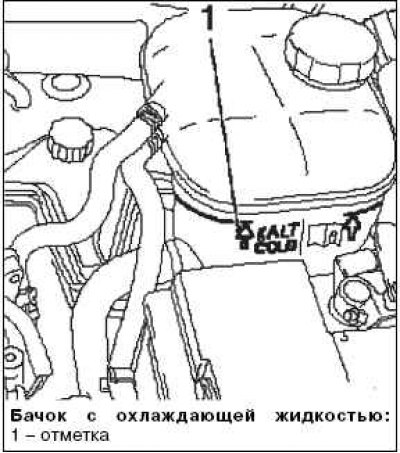
Fill the coolant to the lower mark of the coolant expansion tank.
Close the cooling system.
Replace the coolant expansion tank cap.
Allow the engine to warm up at 2500 min⁻¹ until the radiator fan comes on.
Bleed the cooling system.
Let the engine run for approximately 2 min at 2000–2500 rpm⁻¹.
Note: Air is removed from the cooling system through the exhaust lines.
Stop the engine and let it cool.
Check the coolant level and add coolant up to the "COOL" mark.
Visitor comments