
OpelBook.ru
Cars AvtoVAZ Cars Mitsubishi Cars BMW Cars Mercedes Cars Nissan Cars Toyota Cars Chevrolet
English Русский
Български
Беларускі
Український
Српски
Hrvatski
Română
Polski
Slovenský
Magyar
 |  Sitemap  |  Contacts  |    


Main Astra Corsa Insignia Kadett Omega Vectra Zafira Others Articles
Astra F (1991-1998, petrol) Astra G (1998-2004, petrol) Astra G (1998-2004) Astra H (2004-2009) Astra J (2009-2015, petrol)
  • Main
  • Astra
  • Astra J
  • General information
  • Faults en route
  • Fuel injection system faults

Fuel injection system faults (Opel Astra J)

            0

The car uses a distributed fuel injection system with feedback. The injection is called distributed because the fuel is injected into each cylinder by a separate nozzle. The fuel injection system allows to reduce the toxicity of exhaust gases while improving the driving characteristics of the car.

This section only briefly describes the injection system malfunctions caused by failure of certain sensors. The procedure for removing and installing units of the fuel and engine control systems is given in the subsections Engine power supply system and Engine management system.

In the feedback injection system, a catalytic converter of exhaust gases and sensors of oxygen concentration in exhaust gases are installed, which provide feedback. The sensors monitor the concentration of oxygen in exhaust gases, and the electronic control unit, based on their signals, maintains such a ratio of air and fuel at which the converter operates most effectively. Moreover, the main control sensor is the sensor installed on the exhaust manifold, and the sensor installed at the outlet of the converter is called a diagnostic sensor; it determines the quality of operation of the entire engine management system as a whole. If the engine control unit, based on the information from the diagnostic sensor, detects an excess of oxygen concentration in the exhaust gases, which cannot be eliminated by calibrating the system based on the signal from the control sensor and which indicates some kind of system malfunction, it will turn on the signal lamp 41 in the instrument cluster (see Instrument cluster, Fig. 1) of the engine management system and enters the error code into memory for subsequent diagnostics.


Attention!
  • Before removing any fuel injection system components, disconnect the negative battery cable. Disconnect the battery only when the ignition is off. Do not start the engine if the battery cable terminals are not tight enough.
  • Never disconnect the battery from the vehicle's electrical system when the engine is running. When charging, disconnect the battery from the vehicle's electrical system, as the increased current during charging may damage the electronic components. Do not disconnect or connect the wiring harness connectors to the ECU when the ignition is on. Before performing arc welding on the vehicle, disconnect the wires from the battery and the wiring connectors from the ECU.


All voltage measurements should be performed using a digital voltmeter with an internal resistance of at least 10 megohms. The electronic components used in the injection system are designed for very low voltage, so they can easily be damaged by electrostatic discharge. To prevent damage to the ECU by electrostatic discharge:
  • do not touch the ECU connectors or electronic components on its boards with your hands;
  • when working with the programmable read-only memory (PROM) of the control unit, do not touch the terminals of the microcircuit.

It is not allowed to operate the engine with exhaust gas neutralizer on leaded gasoline - this will lead to rapid failure of the neutralizer and oxygen concentration sensors. When working in rainy weather, do not allow water to get on the electronic components of the fuel injection system.


Check the injection system in the following order.
  • Check the connection of the engine and battery to ground.
  • Check the fuel pump and its fuel filter.
  • Check the fuses and relays for switching on the injection system components.
  • Check the reliability of the contacts in the pads with wires of the injection system elements.
  • Check the injection system sensors.

The vast majority of fuel injection system faults are caused by failure of the following sensors:
The vast majority of fuel injection system faults are caused by failure of the following sensors:

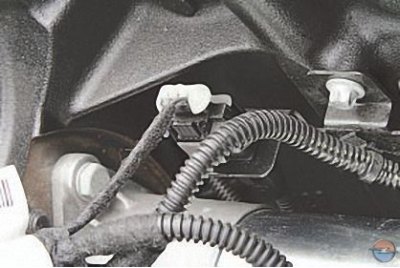
  • crankshaft position sensor (the photo shows the connector of the sensor wiring harness block, installed on the cylinder block behind the starter, the sensor itself is located inside the engine, so access to it is opened only after removing the gearbox, clutch and flywheel) - complete failure of the injection system, the engine does not start;
crankshaft position sensor (the photo shows the connector of the sensor wiring harness block,…

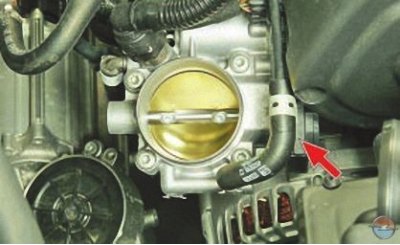
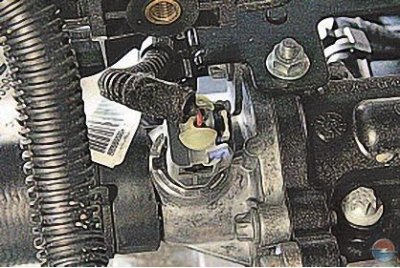
  • throttle position sensor (installed in the throttle body cover) - loss of power, jerks and dips during acceleration, unstable operation in idle mode;
throttle position sensor (installed in the throttle body cover) - loss of power, jerks and dips…

  • coolant temperature sensor - difficulty starting in cold weather: you have to warm up the engine, maintaining the speed with the accelerator pedal, when overheating, the power is significantly reduced, detonation appears;
coolant temperature sensor - difficulty starting in cold weather: you have to warm up the engine,…

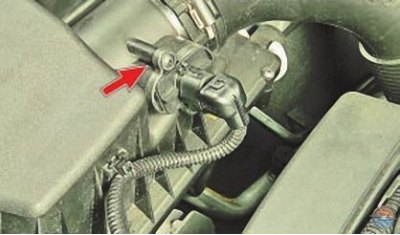
  • combined mass flow and intake air temperature sensor - if the temperature measurement function fails, fuel consumption and exhaust gas toxicity levels increase, and if the flow measurement function fails, fuel consumption increases, dynamics are significantly reduced, and engine starting problems occur;
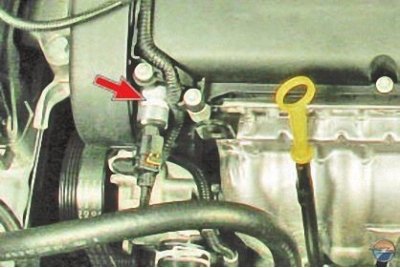
combined mass flow and intake air temperature sensor - if the temperature measurement function…

  • electromagnetic valve of the variable valve timing system - if the valves fail, there is a significant deterioration in dynamics and "floating" of the crankshaft speed in idle mode up to a complete stop of the engine;

Note: The engine shown has two solenoids, one each for the intake and exhaust camshafts.
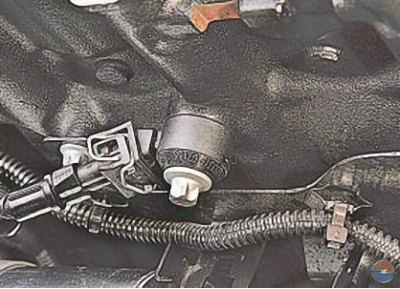


Note: The engine shown has two solenoids, one each for the intake and exhaust camshafts.

  • knock sensor (installed on the left side of the cylinder block in the area between the 2nd and 3rd cylinders) – the engine is very sensitive to the quality of gasoline, increased tendency to detonation;
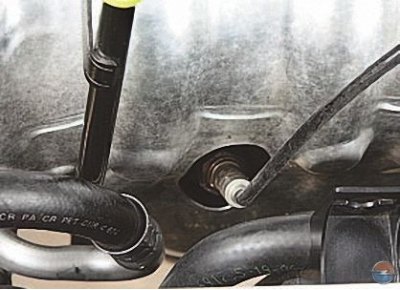
knock sensor (installed on the left side of the cylinder block in the area between the 2nd and 3rd…

  • exhaust gas oxygen concentration sensor (lambda probe) – increased fuel consumption, decreased engine power, unstable idling. Possible damage to the catalytic converter of exhaust gases;
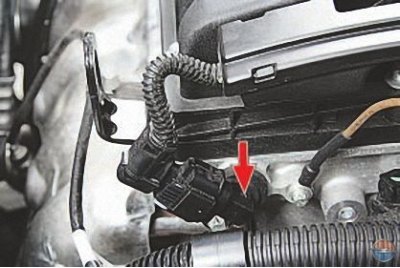
exhaust gas oxygen concentration sensor (lambda probe) – increased fuel consumption, decreased…

  • phase sensor - power loss, fuel consumption increase;

Note: The engine shown has two camshaft position sensors, one each for the intake and exhaust camshafts.
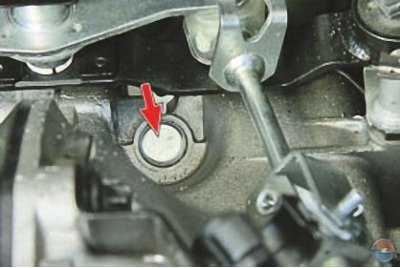


Note: The engine shown has two camshaft position sensors, one each for the intake and exhaust…

  • speed sensor (the location of its possible installation on the gearbox housing is shown, since it is not installed on the car used for photography; instead, the left front wheel speed sensor of the ABS system is used to obtain speed information) – possible deterioration of the vehicle's dynamic qualities and increase in fuel consumption;
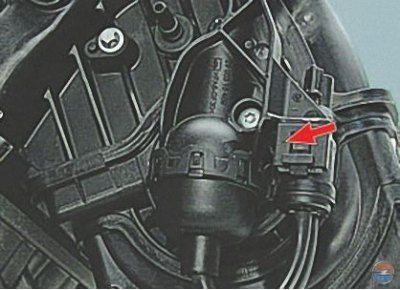
speed sensor (the location of its possible installation on the gearbox housing is shown, since it…

  • electromagnetic valve and pneumatic drive of the intake manifold geometry change system - possible deterioration of the vehicle's dynamic qualities and increase in fuel consumption.

[Material provided by this website OpelBook]


This article is available at russian, bulgarian, belarusian, ukrainian, serbian, croatian, romanian, polish, slovak, hungarian
Checking the article: Trifonova Emilia

Share information:

Previous articles
Opel Astra J: Faults en route
Next articles

Checking the engine fuel system
Checking the ignition system
Malfunctions in the starting system
General techniques for starting an engine
Idle speed is gone
Engine misfires
Engine diagnostics by the appearance of spark plugs
The car moves in jerks
The car accelerates poorly
The engine stalled while driving


See similar ones from other Opel car manuals:
▶ Test sequence for determining faults in the fuel injection… Opel Kadett E (1984-1995)
▶ General information about the fuel injection system of a… Opel Corsa B (1993-2000)
▶ Fuel injection system — precautions Opel Omega A (1986-1993)
▶ General description of the injection fuel system Opel Vectra A (1988-1995, petrol)
▶ Fuel system of injection engines — general information Opel Frontera A (1991-1998, petrol)
Link to this page in different formats

Visitor comments


No comments yet


How much will 30 + 13 =


Astra J (2009-2015, petrol) 
  • General information
  • Vehicle device
  • User manual
  • Faults en route
  • Maintenance
  • Power unit
  • Engine repair
  • Cooling and lubrication system
  • Engine power system
  • Exhaust system
  • Transmission
  • Clutch
  • Car gearbox
  • Drive shafts
  • Chassis
  • Front suspension
  • Rear suspension
  • Steering
  • Brake system
  • Wheels and tires
  • Body
  • Exterior
  • Interior
  • Doors and windows
  • Body Care
  • Heating and air conditioning
  • Security systems
  • Electrical equipment
  • Equipment and devices
  • Lighting and signaling
  • Power devices
  • Electrical circuits
Astra H (2004-2009) 
  • General information
  • Introduction to the guide
  • Troubleshooting
  • User manual
  • Maintenance
  • Power unit
  • Engine repair
  • Cooling and heating
  • Power and exhaust system
  • Ignition system
  • Launch and charge system
  • Transmission
  • Mechanical gearbox
  • Automatic gearbox
  • Drive shafts
  • Chassis
  • Brake system
  • Car suspension
  • Steering
  • Body
  • Interior
  • Exterior
  • Electrical equipment
  • Equipment and devices
  • Electrical circuits
Astra G (1998-2004) 
  • General information
  • Introduction to manual
  • User manual
  • Maintenance
  • Power unit
  • SOHC gasoline engines
  • DOHC gasoline engines
  • Diesel engines 1.7 and 2.0
  • Engine repair
  • Cooling system
  • Supply system
  • Injection system (gasoline)
  • Injection system (diesel)
  • Exhaust system
  • Charge and launch system
  • Ignition system (gasoline)
  • Preheat system (diesel)
  • Transmission
  • Manual gearbox
  • Automatic gearbox
  • Clutch
  • Drive shafts
  • Chassis
  • Brake system
  • Wheel suspension
  • Steering
  • Body
  • Exterior
  • Interior
  • Doors and windows
  • Ventilation and heating
  • Electrical equipment
  • Equipment and devices
  • Electrical circuits
Astra G (1998-2004, petrol) 
  • General information
  • User manual
  • Car care
  • Maintenance
  • Power unit
  • Single shaft engines
  • Twin shaft engines
  • Engine repair
  • Cooling and heating
  • Fuel and exhaust systems
  • Starting and charging system
  • Ignition system
  • Transmission
  • Clutch
  • Mechanical gearbox
  • Automatic gearbox
  • Drive shafts
  • Chassis
  • Brake system
  • Car suspension
  • Steering
  • Body
  • Interior
  • Exterior
  • Electrical equipment
  • Equipment and devices
  • Wiring diagrams Opel Astra
  • Wiring diagrams Opel Zafira
Astra F (1991-1998, petrol) 
  • General information
  • Maintenance
  • Power unit
  • Engine in car
  • Engine removed
  • Cooling system
  • Heating and ventilation
  • Fuel supply (carburetor)
  • Fuel supply (injector)
  • Emission control
  • Ignition system
  • Transmission
  • Clutch
  • Mechanical gearbox
  • Automatic gearbox
  • Drive shafts
  • Chassis
  • Brake system
  • Car suspension
  • Steering
  • Body
  • Exterior
  • Interior
  • Electrical equipment
  • Equipment and devices
  • Electrical circuits
OpelBook.ru © 2017–2026 · Mobile version · · Sitemap: EN BG BY UA RS HR RO PL SK HU · Feedback · Site search
Astra F, petrol · Astra G, petrol · Astra G · Astra H · Astra J, petrol · Corsa B · Corsa C, petrol · Corsa C · Insignia A · Kadett D · Kadett E · Omega A · Omega B · Omega B2 · Vectra A, petrol · Vectra A · Vectra B, petrol · Vectra B · Vectra C · Zafira A, petrol · Frontera A, petrol · Frontera B · Ascona C · Vivaro A ·
We want your visit to be comfortable 🤝! We use cookies 🍪 to make that happen.