
OpelBook.ru
Cars AvtoVAZ Cars Mitsubishi Cars BMW Cars Mercedes Cars Nissan Cars Toyota Cars Chevrolet
English Русский
Български
Беларускі
Український
Српски
Hrvatski
Română
Polski
Slovenský
Magyar
 |  Sitemap  |  Contacts  |    


Main Astra Corsa Insignia Kadett Omega Vectra Zafira Others Articles
Astra F (1991-1998, petrol) Astra G (1998-2004, petrol) Astra G (1998-2004) Astra H (2004-2009) Astra J (2009-2015, petrol)
  • Main
  • Astra
  • Astra J
  • General information
  • Faults en route
  • The car moves in jerks

The car moves in jerks (Opel Astra J)

            0

Contents: Main types of jerks ⬇ A jerk at the start of movement ⬇ Jerks during acceleration ⬇ Jerks during steady motion ⬇

Main types of jerks


In relation to a car, a jerk is a short-term spontaneous change in the engine crankshaft speed regardless of the position of the gas pedal. In everyday operation, as a rule, there are series of jerks. The extreme case of a jerk is a failure, a noticeable delay in the engine's response to pressing the accelerator pedal.

Conventionally, three types of jerks can be distinguished:
  • at the moment of the start of movement;
  • during acceleration;
  • during steady movement, i.e. with a constant position of the gas pedal.

To determine the causes of jerks when driving a car with an injection engine, special diagnostic equipment is required, so we recommend contacting a service center specializing in repairing fuel injection systems. However, as practice shows, in most cases jerks are caused by insufficient fuel pressure in the fuel rail or a malfunction of the throttle position sensor built into the throttle assembly cover. In addition, a specific cause of jerks in an Opel Astra J equipped with an electronic throttle control system may be a malfunction of the accelerator pedal.

If you have some skills, you can identify the cause of the jerks yourself.

A jerk at the start of movement


At the moment of starting the movement, the extreme case of jerking most often occurs - a failure. The most unpleasant sensations are associated with the delay in the engine's response to pressing the gas pedal. Sometimes the engine even stalls.


The jerk occurs at the moment the throttle valve begins to open, when the ECU determines the moment of transition from idle mode to load mode based on the signal from the throttle position sensor and must increase the amount of fuel supplied through the injectors. If the pressure in the fuel rail is insufficient, even with an increase in the injection duration, there is not enough fuel for smooth starting. For the fuel pressure testing method, see the subsection Checking the fuel pressure in the fuel system.

In addition, a jerk may also occur due to a malfunction of the electromechanical part of the throttle assembly, as well as as a result of contamination of the throttle valve with deposits from crankcase gases.

Jerks during acceleration


The reason for jerks during acceleration may be, as in the previous case (see Jerk at the start of movement), insufficient fuel pressure in the fuel rail. The electronic engine control unit, having received a signal from the throttle position sensor about intensive opening of the valve at a large angle, tries to increase the fuel supply as much as possible, but is unable to do so due to low fuel pressure. The reasons for this phenomenon and the method of checking are described in the subsection Jerk at the moment of starting movement.

In addition to the above reasons, jerks during acceleration of a car with an automatic transmission can be caused by either an insufficient amount of working fluid in the transmission or a malfunction of the transmission itself.


Note: A car with an automatic transmission may accelerate jerkily at the beginning of the first trip after disconnecting and reconnecting the battery. This is not a malfunction, since after several accelerations the electronic unit will calibrate the transmission control and gear shifting will become smooth.


Jerks during steady motion


Such jerks are most often caused by a malfunction of the ignition system. Diagnostics and repair are necessary (see section. Electrical equipment). On the way, you can try to do the following yourself:
  • carefully inspect the underhood space. Turn off the ignition and check the reliability of the fastening and fit on the spark plugs of the ignition module and the reliability of the connection of its connector. Start the engine and listen to its operation: the crackling sound when the high-voltage current breaks down to the "ground" is weak, but distinct. In complete darkness, the spark is clearly visible when breaking down;
  • replace spark plugs regardless of their condition and mileage. Pay attention to the condition of the spark plugs: if it is not in compliance with the norm, it may be necessary to repair the engine or its systems.
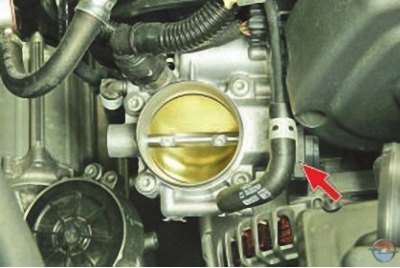
replace spark plugs regardless of their condition and mileage. Pay attention to the condition of…


A specific cause of jerks during steady movement of the Opel Astra J may be a failure of the throttle position sensor built into the throttle assembly cover. Additional symptoms confirming the malfunction of this sensor are:


  • uneven engine idling;
  • reduction in maximum engine power.

The throttle body cover is non-separable and therefore cannot be repaired. If a sensor malfunction is detected (see Checking and replacing engine management system sensors), replace the throttle assembly with the cover.

(Original source is on the website: «opelbook.ru»)


This article is available at russian, bulgarian, belarusian, ukrainian, serbian, croatian, romanian, polish, slovak, hungarian
Checking the article: Trifonova Emilia

Share information:

Previous articles
Opel Astra J: Faults en route
Next articles

Engine diagnostics by the appearance of spark plugs
Engine misfires
Idle speed is gone
Fuel injection system faults
Checking the engine fuel system
Checking the ignition system
The car accelerates poorly
The engine stalled while driving
Oil pressure warning light
Checking the lubrication system
Coolant temperature gauge
Checking the cooling system


Link to this page in different formats

Visitor comments


No comments yet


How much will 15 + 44 =


Astra J (2009-2015, petrol) 
  • General information
  • Vehicle device
  • User manual
  • Faults en route
  • Maintenance
  • Power unit
  • Engine repair
  • Cooling and lubrication system
  • Engine power system
  • Exhaust system
  • Transmission
  • Clutch
  • Car gearbox
  • Drive shafts
  • Chassis
  • Front suspension
  • Rear suspension
  • Steering
  • Brake system
  • Wheels and tires
  • Body
  • Exterior
  • Interior
  • Doors and windows
  • Body Care
  • Heating and air conditioning
  • Security systems
  • Electrical equipment
  • Equipment and devices
  • Lighting and signaling
  • Power devices
  • Electrical circuits
Astra H (2004-2009) 
  • General information
  • Introduction to the guide
  • Troubleshooting
  • User manual
  • Maintenance
  • Power unit
  • Engine repair
  • Cooling and heating
  • Power and exhaust system
  • Ignition system
  • Launch and charge system
  • Transmission
  • Mechanical gearbox
  • Automatic gearbox
  • Drive shafts
  • Chassis
  • Brake system
  • Car suspension
  • Steering
  • Body
  • Interior
  • Exterior
  • Electrical equipment
  • Equipment and devices
  • Electrical circuits
Astra G (1998-2004) 
  • General information
  • Introduction to manual
  • User manual
  • Maintenance
  • Power unit
  • SOHC gasoline engines
  • DOHC gasoline engines
  • Diesel engines 1.7 and 2.0
  • Engine repair
  • Cooling system
  • Supply system
  • Injection system (gasoline)
  • Injection system (diesel)
  • Exhaust system
  • Charge and launch system
  • Ignition system (gasoline)
  • Preheat system (diesel)
  • Transmission
  • Manual gearbox
  • Automatic gearbox
  • Clutch
  • Drive shafts
  • Chassis
  • Brake system
  • Wheel suspension
  • Steering
  • Body
  • Exterior
  • Interior
  • Doors and windows
  • Ventilation and heating
  • Electrical equipment
  • Equipment and devices
  • Electrical circuits
Astra G (1998-2004, petrol) 
  • General information
  • User manual
  • Car care
  • Maintenance
  • Power unit
  • Single shaft engines
  • Twin shaft engines
  • Engine repair
  • Cooling and heating
  • Fuel and exhaust systems
  • Starting and charging system
  • Ignition system
  • Transmission
  • Clutch
  • Mechanical gearbox
  • Automatic gearbox
  • Drive shafts
  • Chassis
  • Brake system
  • Car suspension
  • Steering
  • Body
  • Interior
  • Exterior
  • Electrical equipment
  • Equipment and devices
  • Wiring diagrams Opel Astra
  • Wiring diagrams Opel Zafira
Astra F (1991-1998, petrol) 
  • General information
  • Maintenance
  • Power unit
  • Engine in car
  • Engine removed
  • Cooling system
  • Heating and ventilation
  • Fuel supply (carburetor)
  • Fuel supply (injector)
  • Emission control
  • Ignition system
  • Transmission
  • Clutch
  • Mechanical gearbox
  • Automatic gearbox
  • Drive shafts
  • Chassis
  • Brake system
  • Car suspension
  • Steering
  • Body
  • Exterior
  • Interior
  • Electrical equipment
  • Equipment and devices
  • Electrical circuits
OpelBook.ru © 2017–2026 · Mobile version · · Sitemap: EN BG BY UA RS HR RO PL SK HU · Feedback · Site search
Astra F, petrol · Astra G, petrol · Astra G · Astra H · Astra J, petrol · Corsa B · Corsa C, petrol · Corsa C · Insignia A · Kadett D · Kadett E · Omega A · Omega B · Omega B2 · Vectra A, petrol · Vectra A · Vectra B, petrol · Vectra B · Vectra C · Zafira A, petrol · Frontera A, petrol · Frontera B · Ascona C · Vivaro A ·
We want your visit to be comfortable 🤝! We use cookies 🍪 to make that happen.