


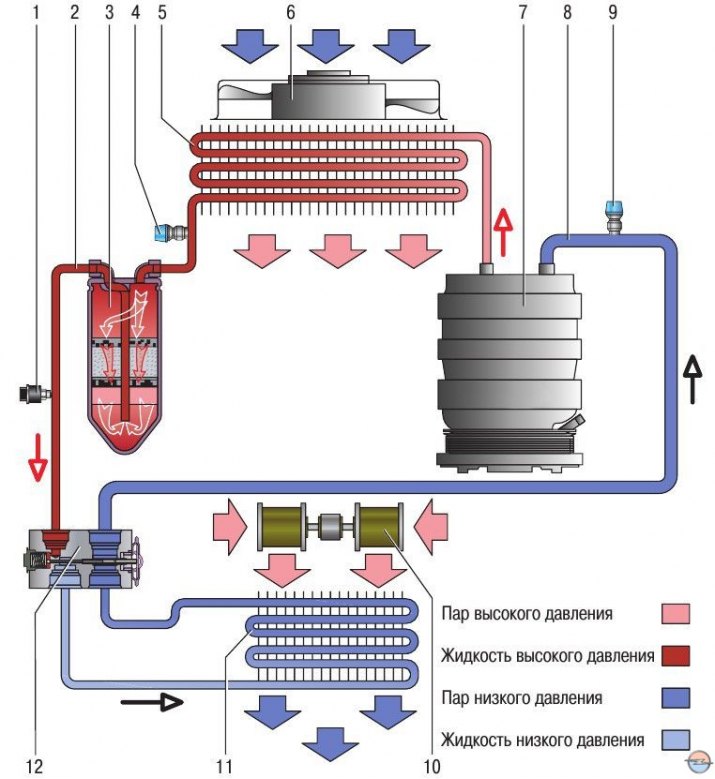
Fig. 1. Schematic diagram of the movement of refrigerant in the air conditioning system: 1 – combined pressure sensor; 2 – section of high pressure pipeline; 3 – receiver-dryer; 4 – high pressure line service valve; 5 – condenser (air conditioner radiator); 6 – condenser and radiator fan of the cooling system; 7 – air conditioning compressor; 8 – low pressure pipeline section; 9 – Low pressure line service valve; 10 – heater fan; 11 – evaporator; 12 – thermostatic valve
The basic diagram of the movement of refrigerant in the air conditioning system is shown in Fig. 1.
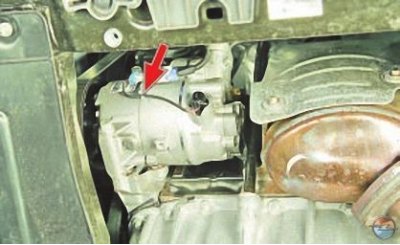
Compressor it is installed on the engine cylinder block and is driven by a poly V-belt.
The compressor ensures the circulation of the refrigerant in the system. The compressor shaft is installed in the aluminum front cover of the housing on bearings and is sealed on the drive pulley side with a seal.
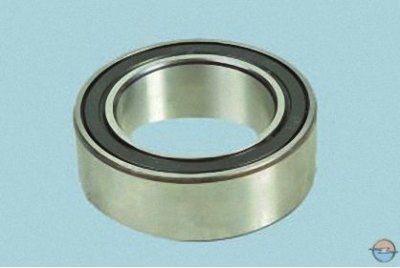
The compressor drive pulley is mounted on a double-row ball bearing and rotates continuously when the engine is running. Torque is transmitted from the pulley to the compressor shaft via the driven disk.
Notes:
- If the system is working properly, a click is heard when the air conditioner is turned on - this is the clutch pressure plate, under the action of an electromagnet, engaging with the drive pulley, and the compressor rotor begins to rotate.
- But during the operation of the air conditioner, the following compressor malfunctions may occur.
1. If the clutch makes strange sounds during rotation, heats up, or smells like burning when the air conditioner is off, then its bearing has probably started to deteriorate. In this case, the bearing must be replaced. In some advanced cases, it may be necessary to replace the compressor clutch assembly or its components.
2. If you do not hear a click after turning on the air conditioner, the following problems may occur:
- there is a refrigerant leak and the control system is blocking the compressor from turning on;
- the pressure sensor in the system is out of order;
- faults in the electrical circuits of the control system;
- the clutch electromagnet coil winding burned out;
- engine control unit for some reason (high engine coolant temperature, high engine speed) blocked the compressor from turning on.
3. If the clutch rotates easily and freely, but when you turn on the air conditioner, you can clearly hear extraneous noises or even the engine stalls, then most likely the compressor is jammed. The internal pump part of the compressor cannot be repaired. In this case, the compressor will have to be replaced.
4. And the last, most unpleasant option. A click is heard, the clutch easily rotates the compressor shaft, but the air in the cabin is not cooled. In this case, the compressor runs idle, without pumping anything. Only an experienced specialist with special control and diagnostic equipment can determine this malfunction.
The most accurate way to determine the cause of the malfunction is after a complete diagnosis at a specialized service center for repairing car air conditioners.
Condenser (air conditioner radiator) multi-flow type is located in front of the radiator of the engine cooling system. It is attached with brackets to the radiator frame. The condenser cells are made of flat thin-walled aluminum tubes with internal longitudinal partitions for rigidity and external finning to improve heat exchange. The tanks are aluminum, with flanges for connecting pipelines and a receiver. The tanks are divided into sections by height, therefore, passing through the condenser, the flow of refrigerant changes direction several times. In the condenser, condensation of vapors of the refrigerant compressed by the compressor occurs and the heat released in this process is removed into the surrounding air.
When the air conditioner is turned on, the engine control unit turns on the power supply circuit of the electric fan of the engine cooling radiator, which improves heat exchange in the condenser and reduces the pressure in the air conditioning system.
Useful tips
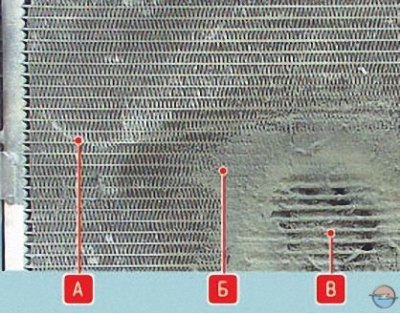
At least once a year, preferably before the start of summer operation, wash the fins A honeycomb condenser from adhering dirt, dust and anti-icing reagents B. This will improve heat exchange, reduce pressure in the system and increase the service life of the system elements.
Do not use high-pressure water jet cleaners to clean the condenser. This may cause damage IN thin-walled finned plates.
Even with regular washing, the need to replace the condenser arises much more often than desired. The fact is that it is the first to take on the flow of anti-icing reagents, dirt and pebbles from the road. And the walls of its tubes are thin... In most cases, the condenser is damaged by corrosion in the third or fourth year of operation.
If the condenser is damaged due to corrosion, it will be more expensive to repair it. Even if the argon welding specialist manages to patch the hole, a leak may soon appear in another place. By the way, the pressure in the system on hot days can reach 25-28 bar.
In addition, it is necessary to take into account the complex structure of the condenser tube: it is divided lengthwise by partitions into channels, so it is highly likely that after welding some of the channels will be blocked. Accordingly, the dissipated power will drop and the operation of the air conditioner will deteriorate, especially in traffic jams and in hot weather.
After each experiment with patching the condenser, you will have to pay for removal and installation, welding of the condenser and filling the system with refrigerant. So it is better to install a new condenser right away. Instead of an expensive original one, you can easily buy a cheaper condenser from authorized manufacturers of spare parts.
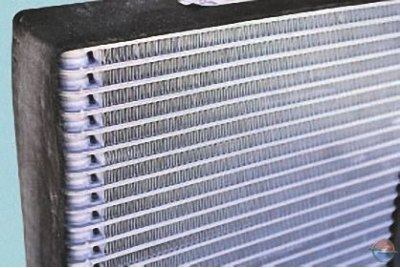
Evaporator is located in the cabin heating and air conditioning system unit. The evaporator is made of aluminum tubes with external finning to improve heat exchange. Passing through the evaporator tubes, the boiling refrigerant actively absorbs heat from the air blowing on the outer finned surface of the tubes. The air is cooled and supplied to the car interior by a fan.
Note: When the air passing through the evaporator is cooled, the water vapor contained in it condenses. The condensate drains through the drain pipe located on the lower left side of the engine shield and under the bottom of the car. If the ambient air humidity is high, a puddle of water may form under the car, which is an indirect sign that the air conditioning system is working properly.
Attention! During vehicle operation, particles of road dust and dirt settle on the outer surface of the evaporator, which is wet from condensation.
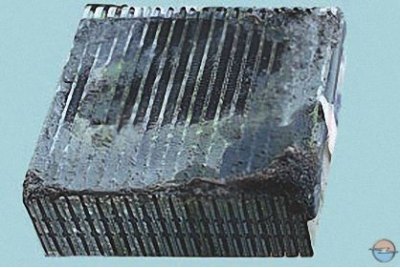
This layer becomes an excellent environment for the life and rapid reproduction of putrefactive bacteria and fungal cultures. Over time, an unpleasant smell appears in the car. It is especially noticeable when the air conditioner is turned off and in humid weather.
In order to minimize the risk of this problem, when buying a new car, it is necessary to carry out preventive treatment of the evaporator with special chemicals, regularly replace the cabin filter and clean the drain pipe. If, despite the measures taken, the smell still appears, contact a specialized service for repairing car air conditioners for disinfection or washing the evaporator. If the contamination is very severe, the evaporator will have to be replaced.
On the side surface of the evaporator there is a flange for mounting the thermostatic valve.
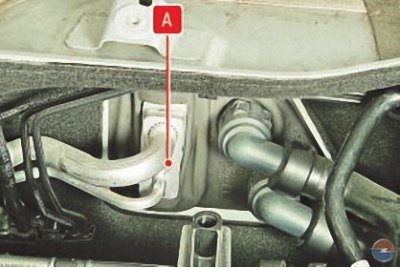
Thermostatic valve A block type is located in the evaporator body. The valve is attached to the pipelines and the evaporator using flange connections. After passing through the throttling hole in the valve body, the liquid refrigerant sharply reduces its pressure and begins to boil. A control element is installed in the valve body, changing the flow section of the throttling hole depending on the pressure and temperature of the refrigerant. The control element is adjusted at the manufacturer and is not subject to adjustment during operation.
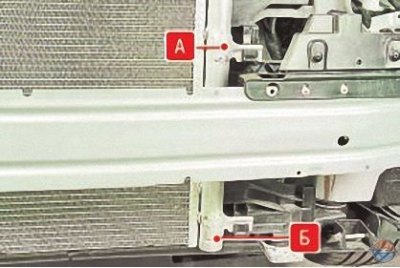
Receiver-dryer A is installed on the condenser on the left side and forms a non-separable unit with it. Inside the housing there is a filter element (cartridge) filled with desiccant granules (silica gel). The liquefied refrigerant passing through the receiver is cleaned of possible impurities, dirt and moisture. At the bottom B the housing has an opening for replacing the filter element.
Warning! In case of repair or replacement of air conditioning system components, if it was in an open state (some units were removed, pipelines were destroyed, etc.), the receiver-dryer cartridge must be replaced. Otherwise, after filling the system, the refrigerant will not be dried and acids may form inside the system, which will destroy the air conditioner parts from the inside.
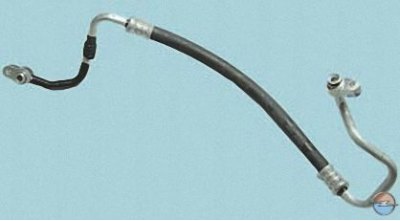
Pipelines connect all elements of the air conditioning system into a single hermetic circuit. The pipelines and their mounting flanges are made of aluminum alloys.
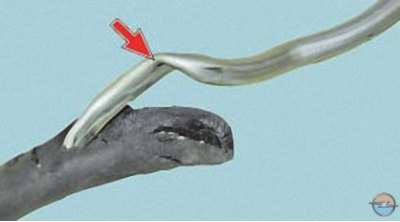
Protect metal sections of pipelines from dents and bends. Any narrowing of the flow section of the pipeline leads to a decrease in the system performance.
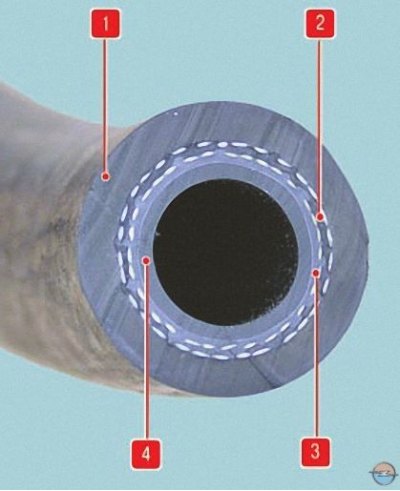
Fig. 2. Flexible insert hose design: 1 – outer protective shell; 2 – fabric cord of the power frame; 3 – plastic sealing layer; 4 – inner oil-resistant layer
To connect mutually moving elements of the system, pipelines in some sections are equipped with flexible inserts (Fig. 2) made of synthetic materials.
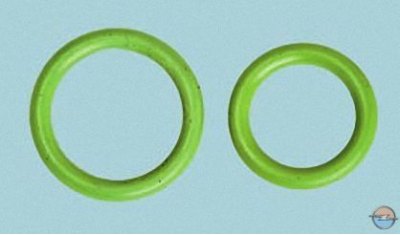
In the places where individual system elements are connected, neoprene circular cross-section sealing rings are installed. During system repairs, when pipeline sections are disconnected, the sealing rings must be replaced. Tighten the threaded connections of the pipelines with the recommended torque. Weak or excessively strong tightening leads to deformation of the sealing surfaces and refrigerant leakage.
Service valves for connecting diagnostic and refueling equipment are located on the pipelines.
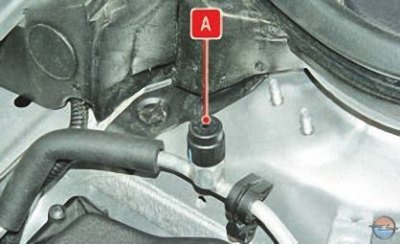
This is how the high pressure line service valves are located on the pipelines A…
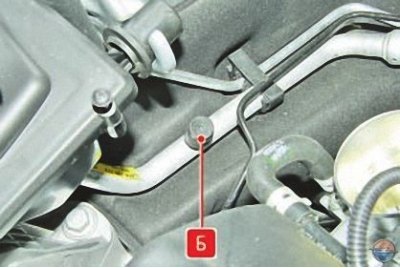
…and low B pressure.
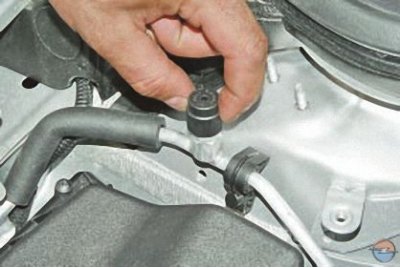
The valves are covered with threaded caps to protect them from dirt.
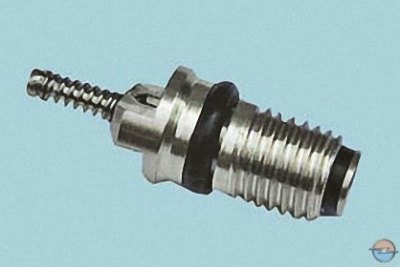
The valves are equipped with valves that are similar in design to the valves on the tires, but differ in size.
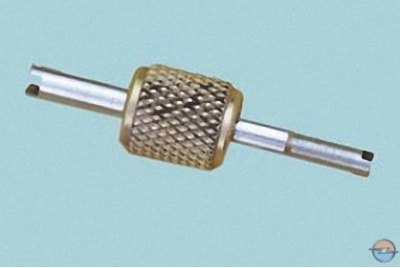
A special key is used to unscrew and screw in the valve cores.
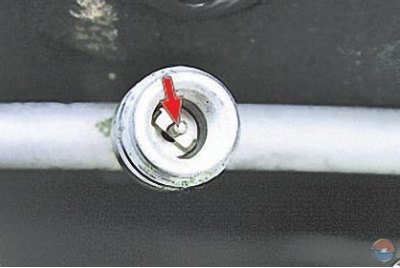
Attention! It is prohibited to check for the presence of refrigerant in the system by pressing the service valve spools, since after such a check the valve spool may not close completely and refrigerant will leak from the system!
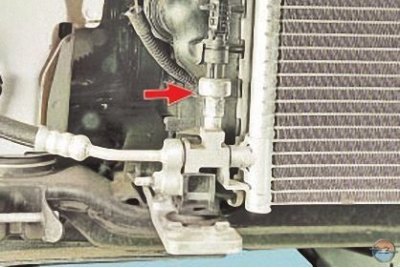
Pressure sensor installed behind the front bumper on the right side on the high pressure line pipeline section.
Based on the sensor signals, the electronic engine control unit switches off the air conditioning compressor in the event of a system depressurization or an emergency increase in pressure in it in order to protect the compressor from overload.
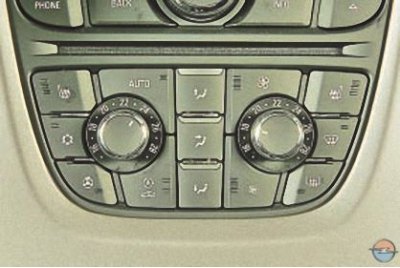
Control unit panel the vehicle's ventilation, air conditioning and heating system is installed on the dashboard console.
The controls for the heater, air conditioner and ventilation are described in detail in the section "Vehicle structure", see. Heating (conditioning) and interior ventilation.
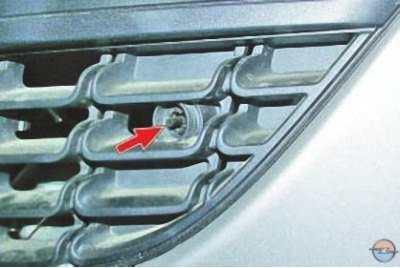
Outside temperature sensor, although located at the front of the car behind the radiator grille in a place protected from sunlight and ventilated, is exposed to factors such as warm air from the engine and radiation from hot asphalt. Therefore, its readings can sometimes be somewhat overestimated, especially after a long period of standing in traffic jams. The outside temperature readings can be considered correct when driving at a speed of at least 40 km / h for at least 10 minutes.
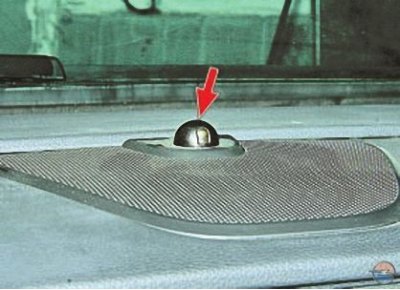
To improve the efficiency of the climate control system and more comfortable distribution of air flows, a solar illumination sensor is installed in the cabin. Depending on the degree of heating of the cabin by the sun's rays, the air flows are directed to the area of the driver's and front passenger's faces or feet according to the sensor's signals. The sensor is located on the instrument panel near the windshield glass.
Coolant. The system is filled with refrigerant HFC134a (R134a). Special oil for compressor lubrication is added to the refrigerant. It is strictly forbidden to use refrigerants and oils of other types in the system.
During the operation of the car air conditioner, situations periodically arise when the air conditioning system needs to be serviced or repaired. Modern diagnostic and repair equipment is used for this purpose.
The most common situation is a depressurization of the system and the release of refrigerant.
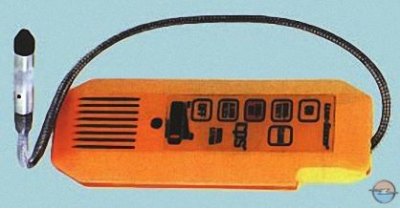
Highly sensitive halogen leak detectors with sound indication are used to detect leaks.
In some complex cases, the so-called ultraviolet diagnostics method of air conditioning system tightness is used.
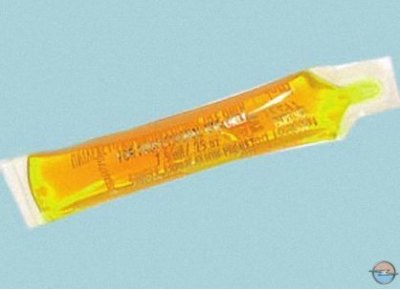
The method consists of introducing a special dye into the system in microdoses.
In places of micro leaks, the dye, together with the refrigerant, gradually comes out onto the outer surface of the system elements.
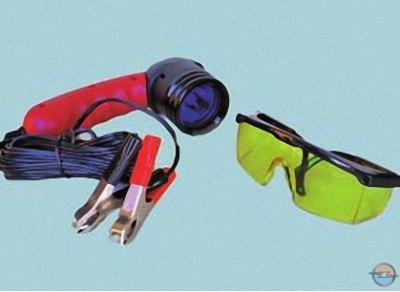
During the inspection of the system, the dye begins to glow (fluoresce) under the influence of ultraviolet rays from a special lamp..
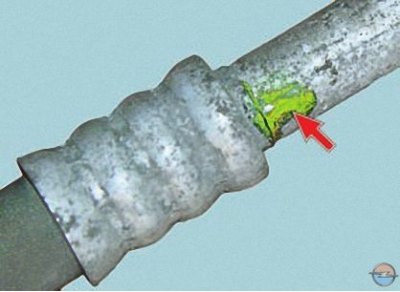
…and the refrigerant leaks become visible.
It should be noted that the dye does not have any negative impact on the system. It can be in the coolant and circulate in the system for as long as desired and serve its purpose only when a leak occurs.
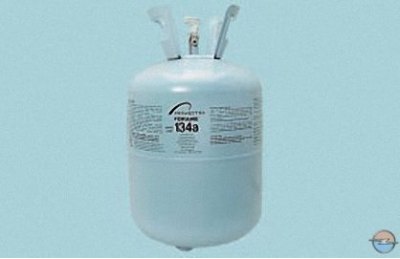
After repairing the car air conditioner, it is necessary to vacuum and fill the system with the appropriate refrigerant (R134a). The volume of filling the car air conditioner for each car model is individual.
(Original posted on the website: OPELBOOK)
To perform high-quality refueling of the car air conditioner, you need:
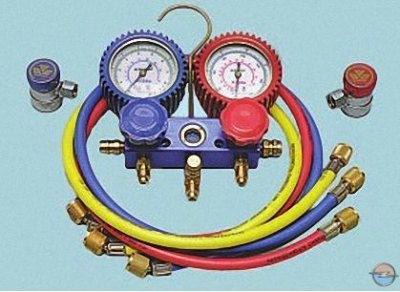
- precision manometric blocks with special connection tips;
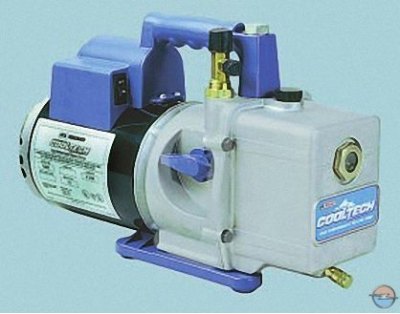
- two-stage vacuum pump for complete removal of air and water vapor from the system;

- high precision (division value no more than 5 g) scales for dosing the refrigerant being charged.
Due to the specific features of air conditioning system repair, this section describes only the work on removing and installing individual elements and the system control unit. Work related to filling the system with refrigerant should be carried out in specialized service centers.
Warning! The air conditioning system is filled with refrigerant under high pressure. If liquid refrigerant comes into contact with human skin, it can cause severe frostbite. Therefore, if possible, carry out all work related to servicing, repair or dismantling of air conditioning system components in specialized service centers equipped with professional technological equipment. When carrying out work on your own, take precautions.
Visitor comments