


Pay attention to any signs of abnormal tire wear. Observe the tire tread pattern. Signs of uneven tread wear such as angular wear of the tread grooves, spotty tread wear, and excessive wear on one side of the wheel indicate improper front wheel alignment and/or balance. If any of these signs of wear are detected, find the cause and correct it immediately.
Excessive tire pressure causes accelerated wear of the center section of the tread, which weakens the grip on the road, reduces the shock-absorbing effect of the suspension and increases the risk of tire failure.
Regularly check your tires for cuts or bulges, especially on the sidewalls. Remove stones or sharp objects stuck in the tread before they penetrate the tire and cause a sharp drop in pressure. Periodically remove the wheels and clean the outer and inner surfaces of the disk from dirt. Watch for corrosion, rust or other deposits on the wheel disks. Light alloy wheels are quickly damaged when driving over a curb while parking, and steel disks also get deflections and dents. In order to prevent increased wear of not only the tires, but also steering and suspension components, it is necessary to monitor the wheel balance. Signs of wheel imbalance are usually vibration of the car body (at a speed of about 90 km/h), although in most cases the vibration is felt through the steering wheel. In turn, it should be borne in mind that wear or damage to steering and suspension parts can cause increased tire wear. Tire wear largely depends on driving style and accelerates with sudden braking and acceleration, when cornering at high speed. Rearranging the wheels allows for more uniform tire wear.
1. The tires supplied by the manufacturer are equipped with a protective bandage (B), which becomes visible when the remaining tread depth reaches less than 1.6 mm. The location of the tread is indicated by the triangular mark A.
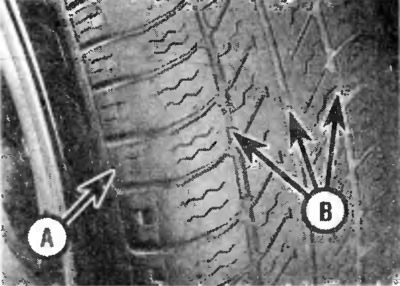
2. Checking the tread depth using an indicator.
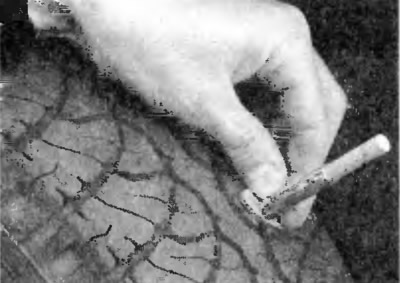
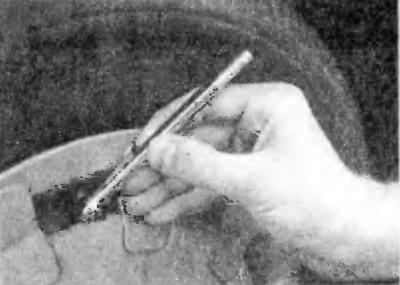
3. Checking the tire pressure using a pressure gauge. It is not allowed to check the pressure in a hot tire.
Cold tire pressure
The tire pressure that comes with your vehicle is indicated on a label attached to the inside of the fuel filler door.
| Astra (the pressure in the rear tires is indicated in brackets) | |
| All models except 2.0 l (all tires), atm | |
| Load capacity up to 3 persons | 2,2 (1,9) |
| Full load | 2,4 (2,8) |
| 2.0L models | |
| For tires 195/60 | |
| Load capacity up to 3 persons | 2,2 (1,9) |
| Full load | 2,3 (2,8) |
| For tires 205/60 | |
| Load capacity up to 3 persons | 2,3 (2,0) |
| Full load | 2,5 (2,9) |
| Zafira | |
| All tires, atm | |
| Load capacity up to 3 persons | 2,2 (2,2) |
| Full load | 2,6 (3,0) |
Article posted on an online resource: opelbook.ru
Visitor comments