


Contents: The main method of pumping -…⬇ Bleeding method using a check valve…⬇ Bleeding using compressed air ⬇ All methods ⬇
Bleed the brake system wearing protective glasses. If brake fluid accidentally gets into your eyes, rinse them immediately with plenty of water and seek medical help!
Bleeding the hydraulic system is performed to remove air from it that gets into the system when servicing the brake mechanisms, replacing hydraulic lines or the master cylinder, and also when the fluid level in the master cylinder reservoir drops below the minimum permissible value.
If air has entered the system due to a drop in the fluid level in the master cylinder reservoir, or when the brake lines are disconnected from the master cylinder, the brake mechanisms of all four wheels must be bled. When disconnecting the lines from any of the calipers/wheel cylinders, it will be sufficient to bleed only that specific brake mechanism.
If the brake line was disconnected from the nipple located between the master cylinder and one of the brake mechanisms, only this part of the brake circuit is bled.
1. Press the foot brake pedal several times with the engine off to relieve any residual vacuum in the brake booster.
2. Remove the cap from the brake master cylinder reservoir, add fresh fluid to the reservoir if necessary, then place a piece of polyethylene under the cap and screw it back into place.
Do not forget to regularly check the fluid level in the reservoir during bleeding. An excessive drop in the level can result in air getting into the master cylinder, which will nullify all efforts and will entail the need to bleed the entire brake system.
The main method of pumping - requires the help of an assistant
1. With the help of an assistant, have a supply of fresh brake fluid, a clear container partially filled with brake fluid, a length of plastic hose that fits snugly over the bleeder valve, and a suitable open-end/box wrench to loosen/tighten the valve.
2. Remove the dust cap and slightly loosen the bleed valve (1) of the right rear wheel brake mechanism, then tighten it again so that it can be released easily and quickly during the procedure.
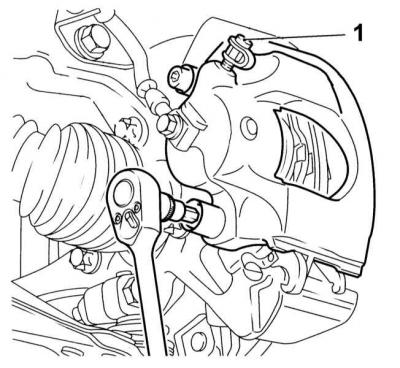
3. Attach a suitable plastic or rubber hose to the valve, and lower the other end into a transparent container partially filled with clean brake fluid. The end of the hose should be completely immersed in the fluid.
4. Ask an assistant to slowly depress the foot brake pedal several times, thereby increasing the pressure in the system.
5. With the brake pedal locked in the lower position, open the bleeder valve slightly so that brake fluid begins to flow out of it. Watch the fluid coming out of the hose. After a few seconds, when the pressure weakens, close the valve and allow the assistant to release the pedal.
6. Repeat the procedures of the last two paragraphs until the fluid starts to flow out of the valve free of air bubbles, then move on to the brake mechanism of the left rear wheel. Proceeding in a similar manner, bleed this mechanism, then the mechanisms of the right front wheel and, finally, the left front wheel.
Always ensure that the fluid level in the master cylinder reservoir does not drop too low!
Never add used brake fluid to the reservoir - it is highly hygroscopic and over time absorbs a lot of moisture, which leads to a drop in its boiling point and, as a result, to a decrease in braking efficiency. In addition, the presence of moisture in the hydraulic system contributes to accelerated aging of the material of flexible brake hoses.
Bleeding method using a check valve kit
As the name suggests, the bleeding kit includes a section of hose equipped with a one-way valve. The valve prevents the fluid being pushed back into the system and allows bleeding to be done by one person - do not forget to monitor the fluid level in the master cylinder reservoir (the level must not fall below the MIN mark!).
Bleeding using compressed air
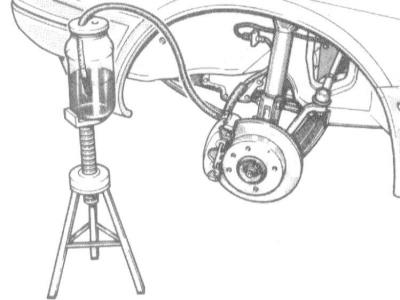
The spare tire can be used as a source of compressed air - it is necessary to release its inflation pressure first. Follow the instructions included with the kit.
When using such a device, you only need to release the bleed valve and wait until the air bubbles stop escaping from the tract.
Original source on the website: OPELBOOK
The main advantage of this method is that the large reservoir with hydraulic fluid included in the kit prevents air from being sucked into the tract during pumping.
All methods
1. After bleeding is complete, add fresh brake fluid to the master cylinder reservoir, bringing its level back to normal.
2. Check the efficiency of the brakes. The pedal should provide firm resistance when pressed - the feeling of its softness indicates the presence of air in the hydraulic circuits and the need to repeat the bleeding procedure.
Never operate the vehicle without being absolutely sure that the brake system is functioning properly!
Visitor comments