


Sequence of execution
1. Prepare the car for work (see "Preparing the car for maintenance and repair").
Warning! When the brake pistons are pressed into the cylinders, the brake fluid level in the reservoir will increase, so pump out some of the brake fluid from the reservoir. After replacing the brake pads, check the brake fluid level and, if necessary, bring it up to normal (see "Checking the levels of technical fluids").
2. Remove the cover of the main brake cylinder reservoir and use a rubber bulb to pump out some of the fluid.
3. Remove the wheel (see "Wheel - replacement").
4. Disconnect the parking brake drive cable from the rear brake caliper (see "Parking Brake Cables - Replacement").
5. Using a 13 mm wrench, unscrew the lower caliper mounting bolt.
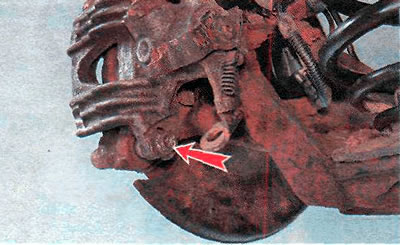
6. Remove the bolt.
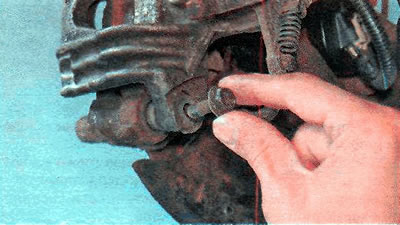
7. Remove the lock washer.
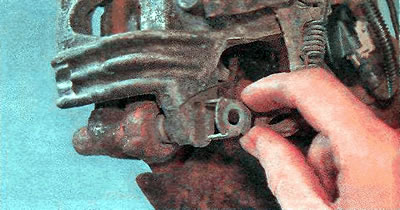
8. Using a screwdriver, lift the support upward, turning it on the axis of the upper guide.
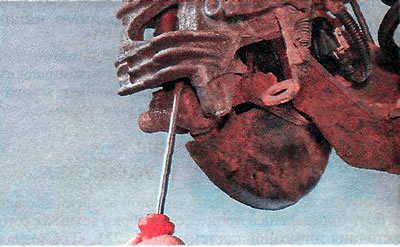
9. Without disconnecting the brake hose, move the caliper along the guide and remove it from the trunnion bracket.
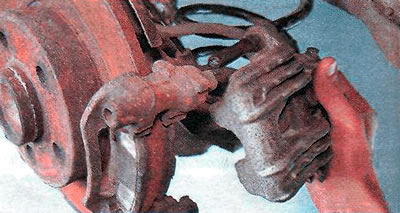
10. Fix the caliper so as not to put stress on the brake hose.
11. Using a slotted screwdriver, remove the brake pads.
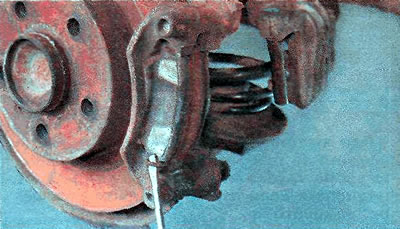
Recommendation: When replacing brake pads, be sure to check the thickness and condition of the brake disc (see "Rear disc brakes - check").
12. Using a special tool, screw the piston into the cylinder.
Warning! Do not press the piston into the caliper (as on the front brake mechanism) unacceptable! This will inevitably lead to damage to the caliper and its subsequent replacement. On the rear brake mechanisms, the piston must be recessed with simultaneous rotation.
13. Align one of the cutouts on the piston with the protrusion on the caliper.
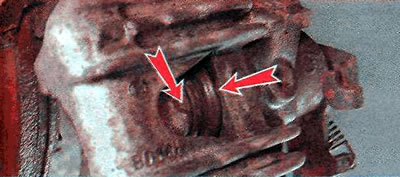
14. Using a metal brush, clean the caliper pad guides and the edge of the brake disc.
15. Apply a special high-temperature grease to the contact points of the pads with the mounting surfaces of the caliper bracket.
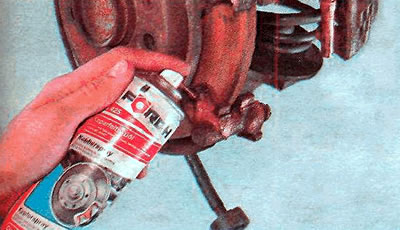
16. Apply special high-temperature grease to the two caliper guides; they should move freely along the bracket bushings.
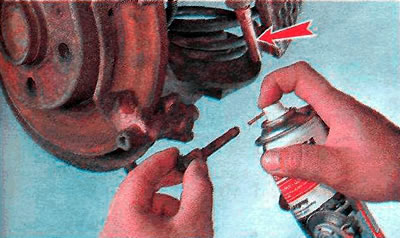
17. Install the brake pads in the reverse order.
18. Similarly, we replace the brake pads on the other side of the car.
19. Press the brake pedal several times to adjust the brake pads.
20. Check the brake fluid level in the master cylinder reservoir and, if necessary, top it up to normal (see "Checking the levels of technical fluids").
Visitor comments