OpelBook.ru
Cars AvtoVAZ Cars Mitsubishi Cars BMW Cars Mercedes Cars Nissan Cars Toyota Cars Chevrolet
English Русский
Български
Беларускі
Український
Српски
Hrvatski
Română
Polski
Slovenský
Magyar
 |  Sitemap  |  Contacts  |    


Main Astra Corsa Insignia Kadett Omega Vectra Zafira Others Articles
Astra F (1991-1998, petrol) Astra G (1998-2004, petrol) Astra G (1998-2004) Astra H (2004-2009) Astra J (2009-2015, petrol)
  • Main
  • Astra
  • Astra G
  • General information
  • Maintenance
  • Inspection of suspension and steering components, checking the condition of the drive shaft protective covers

Inspection of suspension and steering components, checking the condition of the drive shaft protective covers (Opel Astra G)

            0

Contents: Checking the condition of shock…⬇ Checking the condition of the…⬇ Checking the condition of wheel…⬇ Checking the condition of the…⬇
The condition of the suspension and steering components should be checked regularly, as their wear or damage can cause a reduction in the service life of the tires, lead to a decrease in vehicle controllability and an increase in fuel consumption. Detailed illustrative material is also presented in the Chapter Suspension and Steering.


Checking the condition of shock absorbers


1. Park the car on a level, horizontal surface, if possible with a hard surface. Firmly apply the parking brake and check the tire inflation pressure.

2. Press down on one corner of the car. When you release the corner, the body should return to its original position, making no more than one or two oscillations.

3. Rocking of the body most likely indicates wear or weakening of the corresponding shock absorber.

4. Repeat the procedure, moving on to the remaining corners of the car one by one.

5. Jack up the car and place it on supports.

6. Carefully inspect the shock absorbers for signs of fluid leaks. The presence of a thin oil film should not cause concern. Be sure to verify that the source of the leak is the shock absorber, if necessary, replace the shock absorbers as a set (front and back).
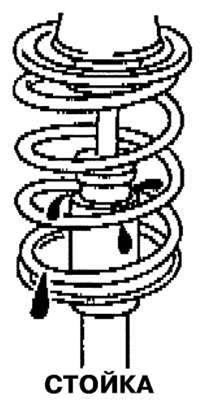
6. Carefully inspect the shock absorbers for signs of fluid leaks. The presence of a thin oil film…


7. Check the reliability of the shock absorbers on their supports. If defects are detected, replace the shock absorbers (also included).


8. The procedure for replacing shock absorbers is described in Chapter Suspension and steering.

Checking the condition of the suspension and steering components


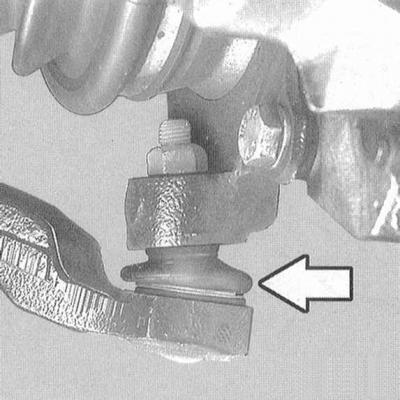
1. Visually inspect the suspension and steering components for deformations and mechanical damage. Assess the condition of the sealing cuffs, protective covers and rubber-metal bushings - try not to miss signs of developing leaks.
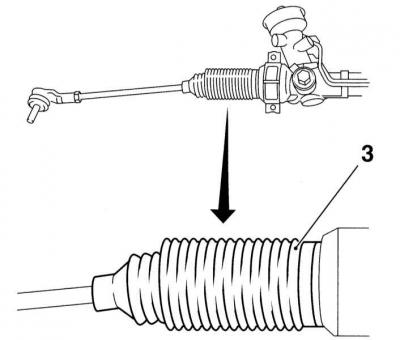
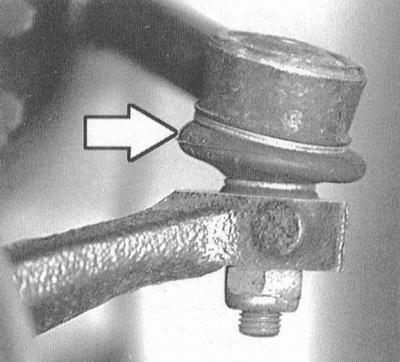
1. Visually inspect the suspension and steering components for deformations and mechanical damage.…


1. Visually inspect the suspension and steering components for deformations and mechanical damage.…


1. Visually inspect the suspension and steering components for deformations and mechanical damage.…


2. Clean the lower surface of the steering knuckle from traces of dirt, ask an assistant to grab the lower edge of the wheel and tug it in the transverse direction. Try to visually assess the play in the ball joints connecting the knuckle to the suspension control arm. If there is play, the worn joint must be replaced.


3. Grasp the front and rear edges of the wheel, then push down on the front edge and pull on the rear edge. If there is play in the joints of the steering gear components, check the condition of the tie rod ends. Wear on the outer ends can be detected visually, and on the inner ends - by touch through the protective cover of the steering gear (when rocking the wheel). Move to the other side of the car and repeat the procedure by pulling the opposite wheel.
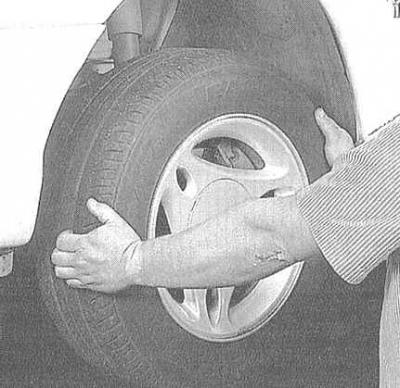
3. Grasp the front and rear edges of the wheel, then push down on the front edge and pull on the…


4. More detailed information on the design of suspension components is given in Chapter Suspension and steering.

5. Lower the car to the ground and assess the amount of play in the steering wheel. From under the car, visually assess the inertia of the steering drive when turning the steering wheel (an assistant's help will be required).

Checking the condition of wheel bearings


1. Pull the front wheel with both hands at the top and bottom edges - the presence of any noticeable play indicates a weakened/damaged wheel bearing or suspension components. Ask an assistant to firmly press the foot brake pedal and repeat the check - if the play disappears or is reduced to a minimum level, then you should take care of the bearing, otherwise check the condition of the articulation units of the suspension components.


2. Grasp the front and rear edges of the wheel and repeat the test described above — If the play disappears when the brake pedal is released, tighten or replace the wheel bearing, otherwise check the condition of the steering drive components (see above Checking the condition of the suspension and steering components, p. 3).

Checking the condition of the protective covers of the drive shafts


1. Corrugated rubber boots installed at both ends of each drive shaft are designed to protect the constant velocity joints (CV joints) from damage caused by dirt. Oil and grease getting on the surface of the boots can lead to their premature destruction. It is advisable to wash the boots with a solution of soapy water from time to time. Due to constant bending when turning the wheels, the boots of the outer CV joints wear out faster and should be checked more often and regularly.

2. Carefully check the covers for cuts, cracks and other damage, assess the reliability of their fixation with bandage tapes. If defects or traces of grease leaks are detected, the damaged cover must be replaced (see Chapter Clutch and drive shafts).
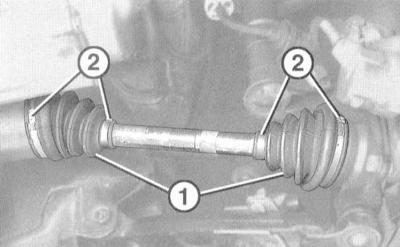
2. Carefully check the covers for cuts, cracks and other damage, assess the reliability of their…


This article is available at russian, bulgarian, belarusian, ukrainian, serbian, croatian, romanian, polish, slovak, hungarian
Checking the article: Pavlovsky Nikolay

Share information:

Previous articles
Opel Astra G: Maintenance
Next articles

Checking the condition and replacing the windshield wipers
Checking, servicing and charging the battery
Checking the condition of the cooling system components
Checking the condition and replacing the hoses located in the engine compartment
Removal sediment from a diesel engine fuel filter
Checking the condition and replacing the auxiliary drive belt
Checking the brake system
Checking electrical equipment
Monitoring the condition of the anti-corrosion coating of the car body and underbody
Lubrication of locks, hinges and stops
Resetting the service interval indicator
Replacing the air cleaner filter element — diesel models produced before 09.2000


See similar ones from other Opel car manuals:
▶ Checking the condition of the suspension and steering… Opel Corsa C (2000-2006)
▶ Checking the condition of the protective covers of the… Opel Frontera A (1991-1998, petrol)
▶ Replacement of protective covers of wheel drive shaft joints Opel Kadett E (1984-1995)
▶ Checking the drive shaft protective cover Opel Vectra A (1988-1995, petrol)
▶ Checking the condition of the auxiliary drive belt — every… Opel Omega A (1986-1993)
Link to this page in different formats

Visitor comments


No comments yet


How much will 22 + 19 =


Astra J (2009-2015, petrol) 
  • General information
  • Vehicle device
  • User manual
  • Faults en route
  • Maintenance
  • Power unit
  • Engine repair
  • Cooling and lubrication system
  • Engine power system
  • Exhaust system
  • Transmission
  • Clutch
  • Car gearbox
  • Drive shafts
  • Chassis
  • Front suspension
  • Rear suspension
  • Steering
  • Brake system
  • Wheels and tires
  • Body
  • Exterior
  • Interior
  • Doors and windows
  • Body Care
  • Heating and air conditioning
  • Security systems
  • Electrical equipment
  • Equipment and devices
  • Lighting and signaling
  • Power devices
  • Electrical circuits
Astra H (2004-2009) 
  • General information
  • Introduction to the guide
  • Troubleshooting
  • User manual
  • Maintenance
  • Power unit
  • Engine repair
  • Cooling and heating
  • Power and exhaust system
  • Ignition system
  • Launch and charge system
  • Transmission
  • Mechanical gearbox
  • Automatic gearbox
  • Drive shafts
  • Chassis
  • Brake system
  • Car suspension
  • Steering
  • Body
  • Interior
  • Exterior
  • Electrical equipment
  • Equipment and devices
  • Electrical circuits
Astra G (1998-2004) 
  • General information
  • Introduction to manual
  • User manual
  • Maintenance
  • Power unit
  • SOHC gasoline engines
  • DOHC gasoline engines
  • Diesel engines 1.7 and 2.0
  • Engine repair
  • Cooling system
  • Supply system
  • Injection system (gasoline)
  • Injection system (diesel)
  • Exhaust system
  • Charge and launch system
  • Ignition system (gasoline)
  • Preheat system (diesel)
  • Transmission
  • Manual gearbox
  • Automatic gearbox
  • Clutch
  • Drive shafts
  • Chassis
  • Brake system
  • Wheel suspension
  • Steering
  • Body
  • Exterior
  • Interior
  • Doors and windows
  • Ventilation and heating
  • Electrical equipment
  • Equipment and devices
  • Electrical circuits
Astra G (1998-2004, petrol) 
  • General information
  • User manual
  • Car care
  • Maintenance
  • Power unit
  • Single shaft engines
  • Twin shaft engines
  • Engine repair
  • Cooling and heating
  • Fuel and exhaust systems
  • Starting and charging system
  • Ignition system
  • Transmission
  • Clutch
  • Mechanical gearbox
  • Automatic gearbox
  • Drive shafts
  • Chassis
  • Brake system
  • Car suspension
  • Steering
  • Body
  • Interior
  • Exterior
  • Electrical equipment
  • Equipment and devices
  • Wiring diagrams Opel Astra
  • Wiring diagrams Opel Zafira
Astra F (1991-1998, petrol) 
  • General information
  • Maintenance
  • Power unit
  • Engine in car
  • Engine removed
  • Cooling system
  • Heating and ventilation
  • Fuel supply (carburetor)
  • Fuel supply (injector)
  • Emission control
  • Ignition system
  • Transmission
  • Clutch
  • Mechanical gearbox
  • Automatic gearbox
  • Drive shafts
  • Chassis
  • Brake system
  • Car suspension
  • Steering
  • Body
  • Exterior
  • Interior
  • Electrical equipment
  • Equipment and devices
  • Electrical circuits
OpelBook.ru © 2017–2026 · Mobile version · · Sitemap: EN BG BY UA RS HR RO PL SK HU · Feedback · Site search
Astra F, petrol · Astra G, petrol · Astra G · Astra H · Astra J, petrol · Corsa B · Corsa C, petrol · Corsa C · Insignia A · Kadett D · Kadett E · Omega A · Omega B · Omega B2 · Vectra A, petrol · Vectra A · Vectra B, petrol · Vectra B · Vectra C · Zafira A, petrol · Frontera A, petrol · Frontera B · Ascona C · Vivaro A ·
We want your visit to be comfortable 🤝! We use cookies 🍪 to make that happen.