
OpelBook.ru
Cars AvtoVAZ Cars Mitsubishi Cars BMW Cars Mercedes Cars Nissan Cars Toyota Cars Chevrolet
English Русский
Български
Беларускі
Український
Српски
Hrvatski
Română
Polski
Slovenský
Magyar
 |  Sitemap  |  Contacts  |    


Main Astra Corsa Insignia Kadett Omega Vectra Zafira Others Articles
Vectra A (1988-1995, petrol) Vectra A (1988-1995) Vectra B (1995-2002, petrol) Vectra B (1995-2002) Vectra C (2002-2008)
  • Main
  • Vectra
  • Vectra C
  • General information
  • Vehicle device
  • Anti-theft alarm

Anti-theft alarm (Opel Vectra C)

            0

The vehicles covered in this Manual may be equipped with one or more of the following anti-theft devices:
  • Anti-theft alarm;
  • Double locking system;
  • Start interlock device (immobilizer).

The anti-theft alarm device monitors all doors against burglary or unauthorized entry (including tailgate/trunk lid), hood, as well as the interior volume of the passenger compartment, vehicle tilt and ignition. An attempt at unauthorized opening of the hood, trunk lid, entry into the vehicle through any of the doors with the anti-theft system activated, as well as an attempt to move the vehicle or movement inside the passenger compartment leads to activation of an audible signal, accompanied by flashing turn signals/headlights/side lights. The audible signal will turn off automatically after approximately 30 seconds, and the light signal - approximately in 5 minutes.

Note: The duration of signal activation is regulated by local legislation and may differ from the above.


The anti-theft alarm is activated again no later than 10 seconds after locking the car, by pressing the lock button on the remote control/turning the key in the driver's door lock cylinder.

Activation of the device is confirmed by the operation of the LED built into the anti-theft system switch button on the console section of the instrument panel (see illustration 8.3) - it lights up for about 10 seconds and then switches to flashing mode. If the doors or hood are not closed tightly, or the anti-theft alarm system is faulty, when the device is activated, the LED starts to flash at a high frequency - it is necessary to check the tightness of the doors/hood, and in case of a system malfunction, contact an Opel service station. The anti-theft alarm device is automatically deactivated when the doors are unlocked using the remote control or key. When triggered, the alarm can be forcibly returned to standby mode before the set period expires by pressing the lock button on the remote control. Pressing the unlock button will deactivate the anti-theft system along with the alarm. If necessary(for example, if animals must remain in the cabin) the anti-theft alarm can be activated without the interior and tilt control function. To do this, press the switch button before leaving the car (see illustration 8.3) on the console section of the instrument panel, and then activate the alarm in the standard way.
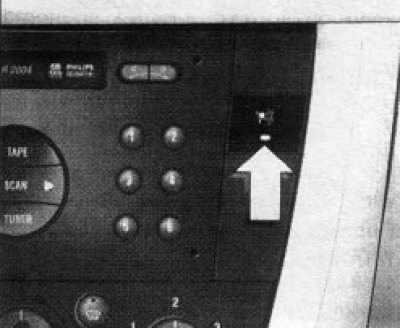
8.3 Interior and vehicle tilt control function deactivation button - the anti-theft alarm…

8.3 Interior and vehicle tilt control function deactivation button - the anti-theft alarm activation LED is indicated by the arrow


Double locking system


Warning! When the double locking system is activated, it is not possible to unlock the doors from the inside - never activate the system if there are passengers in the car!


Double lock activation is performed again no later than 10 seconds after locking the car, by pressing the lock button on the remote control/turning the key in the driver's door lock cylinder.

The lock is deactivated automatically when the doors are unlocked using the remote control or key.


This article is available at russian, bulgarian, belarusian, ukrainian, serbian, croatian, romanian, polish, slovak, hungarian
Checking the article: Meshcheryakov Damir

Share information:

Previous articles
Opel Vectra C: Vehicle device
Next articles

Replacing the remote control battery
Unlocking and locking doors
Remote control control
Single lock
Upper roof hatch
Opening the fuel tank hatch and filler neck
Electronic immobilizer
Life and health safety equipment
Seat belts — rules and features of use
Supplemental Restraint System (SRS)
Risk of Carbon Monoxide (CO) Poisoning
Instrument panel and center console


See similar ones from other Opel car manuals:
▶ Anti-theft alarm device Opel Corsa C (2000-2006, petrol)
▶ Anti-theft alarm system and engine immobilizer Opel Omega B (1993-1999)
▶ Turning the anti-theft alarm on and off Opel Frontera A (1991-1998, petrol)
▶ Anti-theft device Opel Astra F (1991-1998, petrol)
▶ Replacing the anti-roll bar of the GNE suspension Opel Insignia A (2008-2017)
Link to this page in different formats

Visitor comments


No comments yet


How much will 27 + 21 =


Vectra C (2002-2008) 
  • General information
  • User manual
  • Vehicle device
  • Maintenance
  • Troubleshooting
  • Power unit
  • Engine repair
  • Cooling system
  • Power and control system
  • Engine electrics
  • Transmission
  • Clutch
  • Car gearbox
  • Drive shafts
  • Chassis
  • Car suspension
  • Steering
  • Brake system
  • Body
  • Exterior
  • Interior
  • Doors, locks and windows
  • Heating and ventilation
  • Electrical equipment
  • Equipment and devices
  • Headlights and lighting
  • Electrical circuits
Vectra B (1995-2002) 
  • General information
  • User manual
  • Weekly checks
  • Maintenance (gasoline)
  • Maintenance (diesel)
  • Troubleshooting
  • Power unit
  • SOHC gasoline engine
  • DOHC petrol engine
  • Diesel engine 1.7 liter
  • Diesel engine 2.0 liters
  • Engine repair
  • Cooling system
  • Fuel system (gasoline)
  • Fuel system (diesel)
  • Charging system
  • Launch system
  • Ignition and preheat
  • Transmission
  • Clutch
  • Mechanical gearbox
  • Automatic gearbox
  • Drive shafts
  • Chassis
  • Brake system
  • Wheel suspension
  • Steering
  • Body
  • Exterior
  • Interior
  • Doors and windows
  • Heating and ventilation
  • Electrical equipment
  • Equipment and devices
  • Electrical circuits
Vectra B (1995-2002, petrol) 
  • General information
  • Maintenance
  • Help with malfunctions
  • Power unit
  • Engine repair
  • Exhaust system
  • Cooling system
  • Fuel system
  • Multec injection system
  • Four point injection
  • Transmission
  • Clutch
  • Gearbox and drive
  • Chassis
  • Wheel suspension
  • Steering
  • Brake system
  • Wheels and tires
  • Body
  • Exterior
  • Interior
  • Electrical equipment
  • Fuses and electronics
  • Power devices
  • Ignition system
  • Lighting and signaling
  • Equipment and devices
  • Heating and ventilation
  • Electrical circuits
Vectra A (1988-1995) 
  • Power unit
  • Engine repair
  • Ignition system
  • Lubrication system
  • Cooling system
  • Injection system
  • Fuel system (carburetor)
  • Fuel system (diesel)
  • Exhaust system
  • Transmission
  • Clutch
  • Car gearbox
  • Chassis
  • Front suspension
  • Rear suspension
  • Steering
  • Brake system
  • Wheels and tires
  • Body
  • Exterior
  • Interior
  • Electrical equipment
  • Electrical circuits
Vectra A (1988-1995, petrol) 
  • General information
  • User manual
  • Maintenance
  • Power unit
  • SOHC engine
  • DOHC engine
  • Cooling and ventilation
  • Fuel system (carburetor)
  • Fuel system (injector)
  • Exhaust converter
  • Transmission
  • Clutch
  • Mechanical gearbox
  • Automatic gearbox
  • Drive shafts
  • Chassis
  • Brake system
  • Car suspension
  • Steering
  • Body
  • Body elements
  • Electrical equipment
  • Power devices
  • Equipment and devices
  • Electrical circuits
OpelBook.ru © 2017–2026 · Mobile version · · Sitemap: EN BG BY UA RS HR RO PL SK HU · Feedback · Site search
Astra F, petrol · Astra G, petrol · Astra G · Astra H · Astra J, petrol · Corsa B · Corsa C, petrol · Corsa C · Insignia A · Kadett D · Kadett E · Omega A · Omega B · Omega B2 · Vectra A, petrol · Vectra A · Vectra B, petrol · Vectra B · Vectra C · Zafira A, petrol · Frontera A, petrol · Frontera B · Ascona C · Vivaro A ·
We want your visit to be comfortable 🤝! We use cookies 🍪 to make that happen.