


Bulkhead
1. Remove the cylinder head. On 2.0L (DOHC), 2.5L and 3.0L engines, remove the camshafts and tappets.
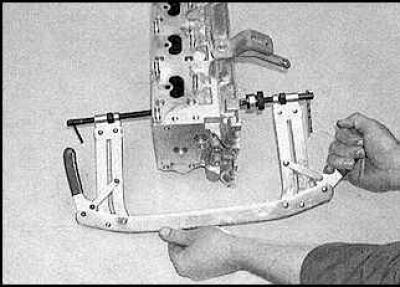
2. Compress the spring of each valve in turn with a special tool and remove the conical bushings. Remove the spring plates and springs.
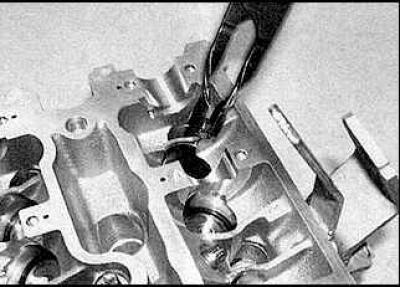
3. Using pliers, remove the valve stem seals and spring seats.
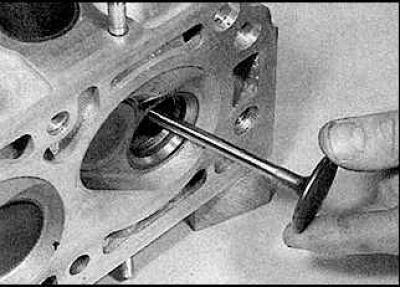
4. Remove the valves. Place the valves and their corresponding parts in separate numbered bags.
Clean the cylinder head and valve parts thoroughly.
Cleaning
1. Clean off any remaining old gasket from the head surface.
2. Clean carbon deposits from combustion chamber surfaces and wash the head with solvent. Clean the valves.
3. Clean the internal channels of the head.
Examination
Cylinder head
1. Carefully inspect the head for cracks and other damage. If cracks are found, the head must be replaced.
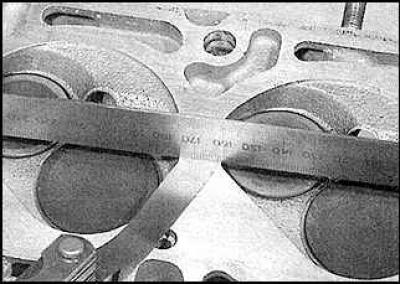
2. Using a ruler and feeler gauge, check the head surface for deformation; if necessary, the head must be machined. For this, contact specialists.
3. Inspect the valve seats in the combustion chambers. If they are cracked or burnt, they must be replaced. To do this, contact a specialist. If the seats are only slightly scratched, it is enough to treat them and the valve heads with an abrasive compound.
4. If the valve guides are worn, they must be replaced. Measure the valve stem diameters and the inside diameters of the guides. Calculate the clearance and compare the resulting value with the technical requirements. If the clearance exceeds the permissible limits, replace the bushings or valves. For this, contact a specialist.
Valves
1. Inspect the valve heads and seats for wear, scratches, and cracks. Check that the valve stem is not bent. If severe wear is detected, the valves must be replaced.
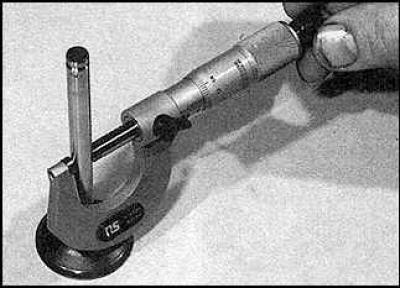
2. Measure the valve stem diameters in several places, if the results obtained differ greatly from each other, this means that the stem is worn and the valve needs to be replaced.
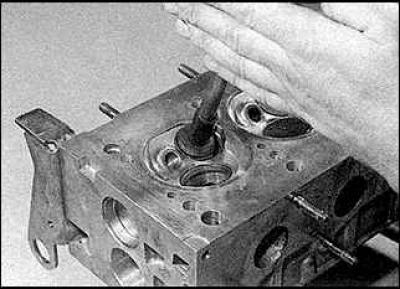
3. If the heads and seats are slightly burnt, they can be polished with a special abrasive paste. In order to achieve complete tightness between the valve and its seat, it is necessary to polish the contact surfaces of the valve and seat. Apply a special abrasive paste to the valve head, insert it into place and turn it sideways using a special tool.
Valve parts
1. Inspect the valve springs for damage and compare their length with the length of the new springs. Replace the springs if necessary.
2. Check that the springs are straight.
Assembly
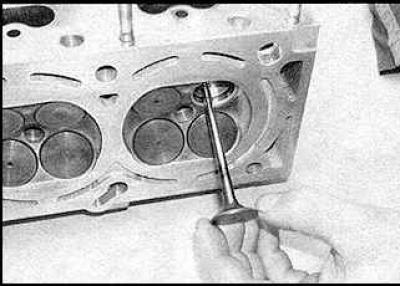
1. Lubricate the valve stems and insert the valves into place.
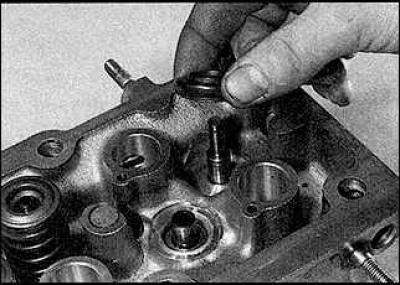
2. Install the spring seat.
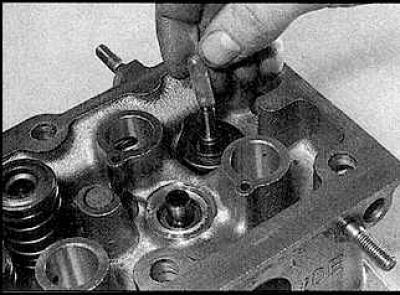
3. Install the oil seal protective sleeve.
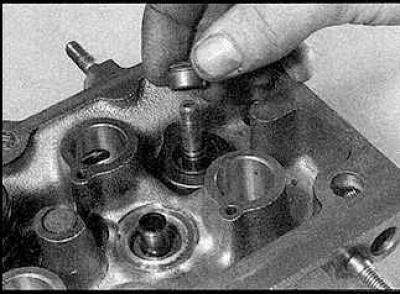
4. Install the valve stem seal.
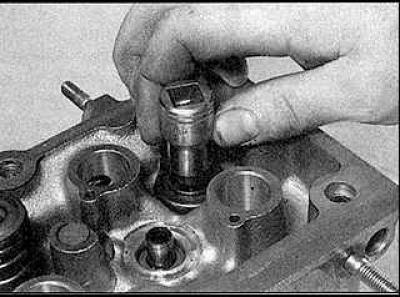
5. Hammer the seal into place.
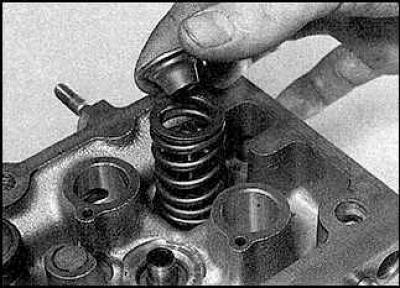
6. Install the springs and spring plates.
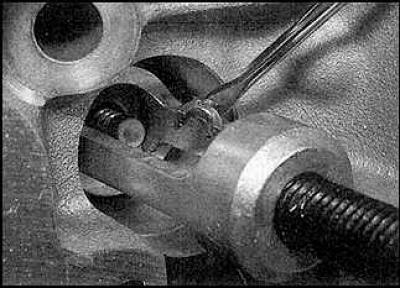
7. Compress the springs and install the cone bushings.
8. Install the cylinder head.
Visitor comments