
Typical design of the exhaust system
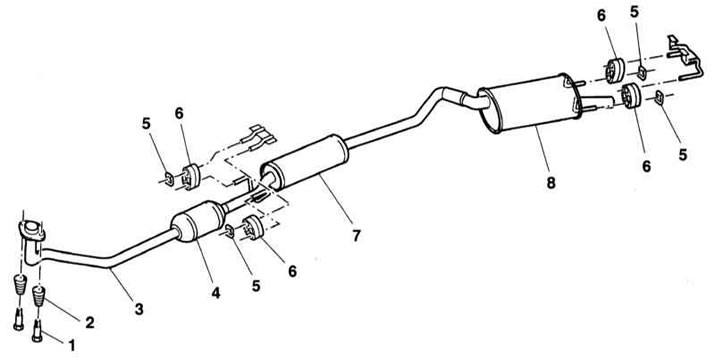
1 - Bolt
2 - Conical spring
3 - downpipe
4 - Catalytic converter
5 - Locking bracket
6 - damping ring
7 — the Central muffler with the central pipe
8 - Main muffler with exhaust pipe
Regularly inspect the entire system for signs of corrosion, deformation and mechanical damage. Check fastener tightness. Violation of the tightness of the components and their joints is fraught with the ingress of exhaust gases into the vehicle interior. Defective components and sections must be replaced.
If the system is severely damaged by corrosion, a cutting torch may be required to separate its sections (alternatively, you can use a hacksaw or a pneumatic chisel - do not forget to wear safety goggles and gloves).
System repair should be carried out in the following order:
- When removing components, move along the system path in the direction from the exhaust pipe to the engine;
- Lubricate the fasteners to be loosened with penetrating oil;
- Prepare the necessary replacement gaskets, suspension loops, clamps and fasteners in advance;
- Lubricate the threaded part of the fastener with an anti-seize sealant before installation;
- When installing components, make sure that there is sufficient clearance between the sections of the system and nearby suspension / body elements. Pay special attention to the correct installation and secure fastening of the heat shield of the catalytic converter.
Visitor comments