OpelBook.ru
Cars AvtoVAZ Cars Mitsubishi Cars BMW Cars Mercedes Cars Nissan Cars Toyota Cars Chevrolet
English Русский
Български
Беларускі
Український
Српски
Hrvatski
Română
Polski
Slovenský
Magyar
 |  Sitemap  |  Contacts  |    


Main Astra Corsa Insignia Kadett Omega Vectra Zafira Others Articles
Astra F (1991-1998, petrol) Astra G (1998-2004, petrol) Astra G (1998-2004) Astra H (2004-2009) Astra J (2009-2015, petrol)
  • Main
  • Astra
  • Astra J
  • Body
  • Doors and windows
  • Replacement of fixed body glazing

Replacement of fixed body glazing (Opel Astra J)

            0

The windshield and tailgate glass are glued into the body and door openings, respectively. They are replaced using the same techniques, so the work is shown using the windshield glass as an example.

You will need: flat-blade screwdriver, awl, knife, glass gluing kit.

You will need: flat-blade screwdriver, awl, knife, glass gluing kit.


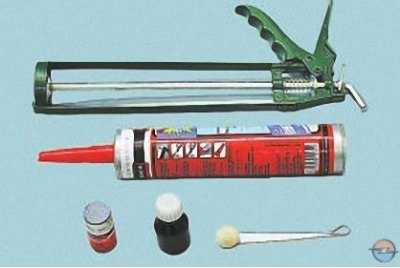
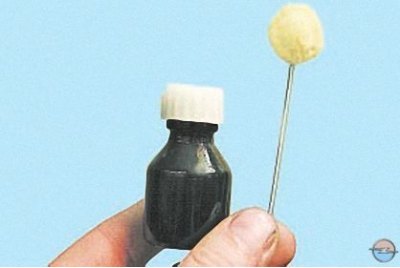
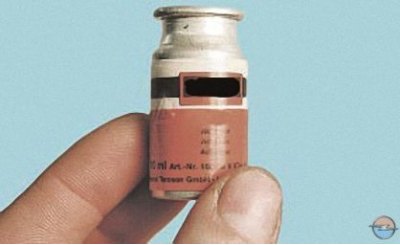
This is what a glass gluing kit looks like. It consists of a tube of glue, a tube tip, an activator/cleaner, and a primer.

Note: There may be minor differences in the instructions for use of kits from different manufacturers. Therefore, when performing this operation, please refer to the instructions for the kit you purchased.


Note: It is convenient to use a steel wire to remove glued glass.


Note: It is convenient to use a steel wire to remove glued glass.


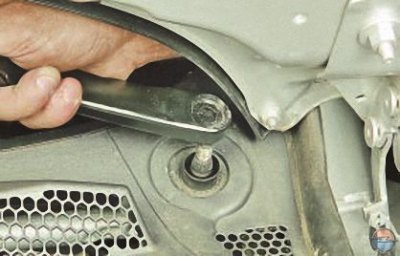
1. Remove the levers from the wiper linkage shafts (see Removal and installation windshield wiper arms).


2. Open the hood and place it on the support.

2. Open the hood and place it on the support.


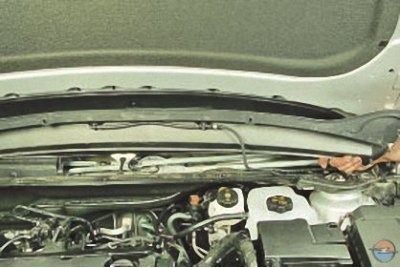
3. Remove the air intake box grille (see Removal and installation the air intake box grille).

4. Close the hood.

5. Using a screwdriver, remove the glass trim by sliding it off the glass and removing it from the window opening groove.

6. Open both front doors.

6. Open both front doors.


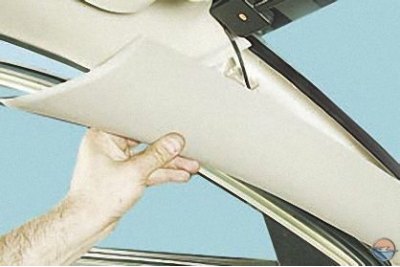
7. Remove the front pillar trims, overcoming the elastic resistance of their holders.

7. Remove the front pillar trims, overcoming the elastic resistance of their holders.


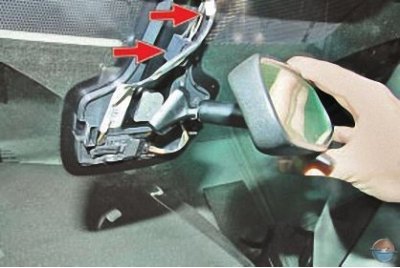
8. Remove the interior rearview mirror (see Removal and installation the interior mirror) and disconnect the wiring harness connectors (shown in the photo by arrows).


8. Remove the interior rearview mirror (see Removal and installation the interior mirror) and…


9. Lightly pry the glass with a screwdriver and pierce the adhesive seam with a pointed tool (for example, with an awl) and pull the string through the hole.
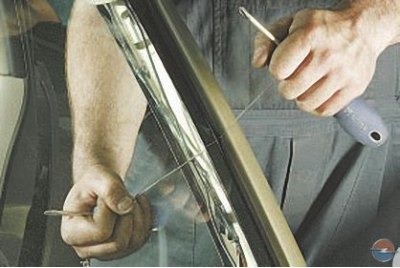
9. Lightly pry the glass with a screwdriver and pierce the adhesive seam with a pointed tool (for…


10. For ease of use, screwdrivers can be attached to the ends of the string to serve as handles.

11. Use a string to cut the glue seam along the entire perimeter of the glass (you may need an assistant to perform this operation).

12. Remove the glass from the car.

Warning! Take precautions when handling glass. Damaged glass may break unexpectedly.


Warning! Take precautions when handling glass. Damaged glass may break unexpectedly.


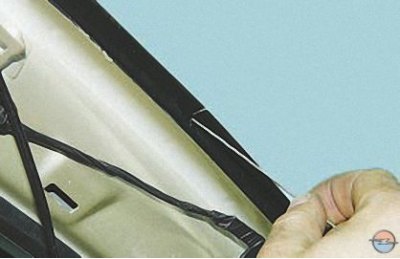
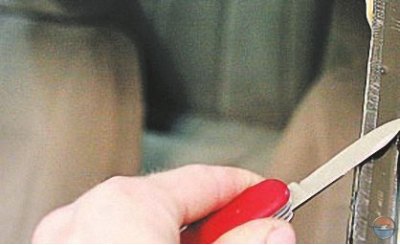
13. Cut off the old seam, leaving a thin layer of glue (1–2 mm).


13. Cut off the old seam, leaving a thin layer of glue (1–2 mm).


14. Apply activator..
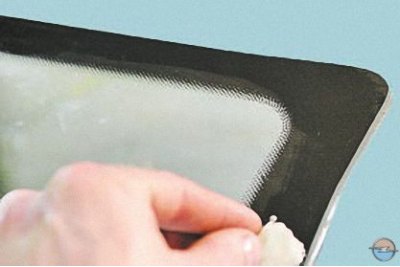
14. Apply activator..


15. …on the edge of the glass and the window opening along the entire perimeter.

15. …on the edge of the glass and the window opening along the entire perimeter.


16. Apply primer around the perimeter of the glass and window opening.

Caution! Do not apply primer to old adhesive residue.


17. Install rubber pads of the same thickness around the entire opening to prevent contact between the glass and body elements.


18. Within 30 minutes after applying the primer, apply the glue evenly to the window opening (layer thickness 0.5 cm) and around the perimeter of the glass.

19. Install the glass on the car.

20. Replace the glass seal.

21. Press and fix the glass in any available way (for example, using masking tape). The adhesive polymerization period is at least 2-3 hours. During this time, the car should not be exposed to any external influences. Even a sharp closing of the door can lead to an increase in air pressure in the cabin and, as a result, to the glass tearing off. It is advisable to start using the car no earlier than 24 hours after gluing the glass.

22. Install the front pillar trims.

23. Install the air intake box grille and interior rearview mirror.

24. Install the windshield wiper arms together with the blades.

25. Replace the rear door window glass in the same way.

If for some reason the new windshield glass does not have a rearview mirror mounting bracket, you can glue it to the glass yourself. To do this, you will need:
  • loctite brand glue;
  • mirror mounting bracket;
  • glass-graph pencil or chalk;
  • alcohol for rinsing;
  • clean paper towel;
  • fine-grained sandpaper No.320-360.

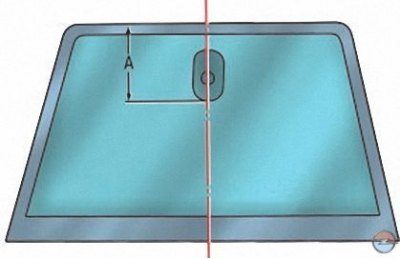
Fig. 1. Marking the position of the mirror mounting bracket on the windshield glass:

Fig. 1. Marking the position of the mirror mounting bracket on the windshield glass:
A - the size from the top edge of the glass to the bottom edge of the base of the mirror mounting bracket


[Text copied from a web portal: www.opelbook.ru]

The markings on the windshield glass for installing the mirror mounting bracket are shown in Fig. 1.

Perform the following operations.

1. Measure the distance along the inner surface of the glass along the axis of symmetry A from the top edge of the glass to the bottom edge of the bracket base, equal to 240 mm.

2. Place the bracket base on the outer surface of the glass, aligning its lower edge with the marking line. Mark the contour of the bracket base on the glass with a glass graphite or chalk. Draw a circle around the bracket installation location that is slightly larger in diameter than the bracket base in order to limit the cleaning area of the inner surface of the glass.

3. Wash the inside surface of the glass with soapy water and dry with a paper towel.

4. Wipe the inside surface of the glass with a paper towel soaked in alcohol.

5. Sand the circled area on the inside of the glass with 320-360 grit sandpaper, wipe with a paper towel soaked in alcohol, and let dry.

6. Apply glue to the glass surfaces and the bracket base, following the instructions of the glue manufacturer.

7. Apply the bracket to the inner surface of the glass according to the markings and press it firmly for 30–60 seconds.

8. After 5 minutes, remove excess glue from the glass with a paper towel soaked in alcohol.


This article is available at russian, bulgarian, belarusian, ukrainian, serbian, croatian, romanian, polish, slovak, hungarian
Checking the article: Trifonova Emilia

Share information:

Previous articles
Opel Astra J: Doors and windows
Next articles

Removal and installation the fuel tank filler pipe hatch lock
Removal and installation the fuel tank filler pipe hatch cover
Removal and installation the tailgate
Replacing the tailgate lock
Removal and installation the outer trim of the tailgate
Removal and installation the rear door trim


See similar ones from other Opel car manuals:
▶ Monitoring the condition of the anti-corrosion coating of… Opel Corsa B (1993-2000)
▶ Replacing the valve body Opel Insignia A (2008-2017)
▶ Body checkpoints Opel Kadett E (1984-1995)
▶ Structural safety of the body Opel Omega A (1986-1993)
▶ Body check Opel Vectra A (1988-1995, petrol)
Link to this page in different formats

Visitor comments


No comments yet


How much will 36 + 37 =


Astra J (2009-2015, petrol) 
  • General information
  • Vehicle device
  • User manual
  • Faults en route
  • Maintenance
  • Power unit
  • Engine repair
  • Cooling and lubrication system
  • Engine power system
  • Exhaust system
  • Transmission
  • Clutch
  • Car gearbox
  • Drive shafts
  • Chassis
  • Front suspension
  • Rear suspension
  • Steering
  • Brake system
  • Wheels and tires
  • Body
  • Exterior
  • Interior
  • Doors and windows
  • Body Care
  • Heating and air conditioning
  • Security systems
  • Electrical equipment
  • Equipment and devices
  • Lighting and signaling
  • Power devices
  • Electrical circuits
Astra H (2004-2009) 
  • General information
  • Introduction to the guide
  • Troubleshooting
  • User manual
  • Maintenance
  • Power unit
  • Engine repair
  • Cooling and heating
  • Power and exhaust system
  • Ignition system
  • Launch and charge system
  • Transmission
  • Mechanical gearbox
  • Automatic gearbox
  • Drive shafts
  • Chassis
  • Brake system
  • Car suspension
  • Steering
  • Body
  • Interior
  • Exterior
  • Electrical equipment
  • Equipment and devices
  • Electrical circuits
Astra G (1998-2004) 
  • General information
  • Introduction to manual
  • User manual
  • Maintenance
  • Power unit
  • SOHC gasoline engines
  • DOHC gasoline engines
  • Diesel engines 1.7 and 2.0
  • Engine repair
  • Cooling system
  • Supply system
  • Injection system (gasoline)
  • Injection system (diesel)
  • Exhaust system
  • Charge and launch system
  • Ignition system (gasoline)
  • Preheat system (diesel)
  • Transmission
  • Manual gearbox
  • Automatic gearbox
  • Clutch
  • Drive shafts
  • Chassis
  • Brake system
  • Wheel suspension
  • Steering
  • Body
  • Exterior
  • Interior
  • Doors and windows
  • Ventilation and heating
  • Electrical equipment
  • Equipment and devices
  • Electrical circuits
Astra G (1998-2004, petrol) 
  • General information
  • User manual
  • Car care
  • Maintenance
  • Power unit
  • Single shaft engines
  • Twin shaft engines
  • Engine repair
  • Cooling and heating
  • Fuel and exhaust systems
  • Starting and charging system
  • Ignition system
  • Transmission
  • Clutch
  • Mechanical gearbox
  • Automatic gearbox
  • Drive shafts
  • Chassis
  • Brake system
  • Car suspension
  • Steering
  • Body
  • Interior
  • Exterior
  • Electrical equipment
  • Equipment and devices
  • Wiring diagrams Opel Astra
  • Wiring diagrams Opel Zafira
Astra F (1991-1998, petrol) 
  • General information
  • Maintenance
  • Power unit
  • Engine in car
  • Engine removed
  • Cooling system
  • Heating and ventilation
  • Fuel supply (carburetor)
  • Fuel supply (injector)
  • Emission control
  • Ignition system
  • Transmission
  • Clutch
  • Mechanical gearbox
  • Automatic gearbox
  • Drive shafts
  • Chassis
  • Brake system
  • Car suspension
  • Steering
  • Body
  • Exterior
  • Interior
  • Electrical equipment
  • Equipment and devices
  • Electrical circuits
OpelBook.ru © 2017–2026 · Mobile version · · Sitemap: EN BG BY UA RS HR RO PL SK HU · Feedback · Site search
Astra F, petrol · Astra G, petrol · Astra G · Astra H · Astra J, petrol · Corsa B · Corsa C, petrol · Corsa C · Insignia A · Kadett D · Kadett E · Omega A · Omega B · Omega B2 · Vectra A, petrol · Vectra A · Vectra B, petrol · Vectra B · Vectra C · Zafira A, petrol · Frontera A, petrol · Frontera B · Ascona C · Vivaro A ·
We want your visit to be comfortable 🤝! We use cookies 🍪 to make that happen.