
2. On the car models under consideration, most of the fuses (and relay) is placed in the mounting block located on the left in the engine compartment next to the battery. Second (saloon) the mounting block is mounted in the left side of the luggage compartment. Both blocks are equipped with removable covers.
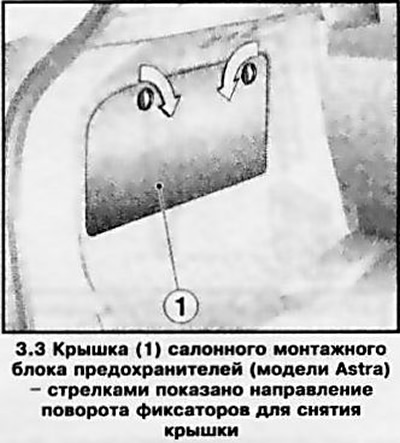
3. To remove the cover of the interior mounting block on Astra models, you need to turn 2 latches, as shown in resist. illustration open and remove the cover. If necessary, insert a coin or other suitable tool into the slot of the latches, pry off the cover using a plastic wedge. On Zafira models, the cover latches have a different design - they must be pressed out. Installation is carried out in the reverse order, check that the cover is securely fixed.
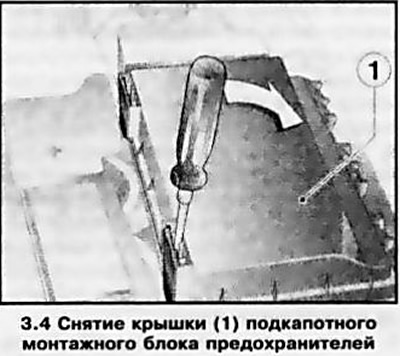
4. To remove the cover of the underhood fuse mounting block, insert a screwdriver into the latch connection and wring it out (see resist. illustration). Then open the cover and remove it from the unit. When installing, make sure that the cover fits snugly against the mounting block.
5. Each individual fuse is used to protect a specific electrical circuit or multiple circuits. An identification card with a layout of fuses in the mounting block is usually glued to the cover of the latter, from its inside (see also Specifications).
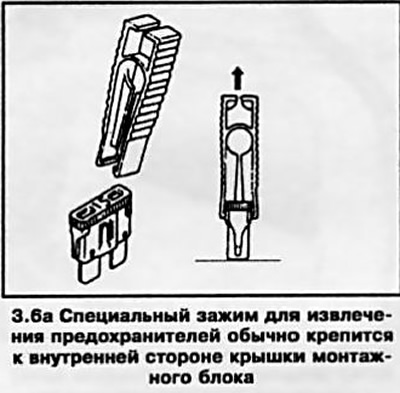
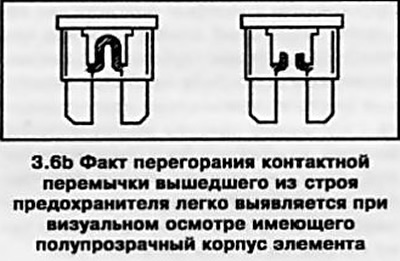
6. The mounting blocks use fuses of a compact design, equipped with bayonet contacts, and, if necessary, easily removed from their sockets in the block. To remove the fuses, use a special clip (see illustration 3.6a), which is located in the cabin mounting block. In case of failure of any of the consumers of electricity, first of all, you should always check the condition of the corresponding fuse. Typically, the fuse case is made of transparent plastic, through which it is easy to determine the condition of the working jumper (see illustration 3.6b).
7. When replacing a blown fuse, make sure that the prepared replacement element matches the type of the failed fuse. Each of the electrical circuits has different operating parameters and needs a different degree of protection, so replacing a fuse designed for a certain current strength that does not correspond to it in terms of parameters is fraught with the most serious consequences (until the fire). Fuse operating parameters (rated current) are usually marked on its plastic case, in addition, color identification is additionally used (see specs).
8. If the new fuse also fails immediately after installation, it makes no sense to replace it further - first, the cause of the overload in the circuit should be identified and eliminated. In most cases, this is a short circuit of the connecting wiring, caused by damage to its insulation. Spare fuses are usually located in the free blocks of the mounting block.
Visitor comments