


To complete the job, you will need a valve lapping tool and lapping paste.
Sequence of execution
1. Remove the oil seal from the valve (see "Valve stem seals - replacement").
2. Remove the valve from the guide bushing.
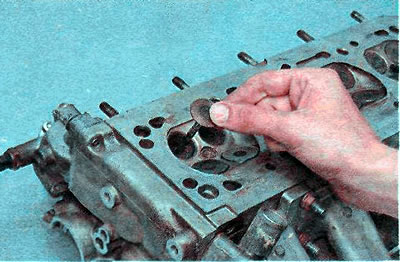
3. Check the condition of the valve guides. The guides should fit tightly in the head body, without any signs of displacement during the operation of the timing belt.
4. Apply lapping paste to the working edge of the valve.
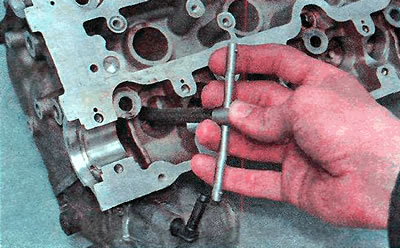
5. Install the valve into the cylinder head and attach the valve grinding tool to its rod.
6. Pressing the valve to the seat, turn it from side to side. After 10-15 movements, turn the valve 90° and continue grinding.
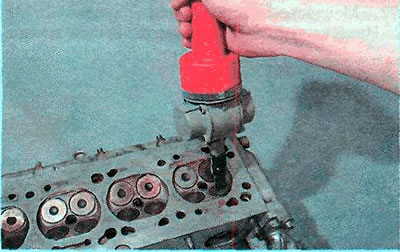
Recommendation: It is much more convenient and efficient to grind valves using a pneumatic device installed directly on the valve plate, which allows for better pressure of the valve plate to the seat.
However, in this case, in addition to the device itself, a compressor will be required to carry out the work, providing a constant pressure of at least 2-3 kgf/cm².
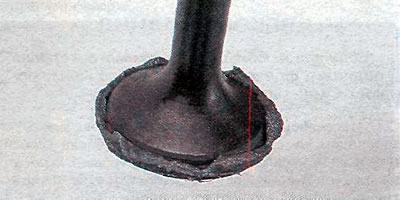
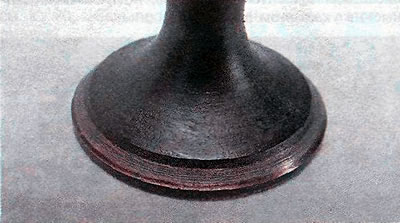
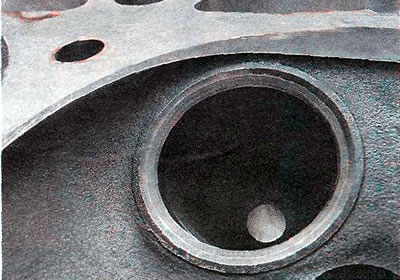
7. We grind until a uniform ring-shaped rim is formed on the valve plate...
...and on his saddle.
8. Carefully remove any remaining lapping paste from the valve and its seat.
9. We grind the remaining valves in the same way.
10. Assemble in reverse order.
Recommendation: After grinding, the valves should be checked for leaks (see above, "Cylinder head - technical condition check") and, if necessary, repeat the grinding.
Visitor comments