


We turn on the side lights, low and high beam headlights, fog lights and lamps, reversing lights, brake lights and hazard warning lights in sequence, checking whether the corresponding lamps are lit.
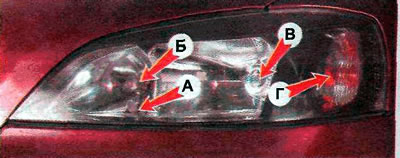
The arrangement of the lamps in the front headlight of the Astra model (on the Zafira model the arrangement of the lamps is similar):
A - side light lamp;
B - high beam lamp;
B - low beam lamp;
G — direction indicator lamp.
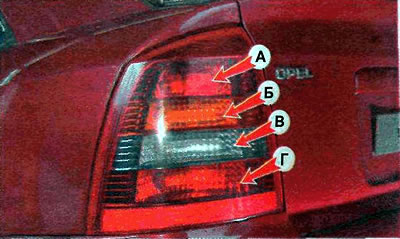
The arrangement of the lamps in the headlight of the Astra model (shown on a car with a hatchback body, on cars with other types of bodies everything is similar):
A - fog light lamp (the right lamp is missing);
B - direction indicator lamp;
B — reverse light lamp;
G — parking light and brake light lamp.
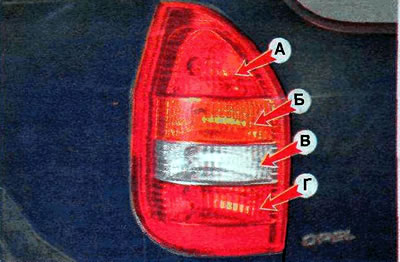
The arrangement of the lamps in the rear light of the Zafira model:
A - parking light and brake light lamp;
B - direction indicator lamp;
B — reverse light lamp;
G - fog light lamp (the right lamp is missing).
Fog lights are located at the bottom of the bumper on the left and right sides (are installed on some vehicles).
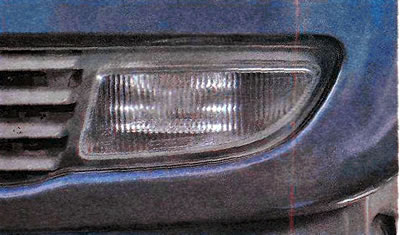
Fog light location (shown on the Zafira model, similar on the Astra model)
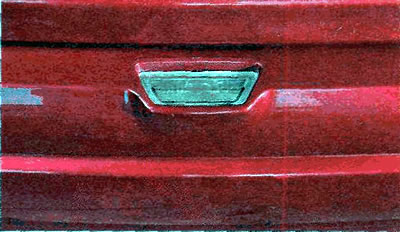
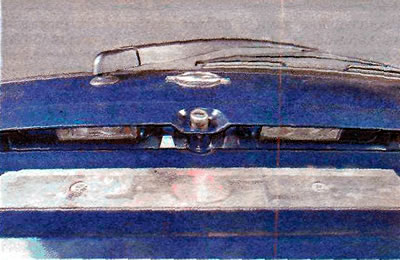
In addition, when the parking lights are switched on, the number plate lights should light up: one on the Astra sedan and hatchback models and two on the Zafira and Astra station wagon models.
Astra
Material was taken from a resource: OpelBook
Zafira
Burnt out bulbs need to be replaced (see relevant sections). It should be understood that if all the lamps in one circuit do not light, for example, all the brake light lamps, then it is unlikely that all the lamps have burned out at once (although this happens too). In this case, you should first check the fuse of the corresponding circuit, and only then try to replace one of the lamps of the faulty circuit with a known good one. If it turns out that the problem is not in the lamps, we check the corresponding switch, in this case - the brake light switch (see "Brake Light Switch - Checking, Replacing and Adjusting"), and then the corresponding electrical circuit (see "Checking and repairing electrical circuits").
It is not enough for headlights and fog lights to simply emit light. They must shine in a strictly defined way. This is a very important factor for ensuring road safety and is therefore controlled during the state technical inspection. The direction of the headlights can be preliminarily checked by parking the car opposite a vertical flat wall at a distance of two to three meters. Turn on the low beam headlights. The light beams should have clear boundaries at the top and be at the same level. Check the operation of the electric corrector. To do this, turn the regulator wheel and watch the low beam headlights, they should evenly lower and rise, stopping at the same level. If both headlights are not adjusted, most likely the electric corrector regulator is faulty, and the control unit must be replaced (see "External and internal lighting control unit - removal, lamp replacement and installation"). If one of the headlights is not adjusted, the actuator of the electric corrector in the corresponding headlight is faulty (see "Headlight Corrector - Replacement"). Turn off the low beam headlights.
If installed, turn on the fog lights. The light beams should have clear boundaries at the top and be at the same level.
However, it should be understood that this method of checking can only reveal very large violations in the adjustment of the headlights. Therefore, it is necessary to periodically check and, if necessary, adjust the headlights at a service station with the appropriate equipment (moreover, this method is preferable when preparing a car for a state technical inspection) or using the method presented below.
Visitor comments