


There are two cases of circuit damage: open circuit and short circuit.
When a break occurs, the circuit is disconnected and no power is supplied to the electrical appliance. Sometimes a break is very difficult to detect because the casing of the terminal block hides oxidized contacts or an incorrect connection. A break can also be detected by shaking the blocks or the wiring harness. This must be taken into account if there are signs of a break or inconsistent operation of the electrical appliance.
A short circuit is an unacceptable connection of a part of a circuit to the "ground" or another part of the circuit. Typically, a short circuit results in a blown fuse or spontaneous switching on of electrical appliances.
After repairing the electrical wiring, it is necessary to check the circuit by turning on the electrical appliances included in this circuit. This confirms not only the correctness of the repair, but also the correctness of the diagnostics performed when searching for a malfunction.
Checking the integrity of the circuit
The integrity of the circuit is checked in the ohmmeter mode. The multimeter leads are connected to the ends of the circuit being checked. When using the circuit continuity mode, if the circuit is intact, the multimeter emits a beep signal (see the multimeter operating instructions). When using the ohmmeter mode, if the circuit is intact, the resistance will be minimal, and if there is an open circuit in the circuit, the resistance will be very high - tending to infinity.
Short circuit detection
If there is a suspicion of a short circuit in any section of the circuit, then disconnect this section from the rest of the car's wiring, disconnecting all its connecting blocks. Connect one terminal of the multimeter in the circuit continuity mode to the section of the circuit being checked, and the second to the "ground" of the car. If the circuit turns out to be closed, then there is a short circuit in this section of the circuit, which must be found by carefully inspecting the entire section of the circuit (wiring harness).
If a short circuit occurs due to damage to the wire insulation, it can be eliminated by restoring the wire insulation using electrical tape.
Often the cause of a short circuit is severe oxidation of the contacts in the connector blocks. In this case, it is necessary to carefully clean or replace the contacts. Before connecting, it is better to treat the contacts with a special conductive grease.
Wiring repair
It is recommended to connect wires using special couplings available on the market.
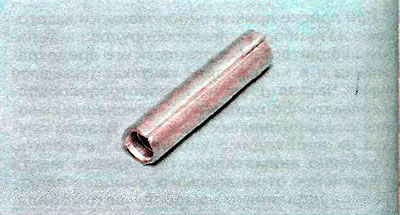
1. We strip the ends of the wires to be connected so that the stripped part is equal in length to half of the connecting sleeve.
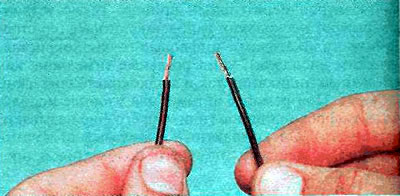
2. Place a heat-shrinkable tube onto one of the wires, approximately 10 mm longer than the connecting sleeve.
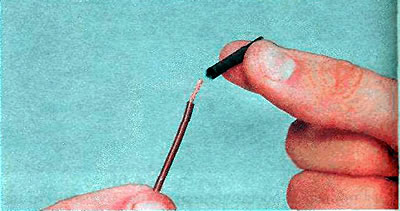
3. Insert the ends of the wires into the connecting sleeve.
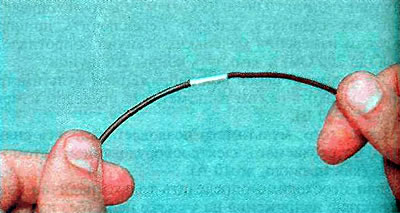
4. Using special pliers, crimp the connecting sleeve.
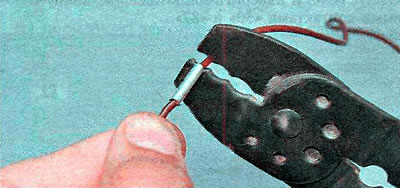
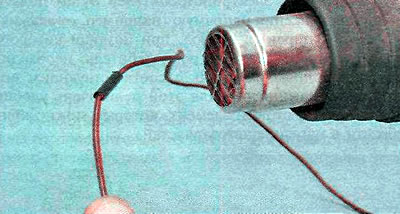
Warning: When performing the following operation, do not hold the heat gun too close to the heat-depositing tube, as it may melt.
5. Move the heat-depositing tube onto the connecting sleeve and heat it evenly with a heat gun.
If there is no connecting sleeve, the wires can be connected by twisting.
1. Strip the wires to be connected by approximately 20-25 mm.
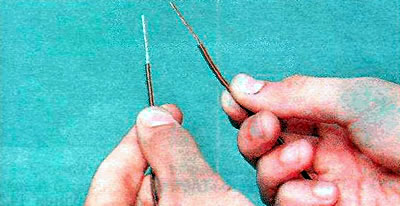
2. Place a heat-depositing tube approximately 25 mm long on one of the wires.
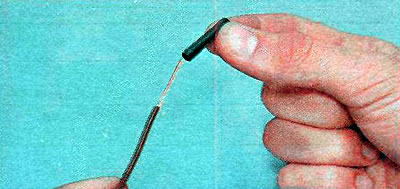
3. Cross the wires and wrap the second wire around the first one by one turn.
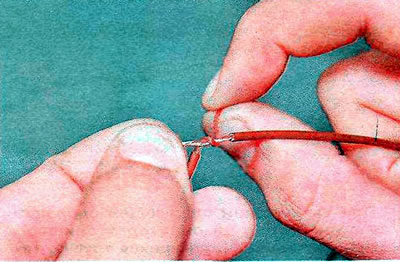
4. Perform a similar operation with the second wire.
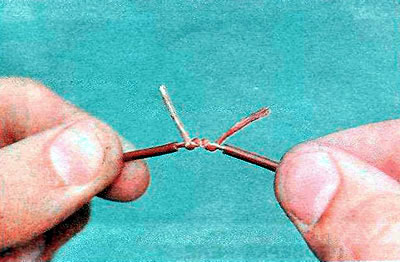
5. Cross the ends of the wires.
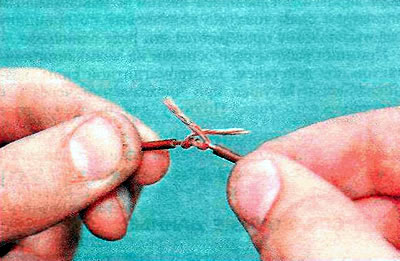
6. Twist the ends tightly around the wires.
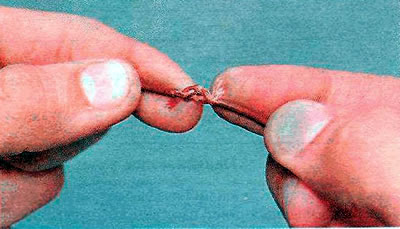
7. Move the heat-depositing tube onto the twist.
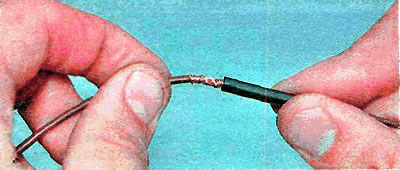
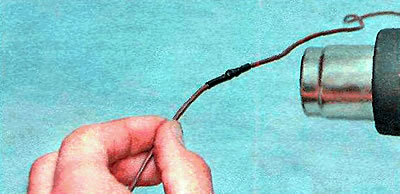
Warning: When performing the following operation, do not hold the heat gun too close to the heat-depositing tube, as it may melt.
8. Heat the heat-depositing tube evenly with a heat gun.
Visitor comments