


Recommendation: Before starting work, make sure that the selector cable is adjusted correctly (see "Automatic transmission mode selector cable - replacement and adjustment").
Sequence of execution
1. Prepare the car for work (see "Preparing the car for maintenance and repair").
2. Remove the battery platform (see "Powertrain Mounts - Replacement").
3. Using a slotted screwdriver, pull out the retainer and disconnect the sensor wiring harness connector.
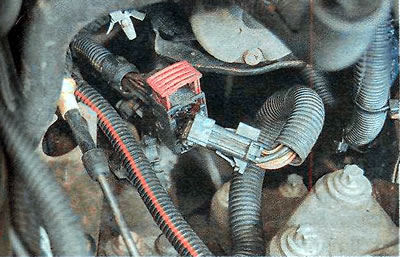
Note: The sensor wiring harness connector terminals are numbered as follows.
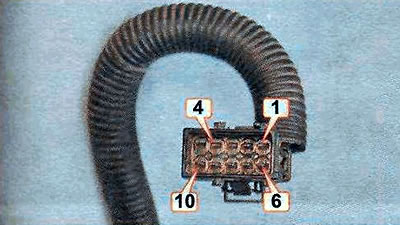
4. If the starter does not turn on, alternately set the selector to positions P and N. Using a multimeter in ohmmeter mode, check the resistance value between terminals 6 and 10.
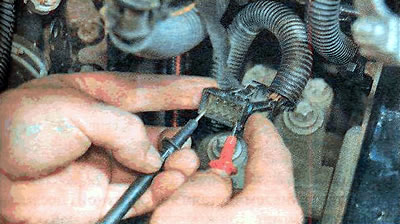
The resistance value should be minimal (the circuit is closed). If the multimeter shows an open circuit (the resistance is infinitely great), it is necessary to replace the sensor (see below).
5. If the reversing lights do not turn on, set the selector to position R. Using a multimeter in ohmmeter mode, check the resistance value between terminals 7 and 8. The resistance value should be minimal (the circuit is closed). If the multimeter shows an open circuit (the resistance is infinitely great), the sensor needs to be replaced.
6. To replace the sensor, set the selector to position N and disconnect the selector cable from the sensor lever (see "Automatic transmission mode selector cable - replacement and adjustment").
7. Remove the wire harness from the holders on the sensor body.
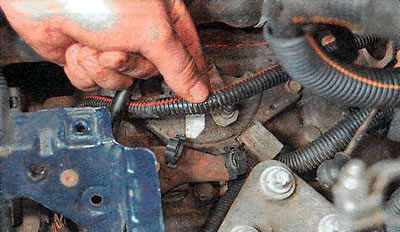
8. Using a 13 mm wrench, unscrew the sensor lever mounting nut (the lever must be held from moving) and we take it off.
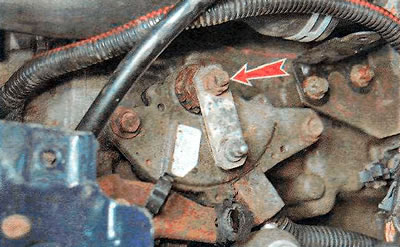
9. Using a slotted screwdriver, bend the edges of the lock washer and use a 17 mm wrench to unscrew the sensor axis nut.
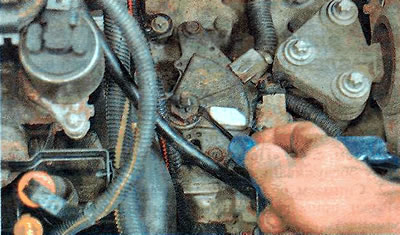
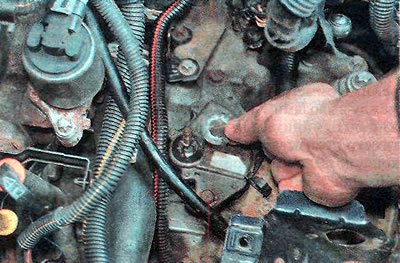
10. Remove the lock washer.
[Information taken from the website: Opelbook.ru]
11. Remove the insulating washer.
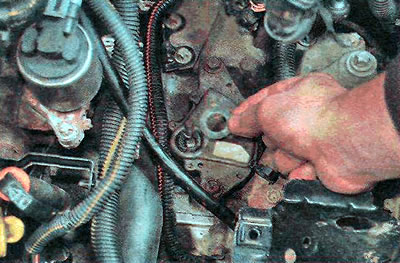
12. Using a 13 mm wrench, unscrew the two mounting bolts and remove the sensor.
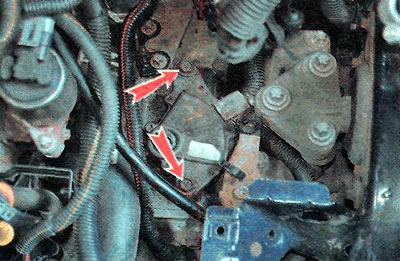
13. Install the parts in reverse order.
Visitor comments