


Sequence of execution
1. Check the level of the working fluid in the gearbox (see "Checking the levels of technical fluids"). A low or high oil level can have a significant impact on the operation of the gearbox. When checking the level, pay attention to the condition of the working fluid. The fluid should be a dark transparent or reddish varnish, without the inclusion of small particles, there should be no burnt smell. Otherwise, there are serious faults in the gearbox and you should contact a specialized workshop as soon as possible.
2. Make sure that the selector cable is in good condition and adjusted correctly, as well as that the selector itself is in good condition. The selector should be clearly fixed in all positions, and its positions should correspond to the modes being switched on. In addition, all selector locks should work properly to prevent accidental movement (see "Controls and instruments"). If a malfunction is detected, it must be corrected (see "Automatic transmission mode selector cable - replacement and adjustment", "Automatic transmission mode selector - removal, repair and installation" and "Automatic transmission operating mode sensor - checking and replacement").
3. When moving, there should be no jerks, impacts or any extraneous sounds. All modes should work in full (see "Controls and instruments").
4. On an inspection ditch or overpass, we inspect the gearbox from all sides, making sure there are no oil leaks:
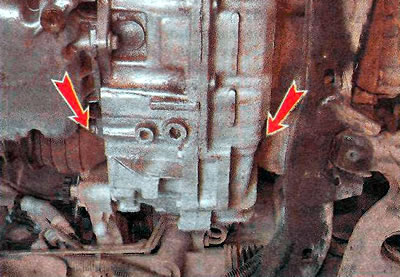
1) at the points where the gearbox connects to the internal joints of the drives; the presence of traces of oil leaks in these places indicates the need to replace the front wheel drive seals (see "Front Wheel Drive Seals - Replacement");
Source is on this resource [OpelBook.ru]
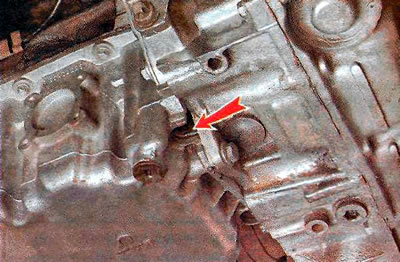
2) at the bottom of the joint between the clutch housing and the engine cylinder block; the presence of traces of oil leaks indicates the need to replace the torque converter seal. It is advisable to contact a specialized service to perform the work.
Visitor comments