OpelBook.ru
Cars AvtoVAZ Cars Mitsubishi Cars BMW Cars Mercedes Cars Nissan Cars Toyota Cars Chevrolet
English Русский
Български
Беларускі
Український
Српски
Hrvatski
Română
Polski
Slovenský
Magyar
 |  Sitemap  |  Contacts  |    


Main Astra Corsa Insignia Kadett Omega Vectra Zafira Others Articles
Corsa B (1993-2000) Corsa C (2000-2006, petrol) Corsa C (2000-2006)
  • Main
  • Corsa
  • Corsa C
  • General information
  • Introduction to guide
  • Vehicle Identification Numbers

Vehicle Identification Numbers (Opel Corsa C)

            0

Contents: VIN Decoding ⬇ Decoding engine designation ⬇
Improving the manufactured products is a continuous process of any flow production. At the same time, in the automotive industry, except for cases of major design changes of models coming off the conveyor, the results of the modification process are not covered in the vehicle operating manual. However, the manufacturer draws up numbered lists of manufactured spare parts, due to which the information encoded in the identification numbers of the car is of particular importance when purchasing the latter. When ordering the required spare part, try to provide the seller with as complete information about your car as possible. Be sure to provide the model name, year of manufacture, as well as the body/chassis and powertrain numbers.

The vehicle identification number (VIN) plate is located to the right of the front passenger seat - there is a special valve in the carpet (see illustration 1).
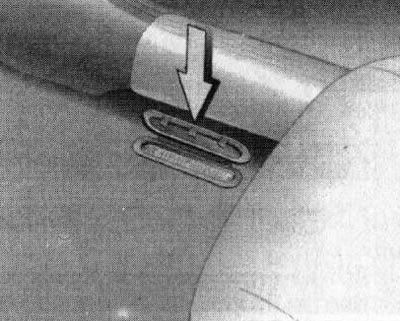
1. The VIN plate is located on the floor panel in the passenger footwell - bend back the valve cut…

1. The VIN plate is located on the floor panel in the passenger footwell - bend back the valve cut into the carpet and remove the cover


Note: On some models, the VIN is stamped on a plate that is attached to the vehicle's dashboard, on the left side under the windshield, so that it can be read from the outside.


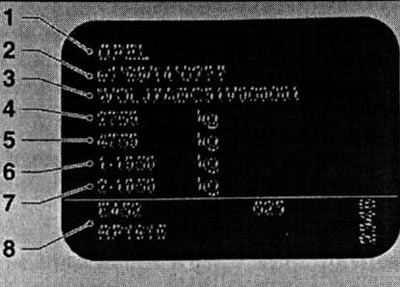
The VIN is also duplicated on the manufacturer's plate, fixed in the opening of the front passenger door on the central pillar (see illustration 2), on some models the nameplate is fixed in the engine compartment, next to the right shock absorber strut. In addition to the identification number, the plate also contains some other data (see illustration 3).
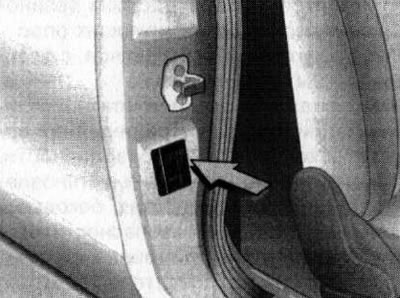
2. Location of the nameplate

2. Location of the nameplate
3. Contents of the nameplate: 1. Manufacturing company; 2. License permit number; 3. Vehicle…

3. Contents of the nameplate: 1. Manufacturing company; 2. License permit number; 3. Vehicle Identification Number (VIN); 4. Permissible gross vehicle weight; 5. Permissible gross trailer weight; 6. Maximum permissible load on the front axle of the vehicle; 7. Maximum permissible load on the rear axle of the vehicle; 8. Vehicle specific data/country specific data


VIN Decoding


Example:

WOLABOUTXWITHF0832123456
123456789

1. Manufacturer code: WOL - Adam Opel AG.

2. Specialized version: O - does not belong to the number of special vehicles.

3. GM code: X - Corsa C/Meriva, H - Agila.

4. Model range: C - Corsa C/Meriva, A - Agila-A/Tigra

5. GM code of the vehicle configuration.

6. Body type: 08 - 3-door Sedan, 68 - 5-door Sedan, 25 - 3-door (with sliding side door) Combo, 06 - 4-door Combo Tour, 75 - Meriva

7. Year of model production: Y - 2000, 1 - 2001, 2 - 2002, 3 - 2003, etc. up to 9 -2009, A - 2010, B - 2011, etc.

8. Manufacturer's code: 1 - Rbsselsheim, 2 - Bochum.

9. Serial number.

The engine designation and number are stamped on the cylinder block next to the oil filter housing (see illustration 4-A), and on diesel engines with a working volume of 1.7 l - on the chamfer on the cylinder block on the flywheel side (see illustration 4-B).
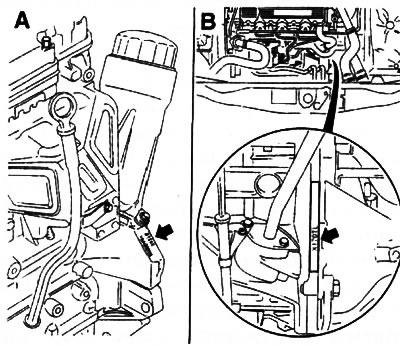
4. Location of the engine identification number

4. Location of the engine identification number


Decoding engine designation


Example:

Z10XER
Y17DTN
123455

1. Exhaust toxicity standard: Y - compliance with EURO-3 standard, Z - compliance with EURO-4 standard.

2. Working volume (displacement): 10 - 1.0 l, 17 - 1.7 l, etc.


3. Compression ratio: L - 8.5-9.0; N - 9.0-9.5; S - 9.5-10.0; X - 10.0-11.5; Y is more than 11.5.

Note: For a diesel engine, the "U" designation is not significant (all engines have a higher compression ratio) and therefore is not indicated.


4. Fuel: E - gasoline, D - diesel fuel.

5. Features (modification): H - high-power, L - low-power; P - Twinport system, T - turbocharging.

Note: The letters "H" and "L" are added to the designation of base engines whose performance is changed. For example, the Y17DTL engine (65 hp) is a modification of the Y17DT engine (75 hp).


This article is available at russian, bulgarian, belarusian, ukrainian, serbian, croatian, romanian, polish, slovak, hungarian
Checking the article: Kornev Georgy

Share information:

Previous articles
Opel Corsa C: Introduction to guide
Next articles

Opel Corsa C and Meriva cars — summary
Purchase of spare parts
Jacking up a car
Towing a car
Starting the engine from an auxiliary power source
Automotive chemicals, oils and lubricants
List of abbreviations used


See similar ones from other Opel car manuals:
▶ Vehicle Identification Numbers Opel Astra H (2004-2009)
▶ Vehicle Identification Numbers Opel Zafira A (1999-2005, petrol)
▶ Vehicle Identification Numbers Opel Frontera A (1991-1998, petrol)
▶ Vehicle identification data Opel Insignia A (2008-2017)
▶ Identification numbers Opel Omega A (1986-1993)
Link to this page in different formats

Visitor comments


No comments yet


How much will 26 + 24 =


Corsa C (2000-2006) 
  • General information
  • Introduction to guide
  • Troubleshooting
  • Vehicle device
  • User manual
  • Maintenance
  • Power unit
  • Engine repair
  • Cooling system
  • Power and exhaust system
  • Control system
  • Engine electrical equipment
  • Transmission
  • Clutch
  • Mechanical gearbox
  • Automatic gearbox
  • Drive shafts
  • Chassis
  • Brake system
  • Wheel suspension
  • Steering
  • Body
  • Exterior
  • Interior
  • Doors and windows
  • Heating and air conditioning
  • Electrical equipment
  • Equipment and devices
  • Lamps and lighting
  • Electrical circuits
Corsa C (2000-2006, petrol) 
  • User manual
  • Car access
  • Governing bodies
  • Seat control
  • Heating and air conditioning
  • Driving and maintenance
  • Engines 1.0 and 1.2 l
  • Engine repair
  • Cooling and lubrication system
  • Injection system
  • Engines 1.4, 1.6 and 1.8 l
  • Engine repair
  • Cooling and lubrication system
  • Injection system
  • Transmission
  • Clutch
  • Mechanical gearbox
  • Automatic gearbox
  • Drive shafts
  • Chassis
  • Wheels and tires
  • Wheel suspension
  • Steering
  • Brake system
  • Body
  • Exterior
  • Doors and windows
  • Electrical equipment
  • Equipment and devices
  • Lighting system
  • Electrical circuits
Corsa B (1993-2000) 
  • General information
  • Introduction to guide
  • User manual
  • Maintenance
  • Power unit
  • SOHC gasoline engines
  • DOHC gasoline engines
  • Diesel engines
  • Engine repair
  • Cooling system
  • Supply system
  • Injection system (gasoline)
  • Injection system (diesel)
  • Exhaust systems
  • Control system (gasoline)
  • Preheat system (diesel)
  • Charge and launch system
  • Transmission
  • Mechanical gearbox
  • Automatic gearbox
  • Clutch and drive shafts
  • Chassis
  • Brake system
  • Front suspension
  • Rear suspension
  • Steering
  • Body
  • Ventilation and heating
  • Exterior
  • Interior
  • Doors and windows
  • Electrical equipment
  • Equipment and devices
  • Lamps and lighting
  • Electrical circuits
OpelBook.ru © 2017–2026 · Mobile version · · Sitemap: EN BG BY UA RS HR RO PL SK HU · Feedback · Site search
Astra F, petrol · Astra G, petrol · Astra G · Astra H · Astra J, petrol · Corsa B · Corsa C, petrol · Corsa C · Insignia A · Kadett D · Kadett E · Omega A · Omega B · Omega B2 · Vectra A, petrol · Vectra A · Vectra B, petrol · Vectra B · Vectra C · Zafira A, petrol · Frontera A, petrol · Frontera B · Ascona C · Vivaro A ·
We want your visit to be comfortable 🤝! We use cookies 🍪 to make that happen.