


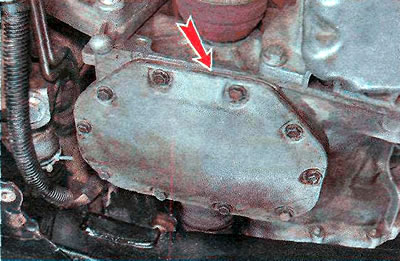
1. From under the differential cover. If there are signs of leakage, the cover gasket must be replaced (see "Gearbox - Checking the level and changing the oil").
2. In places where the gearbox connects to the internal joints of the drives. The presence of traces of oil leaks in these places indicates the need to replace the front wheel drive seals (see "Front Wheel Drive Seals - Replacement").
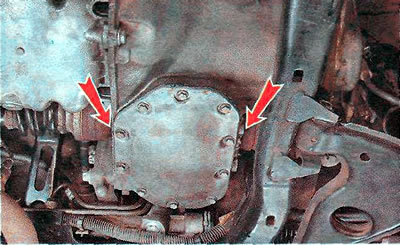
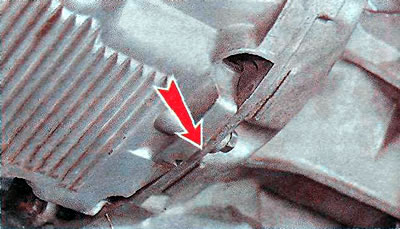
3. At the bottom of the joint between the clutch housing and the engine cylinder block. The presence of traces of oil leaks indicates the need to replace the gearbox primary shaft seal (see "Gearbox primary shaft seal - replacement") or the sealing ring of the clutch slave cylinder housing (see "Clutch slave cylinder - check and replacement").
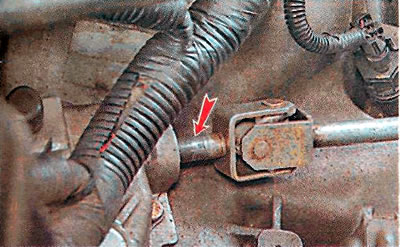
4. On the gearshift rod. If there are signs of leakage, the rod seal must be replaced (see "Gearshift mechanism rod seal").
We make sure that the clutch release and gear shift mechanisms are in good working order and adjusted correctly. To do this, press the clutch pedal, engage all gears in turn, check the ease and clarity of their engagement and disengagement. If necessary, adjust the gear shift mechanism (see "Gearshift mechanism drive lever - replacement and adjustment").
Note: To troubleshoot the following problems: (if they are detected) the gearbox needs to be repaired, which involves disassembling it. This requires special equipment and high qualifications, so it is better to entrust the gearbox repair to a specialized Opel service.
We set the gearshift lever to neutral and start the engine. Press the clutch pedal several times and listen to the sound of the gearbox bearings. It appears when the clutch pedal is released and disappears when it is pressed. Loud noise from the bearings indicates that they are worn out and that the gearbox needs to be disassembled and repaired.
We check the operation of the gearbox while driving. We make sure that there is no crunching, knocking or other extraneous sounds when the gearbox is working. We check the operation of the synchronizers. To do this, moving first with acceleration, and then with deceleration, we shift gears up, then down. The gears should shift clearly and without crunching, and there should be no spontaneous disengagement of gears when the load changes.
Note: If a crunching sound is heard when shifting through all gears, the most likely cause is incomplete clutch disengagement (see "Clutch - checking technical condition").
Text copied from a web portal opelbook.ru
Visitor comments